The Evolving Intersection of Delivery Tech, Kitchen Operations, and the Guest Relationship
More than half a decade after the pandemic fundamentally changed how consumers interact with restaurants, delivery has moved well beyond the “turn it on” phase for full-service operators.
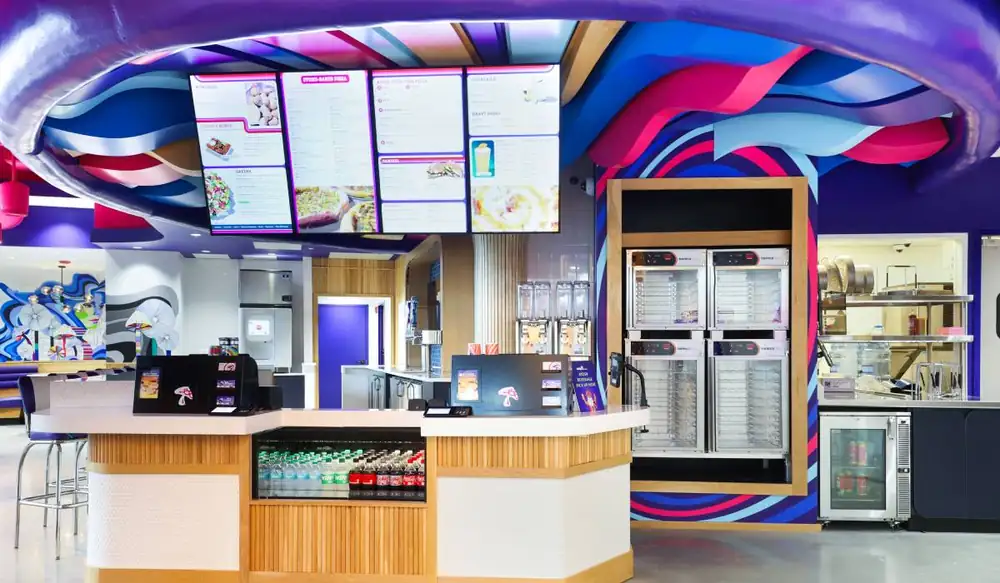
“When the dining room is full, the guest doesn’t care that we have 20 or 30 or 50 additional orders in that hour coming through the same fixed amount of real estate,”
The focus now is less on adding a sales channel than on optimizing one that touches the kitchen, labor model, guest relationship, and broader tech stack. “We look at it a little differently nowadays,” says Jason Saposnik, VP of information technology for FSC Franchise Co., the parent company of Beef ‘O’ Brady’s, The Brass Tap, and Newk’s Eatery. “Early on, the focus was more about just growing delivery sales.
Now, we’re a lot more focused on whether those sales are profitable, how the restaurants can handle that increased volume, and whether customers are actually getting the same great experience.” The first major improvement in delivery operations was straightforward: getting orders into the restaurant without forcing employees to act as the integration layer. Saposnik recalls an earlier “tablet hell” environment in which teams monitored separate devices for DoorDash, Uber Eats, and other channels, then manually entered orders into the POS. “That created all sorts of issues for missed orders and mistakes and delays,” he says. “Now, everything just flows into the POS and into the kitchen correctly.”
That integration is table stakes. But it does not solve underlying capacity questions.
Scott Pavlica, VP of finance at Mecha Noodle Bar, says operators need to think beyond delivery as a percentage of sales and focus on the actual volume a restaurant can absorb at its busiest moments. “You have to think about absolutes and how much volume per 15 minutes, per half hour, per hour—whichever metric you have—that you can really handle,” Pavlica says. “You really have to understand what you can actually handle at peak, because that’s where the pressure points start getting applied.”
The real test comes when digital demand collides with a packed dining room and the same line, expo station, and staff have to serve both. “When the dining room is full, the guest doesn’t care that we have 20 or 30 or 50 additional orders in that hour coming through the same fixed amount of real estate,” Pavlica says. “At the same time, the digital guest doesn’t care that the dining room is full.
They both just want their food.” That is where delivery throttling and kitchen display system prioritization come into play. FSC uses order-volume thresholds to adjust promised delivery times and control when tickets begin appearing in the kitchen.
The point is not simply to slow orders down, Saposnik says, but to pace them more accurately around the restaurant’s actual capacity. Those systems still require operational judgment.
Managers must account for how the kitchen is performing in real time rather than relying solely on a threshold established in advance. Saposnik sees an opportunity for AI to eventually weigh fulfillment pace, order flow across channels, table turns, and kitchen performance more quickly than a manager can during a rush. But operators are also finding that some of the most consequential delivery improvements have little to do with sophisticated automation.
“A lot of the solutions are kind of unsexy,” Pavlica says. “Have you mise en place’d all of your materials to satisfy a to-go order? Just like we want hot plates nearby so we can plate food and get it out, we need our to-go materials to be available in the same manner.” That can mean rethinking storage, giving packaging and labeling supplies a more logical home, or building more space for off-premises production into new units.
At Keke’s Breakfast Cafe, the brand has implemented a dedicated to-go expo role and packaging designed to help food travel better. VP of marketing and communications Jenna Law also points to simple quality-control measures like writing the guest’s name on the bag, noting how many bags belong to an order, and flagging whether it includes a drink. Mellow Mushroom has similarly moved from receipts to indexed sticky labels—”item one of five” or “two of five” and so on—so employees can confirm a large order is complete without reopening sealed packaging.
Those details are not likely to impress a guest in the way a new app feature might, says Ahsan Jiva, EVP of strategy and transformation at Mellow Mushroom. But that is precisely the point.
The best off-premises systems should fade into the background, he explains, allowing the restaurant to deliver an order that is accurate, intact, and consistent with the experience promised inside its four walls.
Beyond the Four Walls
Delivery also presents a broader brand-level calculation: where guests discover a restaurant, who owns the relationship, and how much control the operator retains once the transaction moves outside its own channels. Third-party marketplaces remain an unavoidable part of that equation.
At Keke’s, Law says the delivery guest can look very different from the person coming through the front door. “They may actually find us first on DoorDash and then come to the cafe,” she says, “so you really have to be in that space if you’re any type of restaurant.” The issue is not choosing between first-party and third-party so much as understanding each channel’s role.
Marketplaces offer discovery and convenience for guests accustomed to starting their search in an app. Brands typically prefer to steer orders to their own channels, where the economics are more favorable and the guest relationship is more visible, but changing established ordering habits is difficult. “If I pay $9.99 a month for unlimited delivery through Uber Eats, some first-party platform is not going to get me to move to it,” Saposnik says. “Everyone has their favorite platform that they like to use, and you have to kind of cater to all of them at this point just to make sure you’re getting the best audience that you can.”
Jiva takes a similarly pragmatic view. Were third-party delivery not so deeply embedded in consumer behavior, he says Mellow Mushroom might prefer not to participate.
But the channel has become too ubiquitous—and represents too much potential demand—to walk away from, even with the fees. For many guests, the marketplace is now the starting point for deciding what to eat.
“People are going to the third-party platforms first, and then they’re deciding what to eat,” he says. “It’s becoming harder and harder to dislodge them from using those apps versus using Mellow Mushroom directly.” The tradeoff is that third-party marketplaces bring customers into an ecosystem the restaurant does not fully control. Pavlica says the economics of third-party delivery have been relatively favorable for Mecha so far, but he sees a structural risk: As Uber Eats, DoorDash, and Grubhub “firm up their business models,” brands can feel trapped if they lack flexibility in vendor relationships.
That makes first-party ordering an important counterweight. It does not mean the brand handles every step itself. At Mellow Mushroom, for example, an order placed through the brand’s website may still be delivered by a DoorDash Drive courier through a white-label arrangement.
Mellow controls the digital storefront, ordering flow, guest communication, and transaction; DoorDash handles the last mile. That distinction may be invisible to the guest, but it has major implications for the brand. “Owning the guest information and transactional data is crucial,” says Jiva, warning that brands living entirely inside other ecosystems are effectively renting their own customers.
For Keke’s, first-party channels create a fuller picture of the relationship. A guest who appears to visit the cafe only once may be much more valuable if they are also ordering online or through catering. “You can see the full experience,” Law says. “You can see what they’re doing in the cafe, what they’re doing online, what they’re doing with catering.” The goal is not to abandon marketplaces. “You build the behavior through third party, but then migrate your guests over to your own channel,” Pavlica says. “It’s really imperative to use third party as a guest acquisition tool and have a migration strategy from third party to first party.”
More data, however, does not automatically create more clarity. Pavlica says Mecha is looking beyond topline averages to find the smaller misses that can affect repeat behavior—an otherwise strong accuracy rate, for instance, offers little comfort to the guest whose order is missing a modifier, sauce, or add-on.
From Dashboards to Decisions
Off-premises demand creates variables that do not always fit neatly into traditional models. Two restaurants might generate the same sales per hour, Pavlica notes, but a location with a 30 percent off-premises mix does not need the same front-of-house staffing model as one doing 5 percent.
At Mellow Mushroom, Jiva sees the next step as moving beyond a collection of reports that general managers must sift through and interpret on their own. The company recently rolled out My Mellow, an internal mobile tool that brings together POS information and an AI assistant in what he calls a “centralized command center for the GM.”
The project builds on years of work centralizing data, and its purpose is to cut through “too much noise in so many different systems” and surface what matters most to an in-store leader. “I think dashboards are going to die,” Jiva says. “A dashboard requires someone to read and understand and then take an action around that.
Our goal is to be able to provide the action or our best guess at what the action should be.” Rather than asking a manager to spot rising ticket times, determine whether the problem is tied to a daypart or channel, and decide how to respond, future tools could surface the exception and suggest the next move. Saposnik sees similar potential in systems that can flag an abnormal refund rate, menu-sync issue, or ticket-time spike before it becomes a larger guest-service problem.
The point of that automation is not to strip human judgment out of the process, but to free it up. If the system can tell a GM, “Your Saturday third‑party orders are dragging ticket times; you should throttle this window or add an extra expo,” the manager can spend less time staring at charts and more time running the shift. Getting the order made correctly, routed cleanly, and handed off on time is itself an act of hospitality after all, even if the guest never sees who was behind the line.
For Law, the point is not to automate the human element out of delivery. It is to use technology to extend the care and responsiveness associated with a full-service restaurant into a transaction the team may never see unfold.
A guest who has visited the cafe once but ordered online six times is still a valuable regular, and she wants Keke’s systems to recognize them that way—to see the full relationship, not just a string of anonymous tickets. In her view, smarter tools and centralized data should make it easier to treat off‑premises orders with the same care as a table in the dining room.
“Delivery isn’t going anywhere, so hospitality has to extend into the digital world now,” Law says.
- Who: Mellow Mushroom · DoorDash Drive
- Money: $9.99
- Percentages: 30 percent · 5 percent
- Figures: 30 percent · 5 percent