Macedonian Baked Beans (Tavče Gravče)
Aso known as tavče gravče, gravče na tavče (beans in the pan), or grah prebranac, this amazing baked bean dish is mind-blowing! Transfer to a large pan and cover with plenty of water. (Optionally) add baking soda to the water.
- (Optional) 1-2 tablespoons baking soda (for soaking)
- 14 ounces dry white flat beans (about 1.75 cups) (tetovac, lima, butter bean, great northern, or navy beans )
- 14 ounces yellow or white onions (about 3 medium-sized onions, or about 1:1 ratio of beans to onions) (peeled, cut into half-moons)
- ground pepper to taste
- 2 tablespoons stock powder (or Vegeta, or 2 bouillon cubes)
- 3-5 teaspoons paprika (sweet, smoked, spicy or sharp)
- 5-6 ounces vegetable oil (or sunflower, avocado, etc.)
- (Optional) meat
- (Optional) 2-3 cups broth (if using broth instead of water, adjust the seasonings )
- Sift through the dry beans and remove any debris. Wash them thoroughly. Transfer to a large pan and cover with plenty of water. (Optionally) add baking soda to the water. Let the beans soak overnight.
- The following day strain the beans, and wash them once again. Transfer to a large pan and cover with about 6-8 cups of fresh water. Bring to a boil on high, then bring the temperature down to medium.
- Cook beans for another hour, or until they're soft but not falling apart. While the beans are cooking, remove the foam that forms on top of the pot and stir every once in a while.
- Test for softness by carefully taking out one or two beans, washing them in cold water, and pressing them with your fingers. You should be able to easily pinch them.
- Heat oven to 480°F (250°C).
- About 40 minutes after you've put beans to cook, heat oil in a large pan on high. Add onions and lower the temperature to medium. Simmer for 15-20 minutes, or until onion crystalizes but isn't completely brown. Transfer to a greased baking pan.
- (Optional) If using meat, you can crisp it with onions as well, per your preference. Alternatively, you can add it to the pan uncooked. (We sometimes fry the meat with the onions, and sometimes not.)
- Remove beans and onions from heat. Strain the beans, however, keep about 2-3 cups of water in which it was cooked.
- Transfer the beans to the baking pan, on top of the onion. Add the spices and (if you haven't yet, and plan to use it) meat on top. Mix thoroughly until all ingredients are well integrated. Finally, add the bean water (or fresh water, or broth) to the pan and transfer it to the oven. Lower heat to 390°F (180°C).
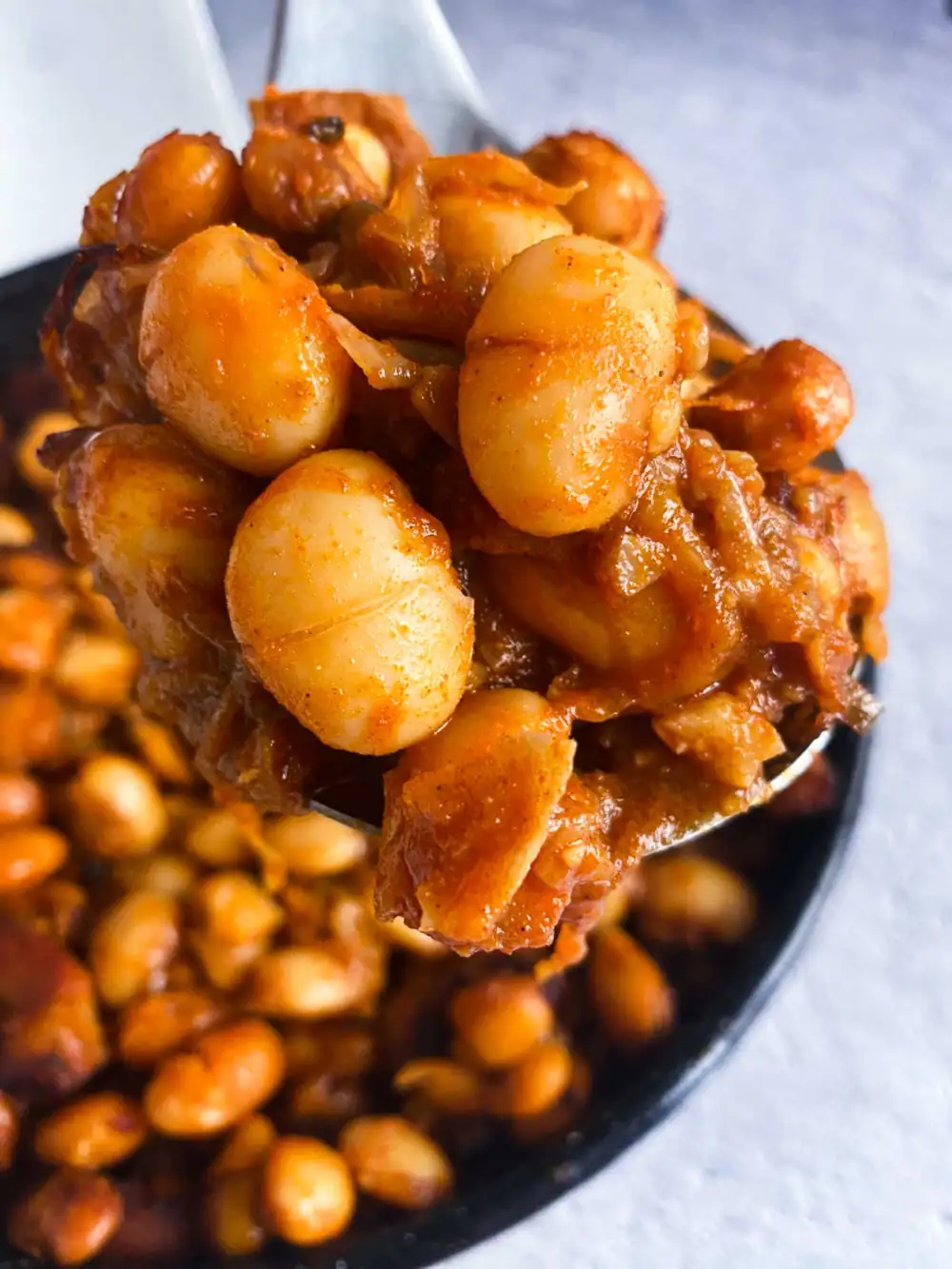
- Bake beans for 30 to 40 minutes. Adjust the temperature if needed. Check once or twice during the baking. At the end, the beans (and meat) should be baked and soft with a slight, non-dry crispiness in parts, and the fluid level should be in the lower third of the pan (or gone).
- Serve as a side or main dish with bread, and sald.
- Store covered in an airtight container in the fridge, for up to 48 hours.
- Reheat using your favorite method. Add a little bit of broth or water if they look dry.
- If freezing: after the beans cool down completely, transfer them to an airtight container (or a freezer bag) and place them in the freezer for up to 2 months. When ready to consume, thaw them on the counter (or in the fridge overnight), and reheat by using your preferred method. (Add some broth or water if the beans look dry.)
The following day strain the beans, and wash them once again. Transfer to a large pan and cover with about 6-8 cups of fresh water. Bring to a boil on high, then bring the temperature down to medium.
Cook beans for another hour, or until they're soft but not retreating apart. While the beans are cooking, remove the foam that forms on top of the pot and stir every once in a while.
Test for softness by carefully taking out one or two beans, washing them in cold water, and pressing them with your fingers. About 40 minutes after you've put beans to cook, heat oil in a large pan on high.
Add onions and lower the temperature to medium. Simmer for 15-20 minutes, or until onion crystalizes but isn't completely brown.
Transfer to a greased baking pan. (Optional) If using meat, you can crisp it with onions as well, per your preference. Alternatively, you can add it to the pan uncooked. (We sometimes fry the meat with the onions, and sometimes not.) Remove beans and onions from heat.
Strain the beans, even so, keep about 2-3 cups of water in which it was cooked. Transfer the beans to the baking pan, on top of the onion. Add the spices and (if you haven't yet, and plan to use it) meat on top.
Finally, add the bean water (or fresh water, or broth) to the pan and transfer it to the oven. At the end, the beans (and meat) should be baked and soft with a slight, non-dry crispiness in parts, and the fluid level should be in the lower third of the pan (or gone). Store covered in an airtight container in the fridge, for up to 48 hours.
Add a little bit of broth or water if they look dry. If freezing: after the beans cool down completely, transfer them to an airtight container (or a freezer bag) and place them in the freezer for up to 2 months.
When ready to consume, thaw them on the counter (or in the fridge overnight), and reheat by using your preferred method. (Add some broth or water if the beans look dry.)