Torikizoku Copycat Grilled Grated Yam (Yamaimo no Teppanyaki)
Torikizoku (鳥貴族) is a popular izakaya chain that has become a go-to spot for yakitori and casual dining all over Japan.
- 300 g Japanese yam (nagaimo) (or Chinese yam (not to be confused with regular American yams which are closer to sweet potatoes))
- 1 egg (separated)
- 1 ½ tbsp Japanese soy sauce (koikuchi shoyu)
- 1 tbsp Japanese mayonnaise (or regular mayonnaise)
- ½ tbsp mirin
- 1 tsp dashi granules (used plant-based dashi granules for vegetarians)
- 1 tbsp toasted sesame oil
- roasted seaweed for sushi (nori) (crushed, topping)
- Japanese mayonnaise (topping)
- Peel of the skin of 300 g Japanese yam (nagaimo) and grate it using a Japanese oroshi grater. Wear gloves if you have sensitive skin.
- Transfer it to a mixing bowl and add the whites of 1 egg (save the yolk for later), 1 ½ tbsp Japanese soy sauce (koikuchi shoyu), 1 tbsp Japanese mayonnaise, ½ tbsp mirin and 1 tsp dashi granules.
- Mix well until the batter is well combined and slightly bubbly.
- Heat your pan on medium-high and grease it with 1 tbsp toasted sesame oil. I recommend a small pan like 20cm/8".
- Pour the yam mixture into the pan and fry until air bubbles start to appear on the surface.
- Lower the heat to medium and place a lid on top. Steam for 5 minutes (reduce time if you prefer a more runny texture close to Torikizoku's).
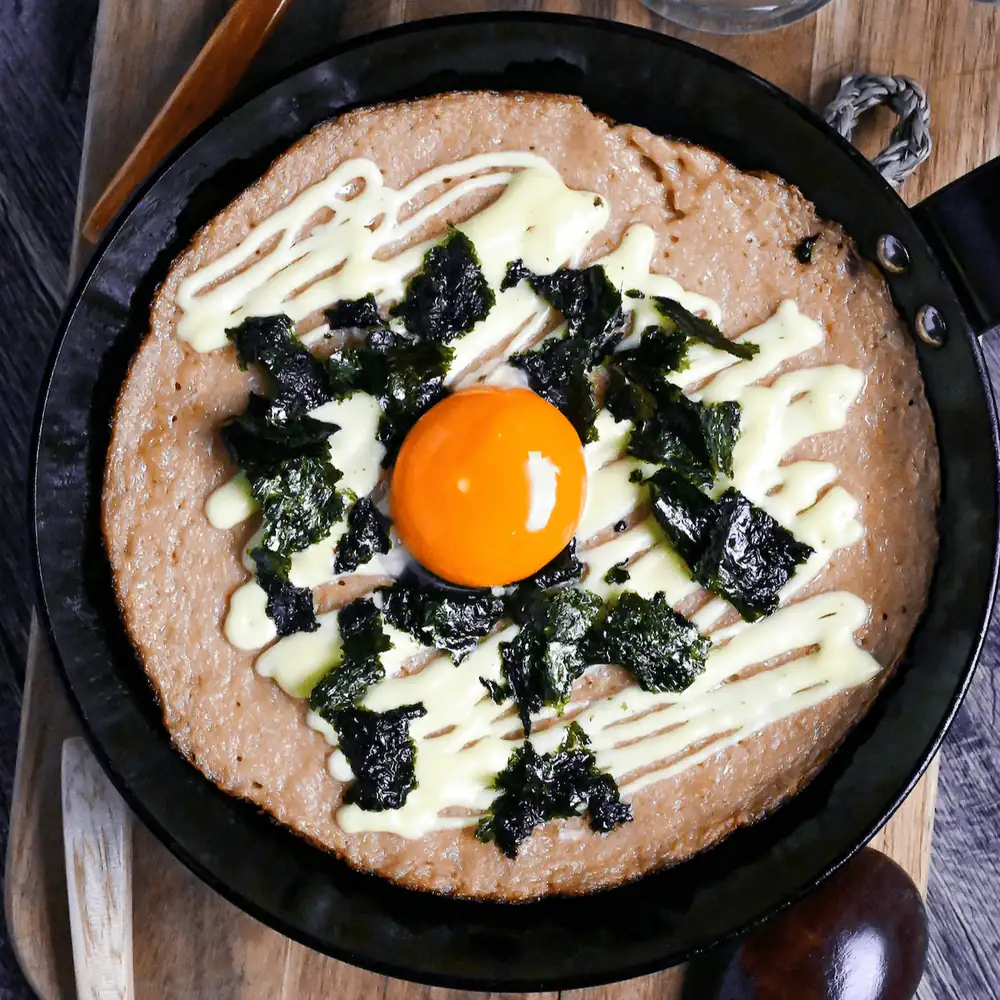
- Remove the lid and turn off the heat. Top with Japanese mayonnaise, crushed roasted seaweed for sushi (nori) and the reserved egg yolk from earlier.
- Give each diner a small plate and enjoy it straight from the pan!
What makes this place special is its extensive menu that goes beyond just chicken skewers, offering something for everyone’s taste. To make their “Grilled Fluffy Grated Yam (Yamaimo no Teppanyaki)” – one of their most popular non-yakitori dishes – I kicked off by thinking back to all the times I’d eaten there when I was younger. Here are my key observations:
- Dashi Element: The seasoning has a distinct dashi savor, but rather than using dashi stock, I think they use dashi granules, which contribute to its “casual dining” taste profile. - Egg Usage: The original method calls for quail eggs, but when cookery at home, I used regular chicken eggs instead. - Texture: At Torikizoku, the yam is served a bit undercooked than my preference.
So, I just adjusted the preparation time to my liking. It’s easy to tweak this to your own taste.
After experimenting with these elements, I think I was able to capture the essence of the original dish while making it more suitable for home preparation. Even if this recipe is based on my memories rather than recent tastings, the result is very satisfying.
The combination of the unique yam texture and dashi-infused seasoning creates a delicious dish that I believe could win over even those who haven’t tried yam before. One thing to note is that this might differ slightly from the current Torikizoku offering (as my experiences are from some years ago), but the fundamental elements that made the dish popular remain intact in this recreation.
- Japanese Mountain Yam (Yamaimo): This unique tuber has a mild taste and sticky texture, creating this dish’s signature “fluffy” texture. Though Japanese Mountain Yam is slightly different to Chinese yam (nagaimo), they can be used interchangeably and you should be able to find at least one kind at well-stocked Asian supermarkets. Please keep in mind that Japanese Mountain Yams should not be confused with American Yams, which are completely different and are actually more like sweet potatoes.
- Egg: You’ll need both the yolk and white separated. - Dashi Granules: This is key to achieving that casual restaurant taste we’re aiming for.
Homemade dashi stock is great for a lot of dishes, but that specific umami punch that comes from dashi granules is what gives this dish its classic “izakaya-style” taste. - Base Seasonings: Japanese soy sauce, mirin, mayonnaise (Japanese brand preferred), and toasted sesame oil. - Toppings: Finish with crushed nori seaweed and an extra drizzle of mayonnaise.
Here are my step-by-step instructions for how to recreate yamaimo no teppanyaki at home. For element quantities and simplified instructions, scroll down for the Printable Recipe Card below. This section aims to provide a comprehensive overview of the cooking steps and techniques with visuals.
It as well includes more in-depth tips and tricks and explains why I do what I do. First, peel the Japanese yam and grate it into a smooth paste.
I recommend a Japanese-style “oroshi” grater for best results. It’ll end up as a sticky, slightly foamy consistency like this.
If you’re sensitive to yams, be sure to wear food-safe gloves during this step because raw yams can irritate some people’s skin. Grab a mixing bowl and put the grated yam in it.
Then add the egg white, mirin, soy sauce, dashi granules, and mayonnaise, and whisk it all together until it’s combined. The mixture should be smooth and slightly bubbly.
Heat a small skillet (I used 20cm) over medium-high heat. Add a bit of toasted sesame oil to coat the bottom of the pan, but not too much.
Pour in the yam mixture once the oil is hot. Give it a gentle stir to distribute it evenly, and then let it cook until you see bubbles forming on the surface.
When the mixture starts to bubble, turn the heat down to medium and put a lid on the pan. If you’re going for that actual Torikizoku’s very gooey texture, drop the steaming time to just 3 minutes.
Take the lid off and check that the surface is set but still tender. Top with a little mayonnaise, sprinkle with crushed nori, and carefully place the reserved egg yolk in the center.
Serve right away while it’s still hot. This dish is typically served as it is.
Each diner will have their own small serving plate and help themselves straight from the pan. I hope you enjoy this recipe!
If you try it out, I’d really appreciate it if you could spare a moment to let me know what you thought by giving a review and star rating in the comments below. It’s also helpful to share any adjustments you made to the recipe with our other readers.
- Bikkuri Donkey’s Hamburger Steak - Lawson’s Devil’s Onigiri - Bronco Billy’s Japanese Steak Sauce
Explore my copycat method collection to find your next favorite dishes! - 20cm Cast Iron Frying Pan The element brands and tools I trust are in my Japanese pantry guide and my cookery tools guide.
Can’t find certain Japanese elements? See my substitution guide here.
- Peel of the skin of 300 g Japanese yam (nagaimo) and grate it using a Japanese oroshi grater. Wear gloves if you have sensitive skin.
- Transfer it to a mixing bowl and add the whites of 1 egg (save the yolk for later), 1 ½ tbsp Japanese soy sauce (koikuchi shoyu), 1 tbsp Japanese mayonnaise, ½ tbsp mirin and 1 tsp dashi granules. - Mix well until the batter is well combined and slightly bubbly.
- Heat your pan on medium-high and grease it with 1 tbsp toasted sesame oil. I recommend a small pan like 20cm/8".
- Pour the yam mixture into the pan and fry until air bubbles start to appear on the surface. - Lower the heat to medium and place a lid on top. Steam for 5 minutes (reduce time if you prefer a more runny texture close to Torikizoku's).
- Remove the lid and turn off the heat. Top with Japanese mayonnaise, crushed roasted seaweed for sushi (nori) and the reserved egg yolk from earlier.
- Give each diner a small plate and enjoy it straight from the pan!