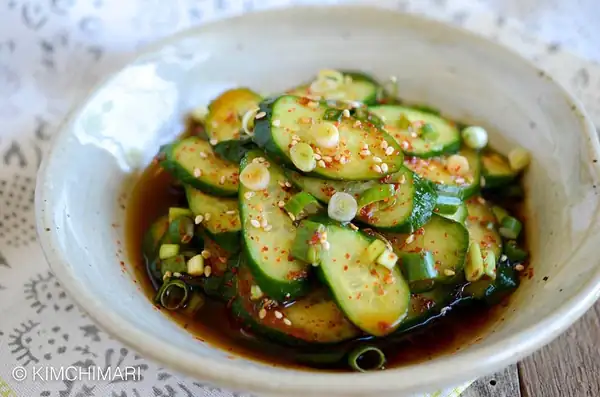
Miyeok Muchim (Seaweed Salad)
Sweet and vinegary seaweed salad made with seaweed (miyeok) is a refreshing side dish that’s super easy and delicious!
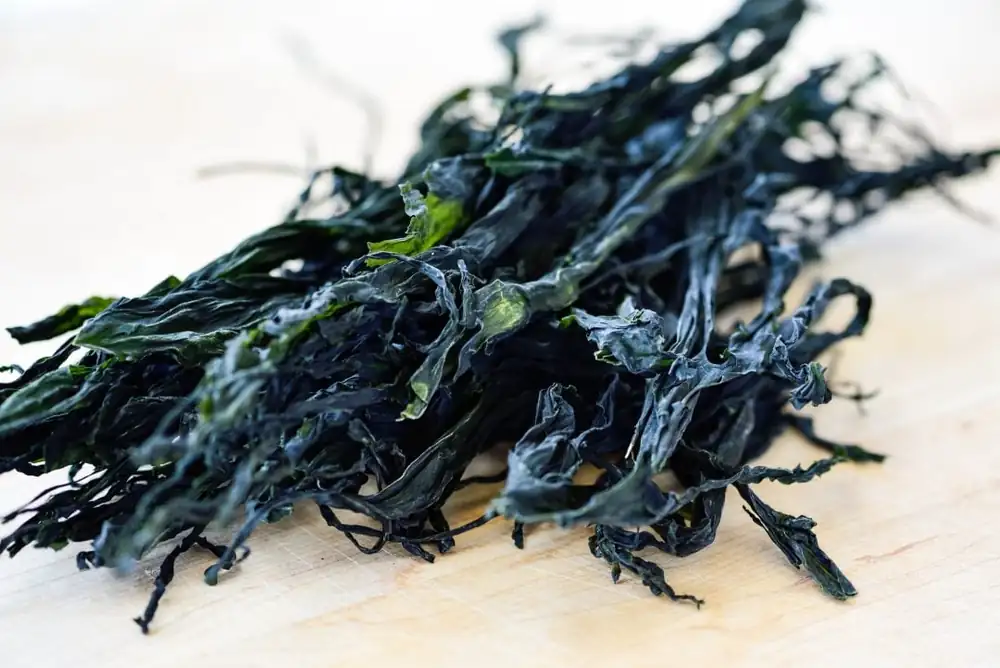
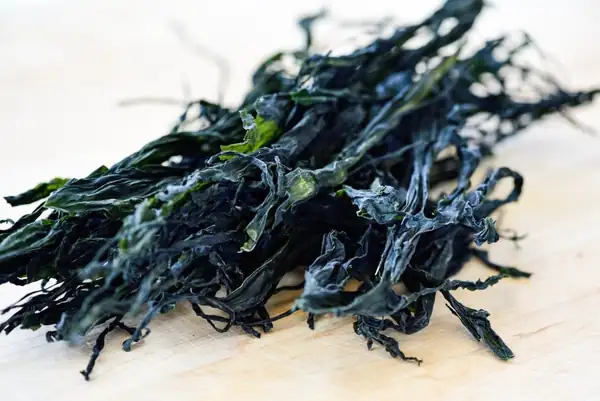
- 1 ounce dried miyeok (미역, (a little more than 2 cups soaked))
- 1 small kirby cucumber (1/2 Korean cucumber, thinly sliced)
- 2 red radishes (or equivalent amount of white radish, thinly sliced)
- 1 teaspoon sesame seeds
- 4 tablespoons vinegar
- 1-1/2 tablespoons sugar
- 1/2 teaspoon minced garlic
- 1/2 teaspoon salt
- 1 teaspoon soy sauce
- Soak the dried miyeok in cold water per package instructions (usually 10 to 20 minutes) or just until it turns soft and plump. Rinse a couple of times to remove any hidden sand. Drain well and cut into bite sizes. See notes.
- Bring a medium pot of water to a boil. Plunge the miyeok into the water and blanch for a minute. Drain and rinse in the cold water until the miyeok is cool. Drain well, and squeeze out excess water.
- Cut the miyeok into bite size pieces by running a knife through a few times in different directions.
- In a large bowl, mix all the dressing ingredients well until the sugar has dissolved.
- Add the miyeok, cucumber, and radish. Toss well to combine everything together. Serve cold.
This vinegary, sweet seaweed salad is a refreshing summer side dish! Miyeok (미역), also known as wakame, is an edible brown sea vegetable that is highly nutritional.
Muchim (무침) means mixed with seasonings. What is miyeok? Miyeok (미역) is an edible brown sea vegetable.
Seaweed contains high levels of iodine, calcium, magnesium, iron, protein, fiber, vitamins, antioxidants, and detoxifying properties. It helps improve your health related to thyroid, bone, digestive, heart, etc. More than enough good reasons to eat seaweed!
As mentioned in my miyeok guk (미역국) recipe, because of the many health benefits, new moms traditionally eat miyeok guk (soup) for the first few weeks after giving birth to help with recovery. Ancient folklore tells us that our ancestors learned from seeing whales eating seaweed after giving birth. In the raw/fresh form, miyeok is brown.
You may see brown raw/fresh miyeok sold in markets if you are in Korea. It turns green when blanched in boiling water.
While fresh miyeok is also great for this recipe, it’s hard to find around here. On the other hand, dried miyeok is a staple item in Korean pantries and used to make soups and salads year round. You can find packages of dried miyeok at Korean markets or on-line source.
Look for the ones with a deep, dark green hue. Dried miyeok comes in different types and sizes.
Most of them are pretty clean these days so it doesn’t require more thorough cleaning that we used to do in the past. Some are even ready to use pre-cleaned and pre-cut so you can use it simply after soaking for a couple of minutes.
Do not soak the seaweed too long. You’ll lose some of the seaweed flavor. 10 to 20 minutes should be sufficient, but check the package instructions for soaking time.
How to make seaweed salad
Once soaked, miyeok turns green, plump, and ready to be eaten. However, blanching it briefly in boiling hot water will slightly soften the texture and brighten the color of green.
It’s typical to add some cucumber slices as well as Korean radish (mu), carrot, and/or onion. The vegetables add a nice textural contrast and color. I used a cucumber and a couple of red radish here.
You can make this seaweed salad a little fancier by adding some boiled shrimp or squid. For more Korean cooking inspirations, follow along on YouTube, Pinterest, Twitter, Facebook, and Instagram.