Bavarian Sweet Mustard & Extra Spicy Mustard
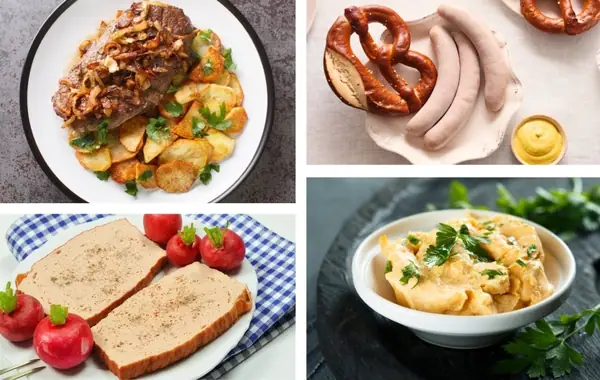
A Weißwurst (White Sausage) in Munich will always be served with the Bavarian Sweet Mustard, which has become famous over time.
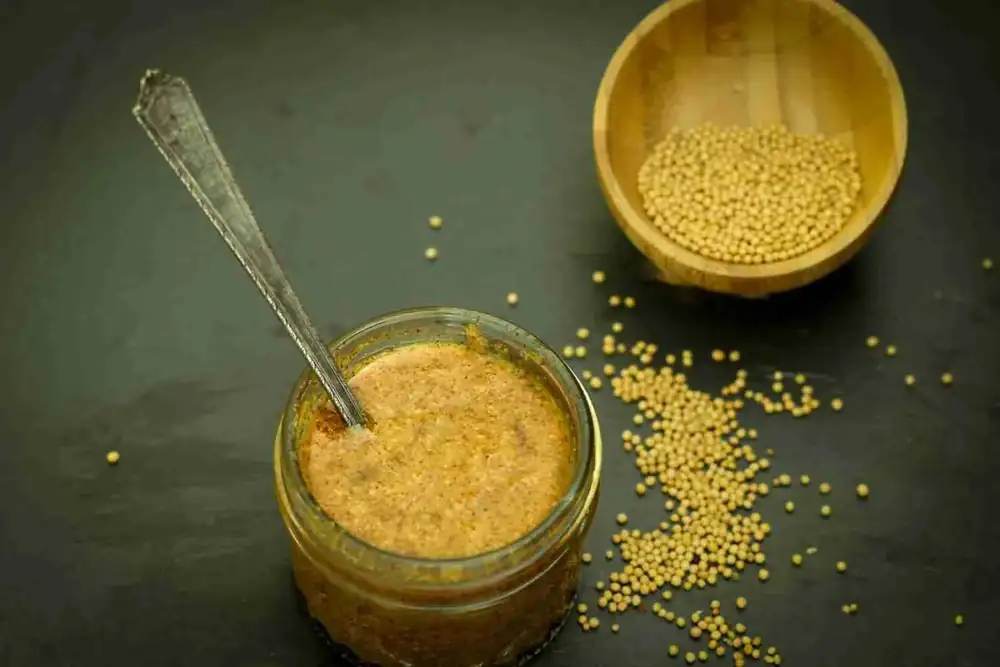
- 50 g yellow mustard, ground
- 5 g salt
- 10 g sugar
- 30 ml white wine vinegar
- 40 ml water
- Mix all ingredients into a bowl and stir with a spoon until everything is combined.
- Then use an electric mixer and mix the mustard for 5 minutes.
- Put the mustard into a jar with a lid and let stand 3 to 4 weeks.
- After several weeks the spiciness should be reduced, the consistency should be spreadable and your mustard is ready.
It has a perfect mix of sweetness and spiciness. In contrast is the German Extra Spicy Mustard, where you can only use a tiny little bit per bite or otherwise you will cry. Both mustards are typical German specialties and hard to get in other countries.
Good thing they are easy to make at home!
A quick History of Mustard
The Romans already knew how to make mustard.
They learned it from Asia and called it „mustum ardens“ which means burning “must”. The word must comes from the unfermented grape juice, which they used in their recipe. Unfermented juice is sometimes still called Most in Germany which once again shows, how much influence Rome had in Europe.
But the German word for mustard is actually Senf (pronounced like sanf) which comes from the greek word sināpi. Senf has an interesting history in Germany.
I won’t get into detail here but just this much: Every principality had their own mustard maker and when a prince traveled, he always brought his own mustard to other principalities. This led to the saying „seinen Senf dazu geben“ which means „adding your mustard to it“.
This is a referral to the undemanded and unnecessary adding of one’s own opinion to a topic … which also is a German specialty.
The 3 Seeds
There are three different kinds of mustard seeds.
The most common is the yellow (or white) seed. This is the milder mustard seed.
There is also the brown seed which some call green mustard because it looks rather green on the inside. The third is black seeds.
Brown and black mustard seeds are a lot spicier than the yellow/white one.
Yellow mustard
While American mustard is bright yellow in color, the German version is rather beige. The reason is not the seed or the recipe but American mustard contains a lot of Curcuma to get this color.
Don’t worry, there is nothing wrong with adding Curcuma. It is a very healthy spice, mostly used in the Indian kitchen.
Uses
I am using yellow mustard in many ways.
It goes into my Frikadellen, I use it in salad dressings, it‘s great for a mustard sauce with fish, fits with most meats and definitely with sausage. I also put it on sandwiches and there is one specific recipe with eggs in mustard sauce which I might cover here one day.
The sweet mustard, also called Bavarian Mustard or Munich Mustard, can absolutely be used for all these, too, but it is particularly enjoyed with Leberkäse (German Meatloaf) and Weißwurst (White Sausage). I really love its taste!
Beyond the culinary uses, mustard is known for several health benefits, internal and external. Read some more about it here:
It needs time! While the ingredients are quickly mixed together, I do not recommend eating it right away.
Often it takes three to four weeks before a yellow mustard has developed the right taste and also the right consistency. Sometimes your mustard might still be runny when you first mix it.
After some weeks is should have the right consistency, which you could compare to that of mayonnaise. And while the seeds are not spicy if you eat them dry, they become quite hot the moment you mix them with liquids.
This means that the mustard is very spicy hot at the beginning and must lose some of that during the first couple of weeks. The sweet mustard does take a little less long, thanks to the enormous amount of sugar, which cancels out some of the spicyness.
But from start to finish, it takes at least 4 days before you can serve it. On the bright side: Mustard actually won’t get bad for a very, very long time!
It’s antibacterial properties plus the vinegar are taking care of that.
Extra Spicy Mustard
That super spicy hot mustard is best known from the brand Löwensenf.
After some weeks of waiting, if you are using it, be careful. Just dip the tip of a knife into it and place a tiny little bit of it to your meat or sausage or whatever you want to eat.
Check how you tolerate it. Do not – I repeat – do not cover a hotdog into it and try to eat it like the American Yellow Mustard. Otherwise, you might regret it … don’t say I haven’t warned you!
But this extra spiciness is quite delicious and I like it most with Frikadellen (German Meatballs).
Ingredients
- 500 ml water
- 250 ml wine vinegar (white or red) good quality preferred
- 250 g white sugar
- 250 g light brown sugar
- 185 g yellow mustard, ground (powder)
- 125 g brown mustard, ground (powder)
- ½ onion
- ½ lemon, organic
- 3 cloves
Instructions
- Add water, vinegar, and both sugars into a pot and stir.
- Heat the content of the pot to dissolve the sugar but don't let it boil.
- Remove the pot from the stove and let cool.
- Add both mustard powders and stir.
- Add the half lemon.
- Put the cloves into the onion and add the onion to the mustard mixture.
- Add a lid and let stand for 24 hours.
- After 24 hours remove the onion and the lemon.
- Squeeze the lemon and add the juice to the pot.
- Let stand for another three to four days.
- Put the sweet mustard into jars. It's ready to use but will still develop more taste over time.