Pineapple Pork Adobo
Level up your Pork Adobo with pineapple!
- 1 tablespoon oil
- 3 pounds pork butt, cut into 1 1/2-inch cubes
- 1 onion, peeled and chopped
- 1 head garlic, peeled and minced
- salt and pepper to taste
- 1 cup pineapple juice
- 1/2 cup vinegar
- 1/2 cup soy sauce
- 1/2 cup water
- 1 cup pineapple chunks
- In a wide pan over medium-high heat, heat oil. Add pork and cook until lightly browned. Season with salt and pepper to taste.
- Add onions and garlic and cook, stirring regularly, for about 1 to 2 minutes or until softened.
- Add pineapple juice and vinegar. Allow to boil, uncovered and without stirring, for about 3 to 5 minutes.
- Add soy sauce and water and bring to a boil.
- Lower heat, cover, and continue to cook for about 40 to 50 minutes or until pork is fork-tender and sauce is reduced.
- Add pineapple chunks and cook for another 1 to 2 minutes or until heated through.
- Season with salt and pepper to taste, if needed. Serve hot.
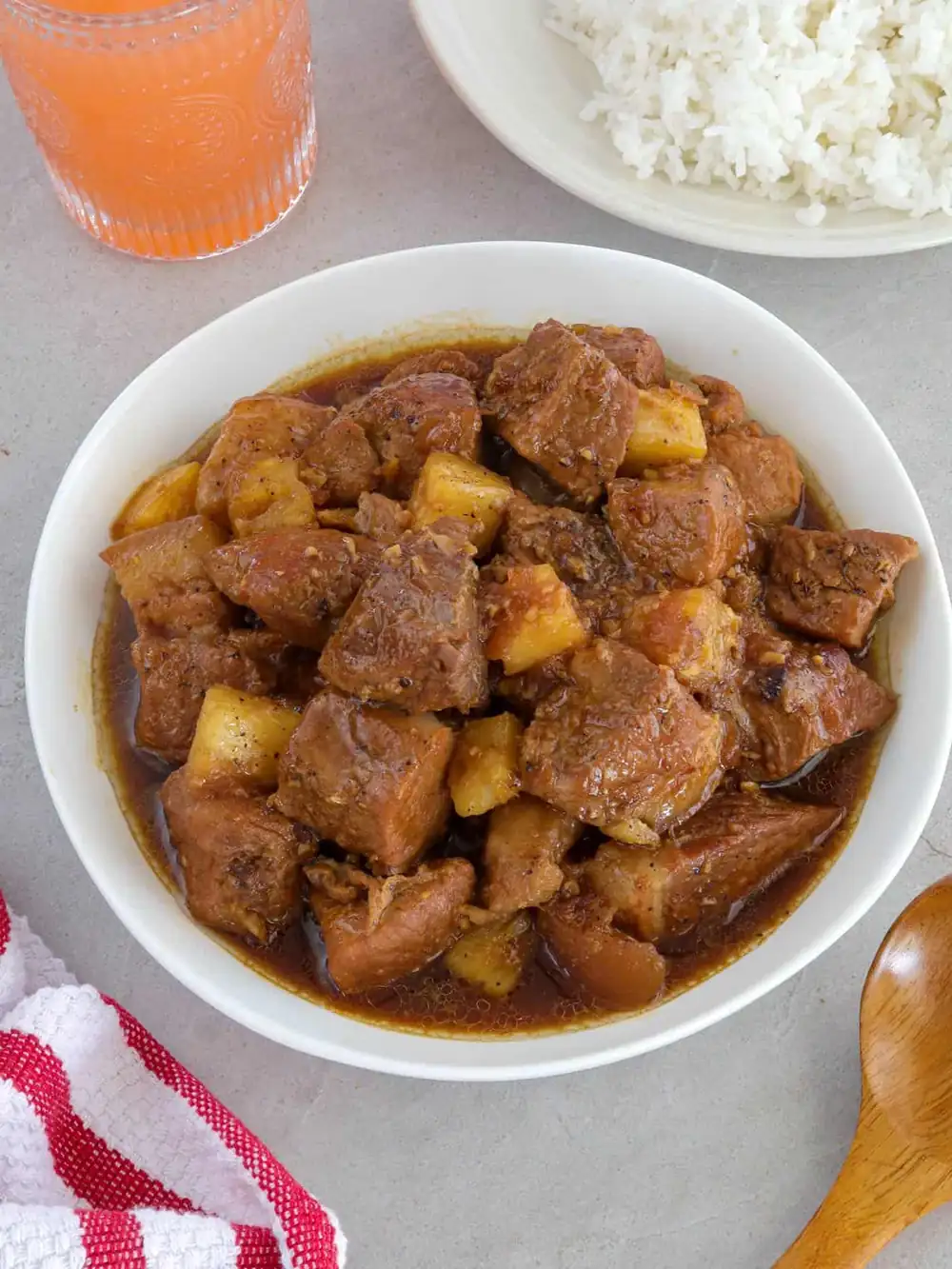
This delicious twist on the classic Filipino dish is easy to make and a crowd favorite. The sweet and salty medley of flavors is the perfect match for piping-hot steamed rice!
When we think of food for parties and special gatherings, we tend to think of more elaborate dishes such as morcon, lengua estofado, lechon pork belly, or kare-kare. However, I am a big proponent of simple home cooking holidays. With a few adjustments, we can quickly turn everyday meals such as adobong baboy or binagoongan into fancy party fare.
A case in point is this pork adobo recipe with pineapple. A simple addition of pineapple juice and chunks takes it from a simple dinner dish to a meal worthy of guests.
With succulent pork pieces and juicy fruit swimming in a gloriously sweet and salty sauce, it will impress family and friends!
Ingredient notes
- Pork- I like to use pork shoulder, but feel free to swap it with pork belly for a generous layer of fat or loin for a leaner cut.
- Pineapple chunks and juice- choose fruit packed in juice and not heavy syrup, lest the dish become overly sweet.
- Vinegar- use palm or cane vinegar for a more authentic taste. If substituting distilled vinegar, you might have to adjust amounts as it has a stronger acidity.
- Aromatics- onions and garlic are the classic flavor base for adobo
- Seasonings- salt to enhance taste and pepper to add zing
How to make pineapple pork adobo
- Sear the pork on medium-high heat until lightly browned. This extra step of caramelizing the meat brings tons of flavor. Add onions and garlic and cook until softened.
- Add pineapple juice and vinegar. Allow the vinegar to boil uncovered without stirring for a few minutes before adding the soy sauce and water to cook off the strong acid taste.
- Lower the heat, cover, and simmer until the pork is fork-tender. Add the pineapple chunks.
- Continue to cook until the sauce is reduced, and season with salt and pepper to taste.
Helpful tip
Cut the meat in even sizes to ensure uniform cooking.
How to serve and store
- Pineapple pork adobo is delicious as a main dish for lunch or dinner. Serve with steamed rice for a satisfying meal!
- The dish can be prepped ahead and works well for meal planning. Allow to cool completely and transfer to a container with a tight-fitting lid. Refrigerate for up to 3 days or freeze for up to 3 months.
- Reheat in a saucepan over medium heat to an internal temperature of 165 F or in the microwave at 2 to 3-minute intervals until thoroughly heated through.
Notes
- Cut the meat in uniform size to ensure even cooking.
- Sear the pork on medium-high heat until lightly browned. This extra step of caramelizing the meat brings tons of flavor.
- Allow the vinegar to boil uncovered without stirring for a few minutes before adding the soy sauce to cook off the strong acid taste.
Nutrition Information
“This website provides approximate nutrition information for convenience and as a courtesy only. Nutrition data is gathered primarily from the USDA Food Composition Database, whenever available, or otherwise other online calculators.”