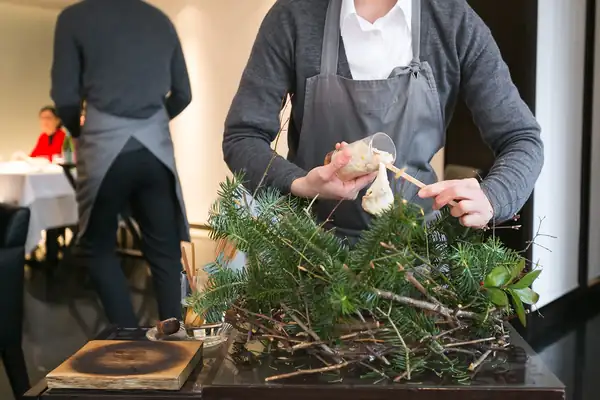
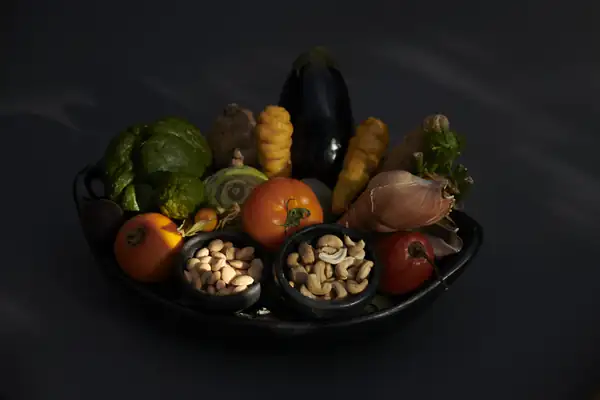
At Narisawa, the Forest Arrives at the Table Still Breathing
In a quiet corner of Minami-Aoyama, Yoshihiro Narisawa has spent two decades turning Japan's mountains, rivers and soil into a cuisine so gentle you barely notice how radical it is. Our critic sat down for the full course and left with a new idea of what a meal can be.
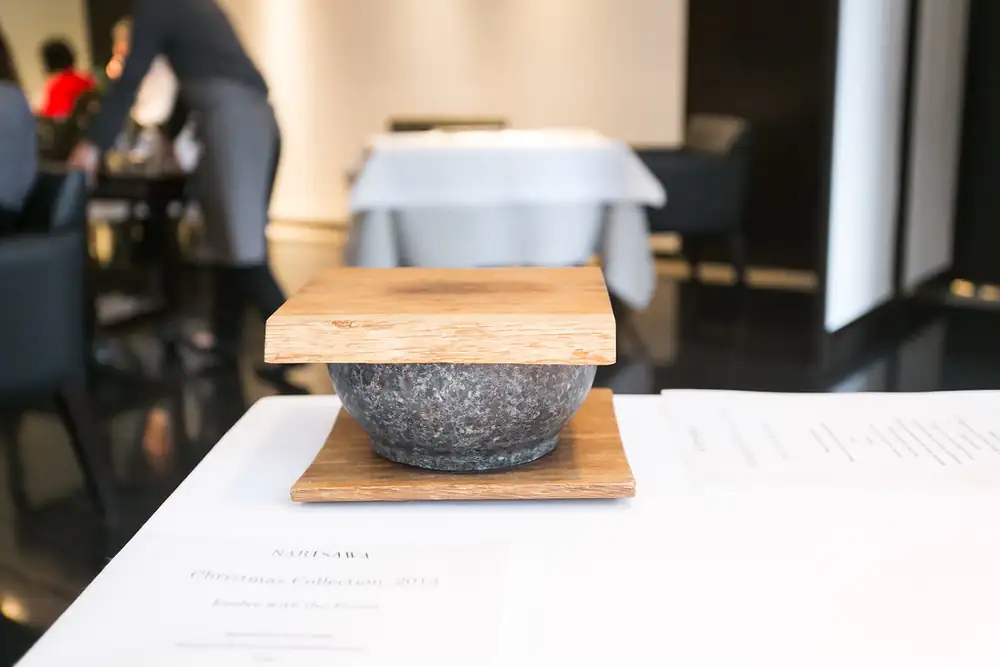
There is a moment, about forty minutes into dinner at Narisawa, when a small mound of dough is set beside you in a wooden vessel and left alone. It has been mixed at the table from chestnut flour and a wild yeast that the kitchen keeps alive year after year, and while you eat the next two courses it rises, slowly, visibly, like something asleep and dreaming. Then it is carried away, baked in a hot stone, and returned as a bread so warm and so faintly sweet that the whole room seems to go quiet for it. They call it Bread of the Forest. It is the clearest statement I know of what this restaurant is: patience made edible.
Yoshihiro Narisawa opened here in 2003 after years in the kitchens of Europe, and what he brought home was not French technique so much as a French seriousness about the land. He calls his cooking Innovative Satoyama Cuisine, after the belt of woodland and paddies that lies between village and mountain in Japan, and the phrase is not a slogan. The menu is a walk through that landscape in the order a body would meet it: water first, then soil, then the things that grow, then the things that move, then the sweetness at the end of the day.
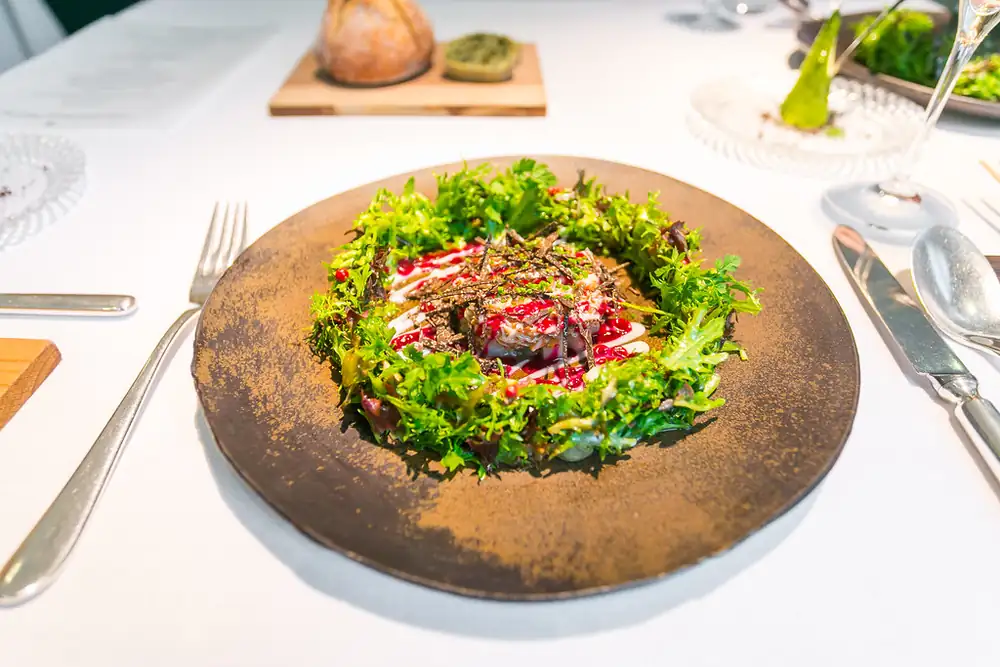
The dish that people talk about, Soup of the Soil, arrives looking like nothing at all: a dark, still broth in a plain bowl. It is made from earth, actual earth, from the roots of a particular forest, cleaned and simmered and clarified until what remains is the taste a forest has after rain. I have eaten it three times over the years and each time the same thing happens: the first spoonful is strange, the second is deeply familiar, and by the third you understand that you have been tasting this all your life in the background of every mushroom and every turnip and never noticed.
The wine and sake service deserves its own paragraph, because it is doing something I have rarely seen done so well: matching drink to place rather than to dish. A sake from Toyama, brewed with the snowmelt of the Tateyama range, arrived cold beside the raw fish and tasted of stone and rain; a white from a small Japanese vineyard, faintly oxidised, met the charcoal beef and made its ash sauce taste older and deeper. Nothing was poured to show off. Everything was poured to explain.
Between courses there are small, wordless gestures that tell you where you are. A hot towel that smells of cypress. A cup of clear broth, unannounced, when the kitchen senses the table needs a pause. A plate of pickled vegetables from the mountains, sharp and cold, that resets the mouth before the bread. These are the details that separate a restaurant with a philosophy from a restaurant that merely has a menu, and here there are dozens of them, none of them mentioned, all of them felt.
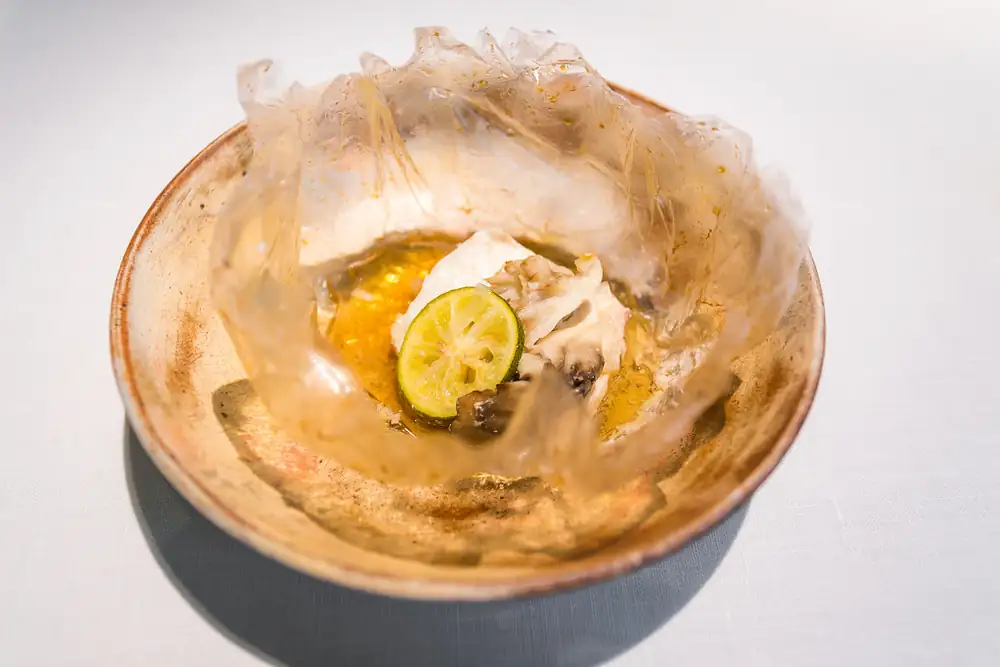
What follows is a lesson in restraint that never feels like one. A slice of raw fish from the Sea of Japan is dressed with nothing but a drop of its own liver and a leaf so young it is almost transparent; the flesh is cool and dense and slightly sweet, and the leaf brings a green bitterness that arrives a half-second late, like a second thought. A piece of Toyama beef, cooked over charcoal, is served with a sauce made from the ash of the vegetables that were grilled before it. The meat is soft in the way only very well raised beef is soft, and the ash sauce is smoky and mineral, and the two together taste like the memory of a fire on a cold night.
The pastry is where lesser kitchens of this kind go sentimental. Here the desserts stay in the forest. A sorbet of fermented plum, sharper than you expect, is set on a crumble of toasted rice; a piece of chestnut, candied over days, is served with a spoon of cream that has been touched with mountain honey and nothing else. You finish the meal not full but clear, which is rarer.
The service matches the food: quiet, exact, warm without performance. The dining room is plain, pale wood and white cloth, and the light is kept low enough that the plates seem to glow. A meal here costs what a good suit costs, and like a good suit it will outlast most of what you buy this year. Book weeks ahead. Go hungry, but more than that, go rested, because this is a meal that asks you to pay attention, and it rewards every minute of it.