Climax Foods and Benchling Use Data Science to Revolutionize Plant-Based Cheese
Last month, US biotech startup Climax Foods made public it had discovered the “first ever” plant-based casein, which can replicate the functional performance of conventional casein to make realistic animal-free cheese.
“There’s a lot of excitement for how machine learning and artificial intelligence can be used in the food industry. At Climax, we’re delivering on that promise today,”
T hrough an innovative data-driven approach to R&D, the collaboration will accelerate the launch of plant-based cheese innovations onto the trade. “There’s a lot of excitement for how machine learning and artificial intelligence can be used in the food sector. Per to At Climax, we’re delivering on that promise today,”, karthik Sekar, Head of Data Science at Climax Foods. ©Climax Foods Millions of combinations Climax Foods uses a “precision process,” where AI and machine learning (ML) discover elements that can replicate dairy proteins among thousands of edible plants at an incredible speed.
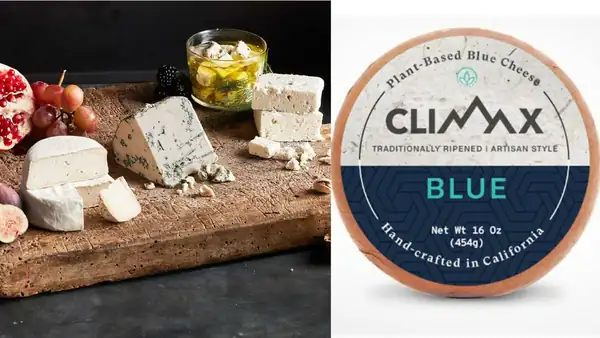
The ML process as well includes the development of prototypes using data from plant-based cheeses, taking into account factors such as taste, texture, nutritional value, and sustainability. Per to Climax is initially focusing on dairy products, but, this technology could as well be applied to other animal-based foods. In January, the firm rolled out its first product range, “zero compromise,” which includes Blue, Brie, Feta, and Chèvre cheeses — all developed using AI and ML to make them realistic and low-cost.
A few months later, the revolutionary biotech announced a partnership with global cheese leader The Bel Group to introduce a new generation of plant-based cheeses. “Our building blocks are the three hundred thousand varieties of plants, which can be combined in millions of different ways to reach specific textures, flavors, smells, and environmental impact. This is a huge combinatorial screening problem that even the largest labs can’t crack when done manually. Climax Foods is uniquely positioned to meet this challenge with our focus on data and machine learning,” argues Sekar.
Image courtesy of Climax Foods “Ideal setup” After undergoing marked rollout, Climax Foods needed the capability to handle more complex data science, optimizations, and machine learning. Specifically, its scientists required models to track “meltability” and cheese savor changes while keeping cost gains below 10%. The business wanted to replace its data systems with a consistent ontology across all teams to meet a standardized classification of concepts.
Benchling’s centralized platform has proven to be a valuable tool for organizing concepts such as elements, formulations. Assays; it as well came with a pre-established ontology that the Climax team could further build upon to support their investigation, saving time for scientists and resources for the business. “Sustainable foods are the future and data science is how we achieve this. We continuously train our portfolio of machine intelligence tools to enable the plant-based recreation of any taste and texture, while optimizing for nutrition and lowering costs.
Benchling specifically gives us a solid foundation where data is findable, accessible, interoperable, and reusable with FAIR data principles. This quality data and Benchling’s flexible system provide the ideal setup for developing and training our machine learning models,” explains Sekar.
- Who: Climax Foods · Benchling · Climax
- Percentages: 10%
- Figures: 10%