Pro Farmer crop tour points to smaller US corn crop than 2025
Iowa, Minnesota yields fall short of last year despite strong finish Scouts found some great crops in eastern areas of Iowa and Minnesota on Thursday but nothing to challenge expectations that this year's US corn crop will fall short of last year's record, as they wrapped up the annual Pro Farmer crop tour, Reuters rep…
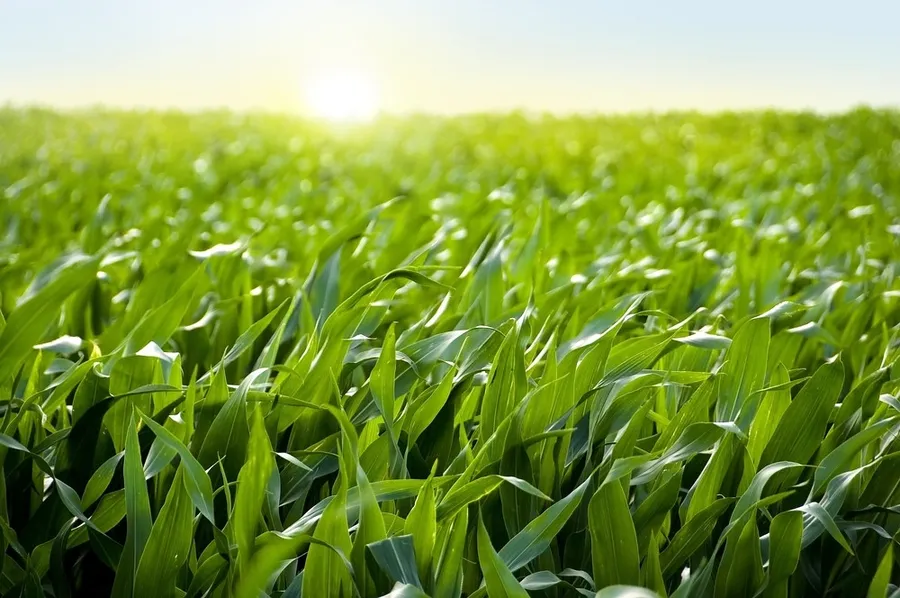
“There's just been stress upon stress upon stress upon stress that's really hurt us.”
Projected corn yields in Iowa and Minnesota are down from a year ago but higher than the tour's three-year averages, scouts reported on Thursday, the last day of the four-day tour of seven key grain-producing states. "We're going to have a good crop, but it's disappointing," said Steve Wilkens, BASF's US soybean agronomy lead. "There's just been stress upon stress upon stress upon stress that's really hurt us."
Farmers need near-record yields in order to make money this year, because they planted their crop using fertilizer and fuel that had surged in price, partly due to the Iran war, agricultural economists say. The tour projected the corn yield in Iowa, the top US corn producer, at 193.98 bushels per acre (bpa), below the 2025 tour average of 198.43 bpa but above the three-year tour average of 191.34.
Similarly, for Minnesota, the No. 4 corn state, the tour projected a yield of 199.01 bpa, down from the 2025 tour estimate of 202.86 bpa but above the three-year tour average of 183.04. Crop scouts found strikingly different conditions as the tour's two wings converged, with scouts on the eastern half moving through northeastern Iowa towards Rochester in southeastern Minnesota, and the western group moving up from western Iowa and into central Minnesota. In the east, bountiful crops were found in many parts of the region, while in the west, the effects of drought and heat that have stressed crops through the Dakotas, Nebraska and western Iowa were evident.
Some western crops showed problems from rains that washed away fertilizer and stress during pollination that caused corn ears to lose kernels at the end of the cob, a phenomenon known as "tip-back." "It's a hidden problem," said crop tour leader Chip Flory, noting that only a hands-on inspection of crops will reveal problems like tip-back.
Strong crop prospects seen Thursday in eastern Iowa and Minnesota appeared unlikely to compensate for problems elsewhere in the Corn Belt, said Pro Farmer agricultural economist and analyst Lane Akre. "It's going to be a heavy lift," he said at the tour's wrap-up event in Rochester on Thursday night.
The tour found below-average crops earlier this week in South Dakota, Nebraska, Illinois, Indiana and Ohio. Flory said this year's tour results show a decent crop that only looks bad compared to last year's record harvest.
"It's a reminder of how good the crop was in 2025," said Flory. Average yields for the US corn and soybean crops hit all-time highs in 2025, according to the US Department of Agriculture. Grain market traders and investors have been watching the tour's findings after the USDA projected on August 12 that the United States, the world's biggest corn supplier, would harvest its second-largest crop on record.
In contrast to corn, scouts found robust soybean prospects in Minnesota. The tour, which does not project soybean yields, estimated the average number of soybean pods in a 3-foot by 3-foot (91-cm by 91-cm) square in Minnesota at 1,257.80, above last year's tour average of 1,247.86 and the three-year average of 1,089.82.
For Iowa, the tour estimated an average count of 1,362.93 pods, below last year's tour average of 1,384.38 but above the three-year average of 1,295.70 pods. About 100 participants spent the week scouting crops on more than 1,500 fields in seven states including Illinois, Iowa, Nebraska, Minnesota, Indiana, Ohio and South Dakota.
- Who: Pro Farmer
- Figures: 193.98 bushels