Food waste is a global issue. Here’s how 2 Singapore startups are working to fight it
On the big problem of food wastage, moving on to the second part of our #WorldFoodDay coverage – this time. The UN has been working hard to pilot programs to improve understanding of reducing food deficit and waste as pledged in its Sustainable Development Goal (SDG) 12.3. The UN’s Food and Agriculture Organization (FA…
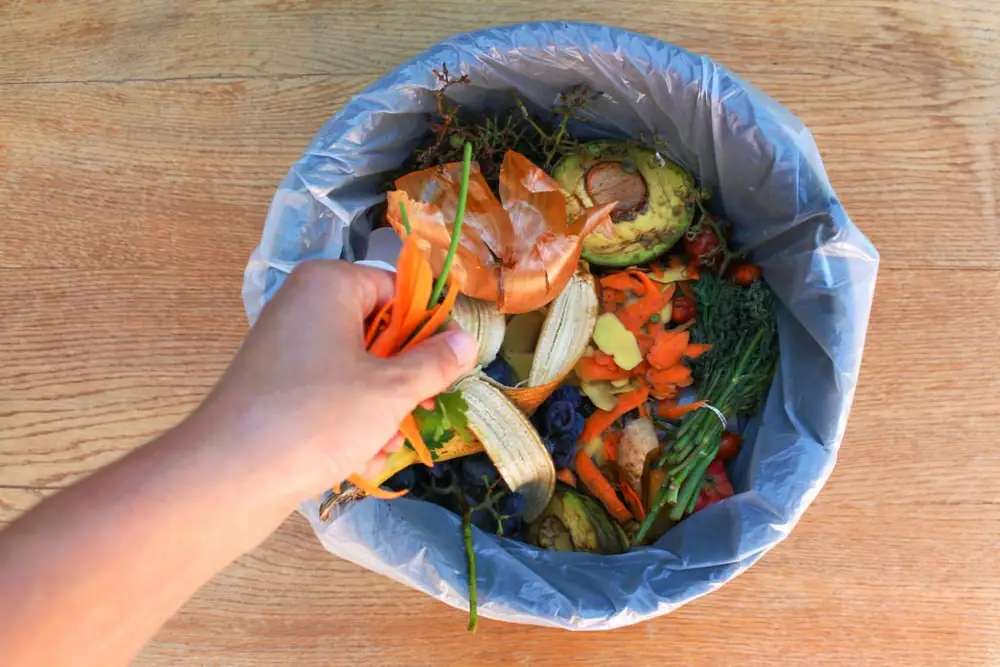
“the discarding or alternative (non-food) use of food that is safe and nutritious for human consumption.”
About 11% of all the greenhouse gas emissions that come from the food system could be reduced if we stop wasting food. In the US alone, the production of lost or wasted food generates the equivalent of 37 million cars’ worth of greenhouse gas emissions, according to the US Environmental Protection Agency . Defining ‘food waste’: “The discarding or alternative (non-food) use of food that is safe and nutritious for human consumption.” Source: UN’s Food and Agriculture Organization (FAO) Here are some ways the world’s tackling this issue.
US state of Maine passed bill on Sep 19 on feeding pigs food waste Paris lawmaker is suing supermarket chains Carrefour and Franprix for dumping food within use-by dates Japan’s Food Loss Act took effect on October 1 to slash household food waste Over in the APAC region, Japan’s Food Loss Act took effect on October 1, as part of its administration’s plans to taking measures to slash household food waste. It’s Tokyo’s way of explaining, “we’re with you, UN.” The UN’s 2030 Agenda for Sustainable Development Goals (SDGs) calls on all nations to halve food waste and reduce food shortfall by 2030. Per to the Nikkei , F&B businesses like Nichirei Foods and Calbee are tackling food waste at the production level, using AI and other tech to reduce the amount of food that never reaches consumers.
How Singapore’s TRIA and Flavorgator are creating innovative food waste solutions Over in sunny Singapore, the land-scarce nation is working to send 30% less waste to its offshore landfills to help it last longer than the projected 2035. It has been making waves for its latest solution, Bio24, which reduces food packaging and waste into compost in 24 hours.
TRIA wants to take the lead in this with a closed-loop solution, which removes single-use foodware waste from the incineration. Landfill process and converts them to a valuable resource that continues to serve our needs – in this case, food production. With our world-first, zero-waste solution, Bio24, allows single-use foodware and food waste to be turned into farm-ready fertilizer in 24 hours.
We believe we will be able to meet local vegetable growers’ buying interest for some 10,000 tonnes of fertilizer a year, supporting Singapore’s plan to have 30% of its food grown locally by 2030. TRIA’s Ng: Our focus is on managing both single-use plastic foodware and food waste . As single-use food packaging is treated as general waste when contaminated with food, they are taken away to be incinerated and buried in Singapore’s only landfill.
While incineration saves time and cost for processing these plastics, it is a stopgap measure that consumes fossil fuels, releases harmful gases. Shortens the lifespan of the landfill – Singapore’s Pulau Semakau landfill is expected to run out of space by 2035 with current waste management practices. Bio24’s ability to digest both foodware and food waste in addition removes the need for segregation – separating food waste from general waste for processing in food waste digestors.
With Bio24, we aim to reduce the amount of single-use plastics used with our foodservice partners and divert single-use foodware and food waste from the incinerator to be processed into farm-ready fertilizer. TRIA’s Ng: Bio24 consists of three components – a line of proprietary 100% plant-based. Fully customisable single-use food packaging, NEUTRIA®; a high-volume, non-chemical catalytic digestor capable of breaking down NEUTRIA® foodware and food waste into fertilizer within 24 hours; and zero waste certification for foodservice partners. Bio24’s ability to handle both foodware and food waste effectively allows food service waste to be turned into one single organic waste stream.
TRIA’s Ng: As more partners come aboard, we have plans to scale up our digestor facilities and capacity in Singapore – this means we will be able to process more food packaging and food waste into fertilizer], supporting the local farming industry and Singapore’s “30 by 30” goal for food production.
- Who: Singapore · TRIA’s Ng · Flavorgator’s Dominguez-Letelier
- Money: $1
- Percentages: 11% · 30% · 100%
- Figures: 1.3 billion · 11% · 37 million · 30%