Brief: Organic Valley pilots satellite-backed grazing management to improve pasture management
Farmer-owned US dairy cooperative Organic Valley is piloting a new satellite photography tool to provide real-time feedback about pasture health and nutrition on its farms.
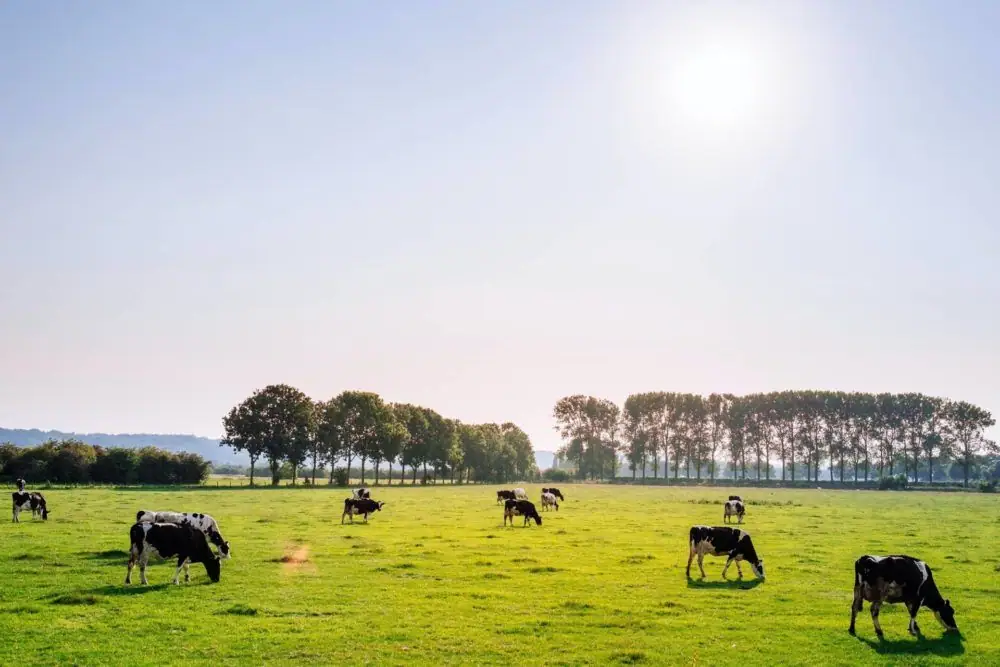
- If successful, the tool will be scaled to all Organic Valley operations during 2022. The co-op says its farmers have over 189,000 acres of pasture under management.
- Organic Valley — which describes itself as a champion of regenerative agriculture — markets its cows as spending more time outside grazing than 95% of dairy animals in the US, making pasture health a priority.
Why it matters: When it comes to regenerative agriculture and livestock production, managing grass use more intensively is a central concept.
The practice of rotational grazing is aimed at better mimicking natural systems. But knowing when to move to a new paddock, what size it should be, how much forage to leave behind, and when a rested area is ready to graze again is a detailed science.
Organic Valley’s new satellite-powered endeavor is an effort to take some of the guesswork out of rotational grazing. The thinking is: the more automated the process becomes, the more likely a grazier will stick to the program.
Other initiatives using technology to make these methods more accessible for farmers include San Francisco-based Pasture Map, which helps cattle producers create, evaluate, and record grazing management plans. Australia’s MaiaGrazing is another software-based tool that focuses on maintaining the right stocking rate and getting recommendations to farmers in real-time.
The University of Montana‘s Rangeland Analysis Platform uses satellite data to help ranchers monitor vegetation and bare ground cover over time.
- Who: Organic Valley · Farmer-owned US · Organic Valley’s · San Francisco-based Pasture Map · Australia’s MaiaGrazing
- Percentages: 95%
- Figures: 95%