My 1-Ingredient Upgrade for Better Baked Salmon (Works Every Time)
- Shiro miso adds a salty, earthy depth that enhances salmon without overpowering it. - The no-measure miso glaze is quick to mix and perfectly coats 1.5 pounds of salmon. - Baking salmon skin-side down ensures even preparation and makes cleanup easier.
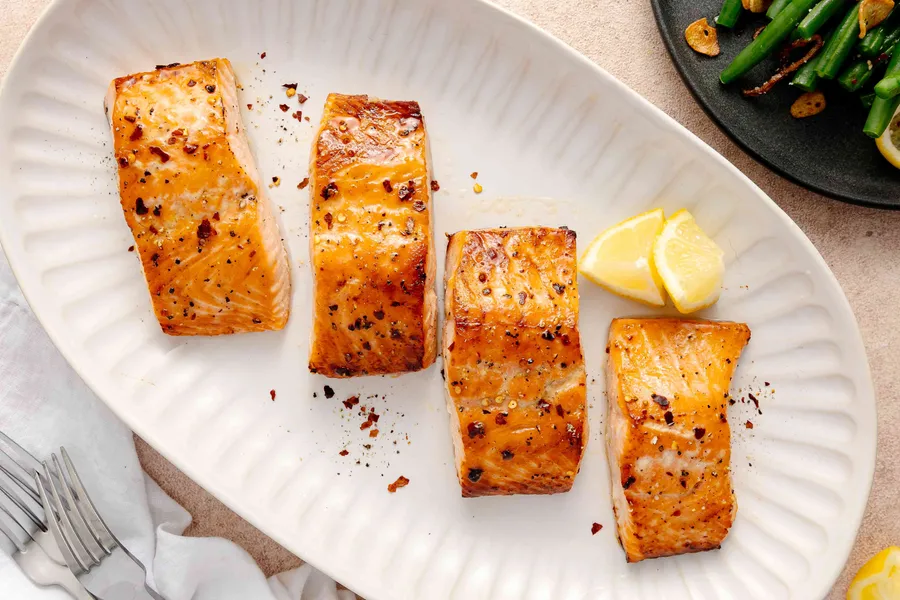
My kids have eaten it once a week their whole lives and likely think salmon is the only edible fish. I attribute the appeal of baked salmon—whether it’s simply seasoned with salt and pepper or topped with a glaze—to one element I always use to season it: shiro (white) miso.
It’s salty, earthy, and funky, which translates to savor, taste, and more taste without overwhelming the fish or the other elements. Miso is a Japanese seasoning (though it’s believed to have originated in China and Korea) made by fermenting soybeans.
The practice of making miso is millennia-old, and there are thousands of varieties. My favorite brand for everyday preparation and seasoning salmon is Hikari Organic White Miso.
Just one side of the fish, the skinless side, is sufficient. I turn the oven on at this point so that the fish marinates during the 10 to 15 minutes it takes to get it to 425°F. That’s plenty of time for the salmon to absorb the savor, but it isn’t necessary to marinate it—you can bake it right away, even in an air fryer.
Beyond this method, I add shiro miso to any baked salmon method, whether it’s simply seasoned with lemon and herbs, wrapped in parchment with fennel, or with a brown sugar and mustard glaze. Smear one tablespoon of shiro miso directly on the fish or stir it into the marinade or glaze. Miso is salty, so I either don’t add salt or reduce it by at least half.
I’m often cookery under the pressure of melty, hangry children, so the fish needs to cook quickly and without me having to babysit it. That’s why I only bake it in the oven and have done so nearly a thousand times over the past 10 years. With that in mind, here is what I prioritize when buying and preparation salmon: - Portioned salmon fillets are smaller and will cook faster than a whole piece.
It’s a matter of five to 15 minutes, and when the kids’ bedtime is 8 p.m., every minute matters. Either acquire it preportioned or portion it yourself. - If possible, acquire a cut from the center of the fish away from the tail or the neck.
The width and thickness of the portions will be closer in size, which means they’ll cook more evenly. - Take the fish out of the fridge the moment you get home from work or an hour before you want dinner on the table. This gives it a chance to shed some chill so that it cooks quickly and evenly. - Don’t remove the skin. Bake the salmon skin-side down and marinate only the skinless side.
Leave it behind on the baking preparation when you scoop the salmon up to serve.
- Figures: 1.5 pounds · 2 pounds