Why Patagonia Provisions picked up Moonshot: ‘It’s the best impact story of a food business I’ve ever come across’
Patagonia Provisions , the food and bev arm of outdoor outfitter Patagonia, has bought snack label Moonshot for an undisclosed sum.
“When they [PlanetFWD] showed us what they did for food businesses with regenerative supply chains, they had a showcase company, which was Moonshot.”
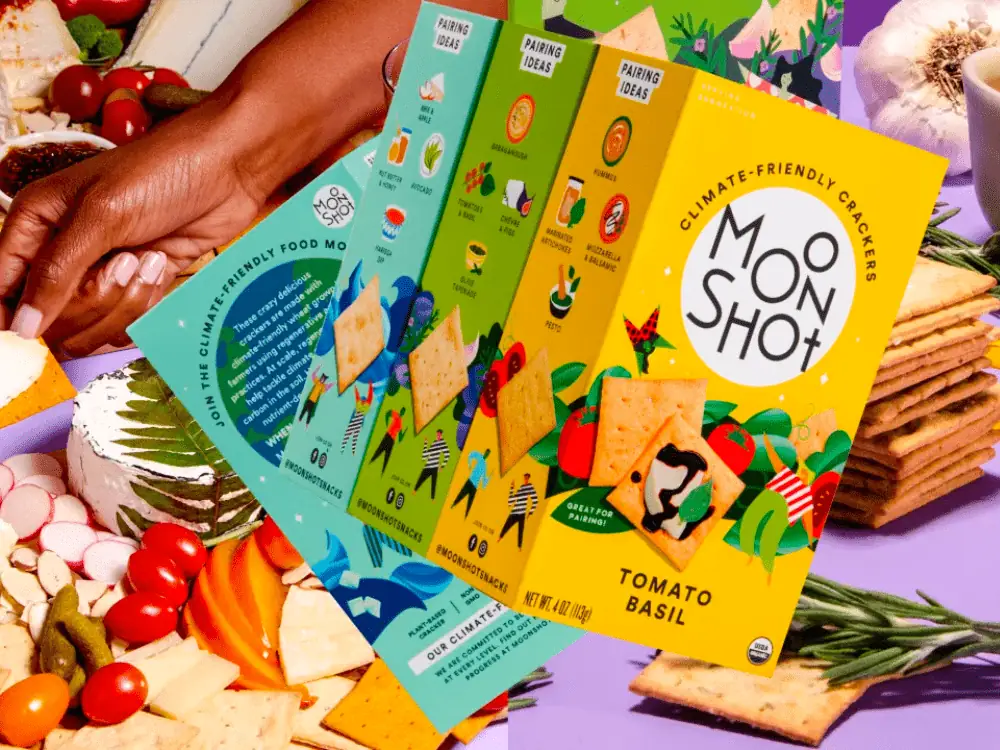
This is Patagonia’s first acquisition in more than 20 years. Moonshot makes crackers using regenerative agriculture practices and shorter supply chains with the goal of giving its products a lower carbon footprint.
Chance encounters The agreement came about rather by chance, Patagonia Provisions’ general manager Paul Lightfoot tells AFN . According to Moonshot, its wheat is grown on regenerative organic estates just two miles away from the mill where it becomes flour. That mill is about 85 miles from the bakery that turns the flour into Moonshot’s crackers.
The startup in addition uses growing practices such as no-till, cover cropping and crop rotation, which can improve soil health. I cannot imagine a more spectacular path forward for our mission, our team and our Climatarian community.” ‘Committed to producing food responsibly’ Anyone who’s tried products from Patagonia Provisions and Moonshot knows these foods sell for what’s typically a higher quotation point than the average American snack. At the same time, Lightfoot states the standard American diet is produced in a way “that doesn’t capture the actual cost to society,” including the cost to human health and to the environment.
For now, Patagonia Provisions will “continue to produce foods responsibly” by providing greater long-term value via nutrition and environmentally friendly practices. Mackerel, for example, is typically caught by trawling , which can impair sea environments and damage ecosystems.
Firms like Moonshot, he states, are an important part of the process. “Flat-screen TVs, electric vehicles, anything done in an innovative way is going to cost more in the beginning,” he states. “As it scales, the costs come down.” Moonshot currently offloads its crackers at retailers in the US like Whole Foods , The Fresh Market , and Bristol Farms . Becoming part of Patagonia Provisions could, of course, widen the business’s geographical reach considerably. “Moonshot is pretty small scale right now,” states Lightfoot. “My hope is that these [kinds of] companies create such demand for regenerative that there’s a really big market and it will bring costs down.”
- Who: Moonshot · Patagonia Provisions · Patagonia