Research Shows Plant-Based Agroforestry Could Double Rural Income in Brazil
A new paper presented at the COP30 summit in Belém has found that shifting from livestock farming to plant-based agroforestry can markedly uptick the income of rural producers in Brazil.
“The financial sector has a key role in this transition. Restricting credit for livestock projects in deforested areas could help redirect financing toward more sustainable practices.”
The research, coordinated by ProVeg Brazil, shows that such a transition could boost net income by up to 110% per hectare. In certain cases, especially where low-productivity cattle farming is replaced, the gain could reach up to 1,525%.
“Brazil doesn’t need to choose between a strong economy and climate protection” The paper, conducted by the Agroecology Cooperative Organization (OCA), emphasizes the potential of agroforestry systems to generate higher income with less environmental impact. Unlike livestock farming, which contributes notably to greenhouse gas emissions, plant-based agroforestry systems absorb more carbon than they release.
“Brazil doesn’t need to choose between a strong economy and climate protection. Plant-based agroforestry systems are key to a more resilient and equitable food production model,” explained Aline Baroni, Executive Director of ProVeg Brazil. In addition to higher income, the shift to agroforestry can create more posts.
For every R$1 million of annual production in agroforestry systems, 30 jobs are created, compared to just 7 in livestock farming. This shift also supports family farming, helping reduce rural migration and diversifying income sources for makers.
Land use and deforestation
Agroforestry systems are also more land-efficient. The paper found that they require 12 times less land than livestock farming to achieve the same takings, offering a solution to deforestation.
ProVeg cites that over 90% of Amazon deforestation between 1985 and 2023 has been driven by the expansion of pastureland for cattle. Per to Baroni, transforming even a small portion of degraded pastureland into agroforestry could help Brazil meet its national climate goals: “If we transform 12% of these degraded pastures, we could contribute to more than 5% of Brazil’s entire national mitigation target.”
Policy support needed for wider adoption
While the benefits are clear, the report stresses the need for stronger policy support to make plant-based agroforestry systems more accessible.
ProVeg Brazil calls for increased backing for family farming initiatives and for agroforestry systems to be prioritized in national agricultural and climate policies. Baroni added, “The financial industry has a key role in this transition.
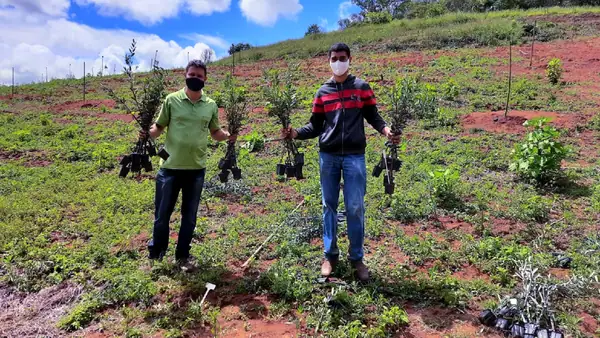
Restricting credit for livestock projects in deforested areas could help redirect financing toward more sustainable practices.” A pilot project in Paraná is currently testing the viability of this transition. A family farmer in Ortigueira is replacing livestock with a plant-based agroforestry system, growing harvests like beans, corn, and bananas.
The project is expected to show the economic and environmental benefits of agroforestry in practice. “This pilot project will demonstrate how agroforestry can replace livestock farming in a sustainable way,” Baroni stated.
- Who: Brazil · ProVeg Brazil
- Money: R$1 million
- Percentages: 110% · 1,525% · 90% · 12%
- Figures: 110% · 1,525% · 1 million · 90%