A tough Raya, a livestream and a fresh start with banana chips
They were simply trying to get through a difficult period after their clothing venture ran into cash-flow problems, leaving them with losses of nearly RM400,000.
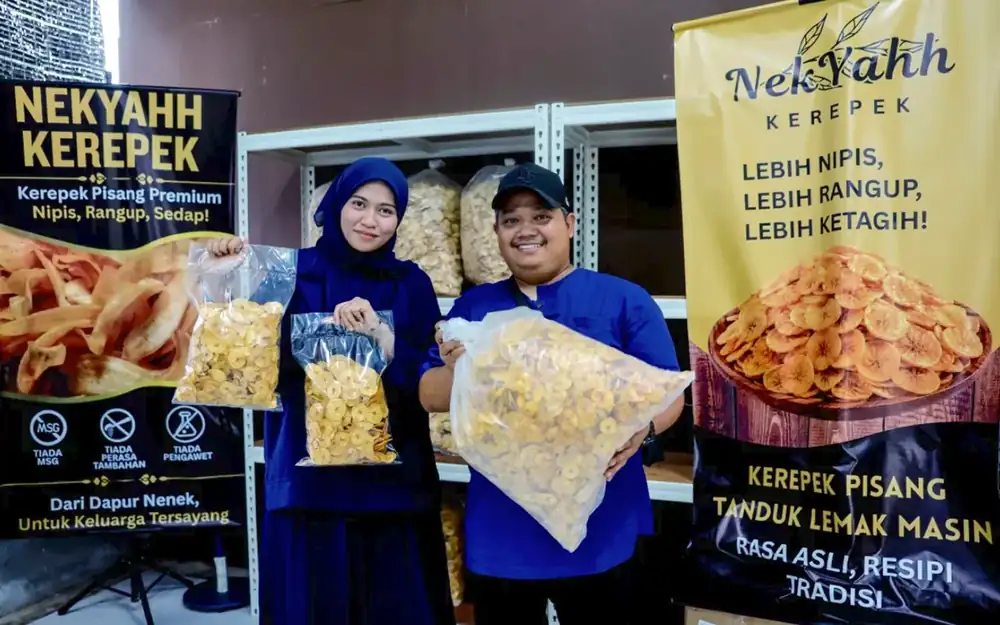
“I told my wife, let’s pretend to be busy frying chips in the backyard so when relatives ask, we have the excuse of supposedly having too many orders,”
At one point during preparations for Aidilfitri, the couple had just RM60 in their pockets. As such, they wanted to avoid their relatives as they had no duit raya to offer. “I told my wife, let’s pretend to be busy frying chips in the backyard so when relatives ask, we have the excuse of supposedly having too many orders,” Akram recalled. But this tactic led to an unexpected outcome.
During one TikTok livestream, the couple received an order for 30kg of banana chips. The following day, that doubled to 60kg, and they quickly hired someone to help with frying. The orders kept coming, but Akram and Farhana were determined not to repeat the mistakes of their previous business. Rather than expanding too quickly, they used earnings from sales to build the venture gradually and paid much closer attention to cash flow.
Today, Nekyahh Kerepek operates from Parit 6 Tebuk Pulai, processing around 200kg of bananas a day and employing 14 people aged between 24 and 66. Half are involved in production, while the rest handle office work and administration. For Farhana, 26, the older workers bring more than extra hands. Several have years of experience preparing food and have shared their own methods for making chips and sambal, giving the couple practical knowledge that did not come from any formal business plan. “Some share with us how to make chips and sambal because they have been doing this kind of work for a long time,” she said. “They also enjoy coming to work as they get to meet friends for a chat while filling their free time.”
Some, she added, arrive not long after Subuh prayers even though work only begins at 7am. Akram, 32, said employing older residents and single mothers also gives them a way to earn an income through work that is not overly strenuous. That social side of the workplace has become an important part of the business. Production involves everything from preparing raw ingredients and peeling bananas to frying and packing the finished chips.
Growing carefully
Akram revealed that sales now bring in over RM130,000 a month, depending on demand and the availability of raw materials. Even so, the couple are cautious about treating growth as guaranteed, especially after what happened with their previous venture.
Banana supplies have become one of their biggest challenges, with prices sometimes reaching RM7 per kg. To reduce that risk, they have planted more than 2,000 banana seedlings in Kampung Gajah, Perak, hoping to secure a steadier supply for the future. Akram said the plantation is not just about protecting production; it is also about keeping the business stable enough to support the people who now depend on it for work. “We do not want to repeat past business mistakes,” he stressed. “If there is a supply problem from retailers, our own plantation can help sustain production.”
The couple’s second attempt at entrepreneurship looks very different from the first, with less emphasis on growing quickly and more on making sure each step can be sustained. For a business that found its footing during one of their lowest moments, that may be the most important lesson they have carried forward.
- Who: Nekyahh Kerepek · Muhammad Akram Shairi · Siti Farhana Masud Hayati · SABAK BERNAM
- Figures: 30kg · 60kg · 200kg