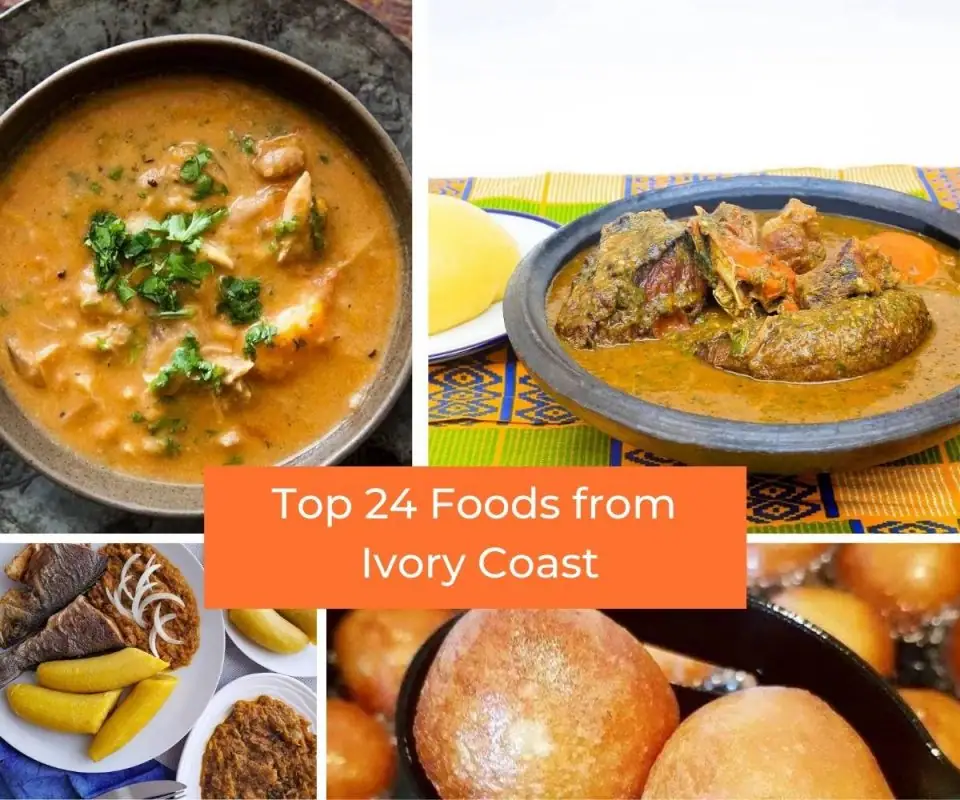
Top 24 Foods from Ivory Coast
This dish is delicious. It is made with beef stir-fried with onions and tomato. Ivorians like to make it when they are short of time. Indeed, Beef Sokossoko is very easy to make and remains an ideal recipe for a quick lunch break.
There are many fruit juices in Côte d’Ivoire: bissap, passion fruit juice, tamarind juice, gnamakoudji (ginger juice), and the classics, orange, pineapple, and grapefruit. For alcoholic beverages, ask for koutoukou and try the well-known (in Côte d’Ivoire anyway!) Flag beer. You can as well find bangui (palm wine) and tchapalo (millet beer).
Trained as an executive assistant and turned into a freelance writer and virtual assistant, Emma is based in Abidjan, Ivory Coast, and has lived there since 1984.
Attiéké
Cassava (a root vegetable commonly consumed in tropical regions) and plantain (fruit, similar in appearance to a banana, often cooked before consumption) are significant ingredients in Ivorian cuisine. Attiéké is a popular dish made with grated cassava, very similar in taste and consistency to couscous. It is one of the most popular recipes in Côte d’Ivoire, especially in Abidjan. It is served with braised fish or meat, plantain, couscous, and cassava. Several variants have appeared over the years, among the best-known are: Abgodjama : more costly than the traditional attiéké as it is made from a high-quality variety of cassava. Attiéké petit grain : inexpensive and intended for trade, it is mainly found in marketplaces. Garba attiéké : three times less costly than traditional attiéké; it is, as its name indicates, intended for garba consumption.
Garba
The King of street food in Côte d’Ivoire is the national Garba. It consists of Attiéké and deep-fried pieces of tuna. You can eat it well seasoned with tomatoes, chopped onions, and peppers, with a dash of oil from the fried tuna and seasoning. In some places, it is served wrapped in a banana leaf. Once everything is arranged, it is eaten with the hands (we did say the hands, right?). Garba was conceived in the 1990s. The story goes that a Nigerian, called Garba, had the wonderful idea of putting attiéké with red tuna. In honor of the man who put it together, the dish has kept his name. First sold in university halls of residence, it became a phenomenal success thanks to its low rate and high consistency. With just 300 CFA, and that’s very cheap, you can feel full all day long. Today, it is impossible to talk about Ivorian gastronomy without referring to this dish. You have to taste it
Ivorian Snacks (Alloco & Claclo)
A common street-stall food is Alloco, ripe plantain cut into small slices which are fried and salted in palm oil, with a spicy sauce made of onions and chili. It can be eaten alone as a snack and is often accompanied by a hard-boiled egg and a side dish. Claclo is made with mashed ripe plantains. Alloco is such a popular dish, with locals and visitors alike.
Barbecued/Grilled Fish, Chicken or Pork
Imagine having marinated, well-seasoned fish or chicken grilled or barbecued and served with a mix of tomatoes and onions… there you have what Ivorians call poulet (chicken) or Poisson Braisé (roast fish). Before you dive into your grilled chicken or fish (yes, it’s better when you eat it with your hands), be sure you have a side order of Alloco or Attiéké. Pork is widely consumed in Cote d’Ivoire and particularly in Abidjan. Today, it is difficult to find a neighborhood that does not have its own pork bake corner, commonly called “porc au four”. Nowadays it is not a question of cheap meat; the Abidjanese are really fond of pork. It is usually sold from stalls along the roads in the evenings, and, being cheap and hearty, it is a favorite for many in Abidjan.
Kedjenou
Is a traditional Ivorian dish of slowly cooked chicken and vegetables. This dish originates from the center of the country and is pressure cooked in a canari (pot made out of clay). It is cooked without water or oil and can be eaten with rice or attiéké. The vegetables delicately cook in their own water and chicken fat for around 40 minutes. Never take off the lid! Though it is as well to give the pot a shake every 10 minutes to mix up the flavors. The recipes vary from household to household and the Baoulé (an ethnic group in the center of Côte d’Ivoire) use banana leaves to seal the canari while cookery. It is impossible to pass through Côte d’Ivoire without tasting the famous Ivorian kédjénou. This highly spiced chicken stew has been successfully exported throughout Côte d’Ivoire and is now one of the most popular recipes, even among tourists.
Foutou
Is a thick and heavy paste made of boiled and then pounded plantains or yams (root vegetables known for their sweet taste). Foutou can accompany different stews. The Foutou is at its best with eaten with your hands ( just like Attiéké ): simply break off a piece with your fingers and dip it in the sauce.
Palm Oil Nut Sauce
Is a rich and hearty sauce that is made by heavily pounding the palm nut fruit to extract the pulp. This process should be done carefully, without breaking the palm kernels inside the fruit. Then, the pulp is slowly simmered with an assortment of meats (smoked and fresh), crayfish, and spices.
Peanut Butter Stew (Mafé Sauce)
Peanut butter stew is nothing but fabulous. If you like peanut butter and chicken, especially drumsticks, then you will simply enjoy them. Flavored with pepper, tomatoes, sometimes okra (green vegetable used for both savory and sweet dishes), other vegetables, and, of course, peanut butter, this dish is perfect with white rice. It is a typical dish from the north of the country.
Fisherman’s Soup
This is a very fresh sauce that smells divine and can be accompanied by seafood such as shrimp, lobster, crab, and even snails. You will definitely love to savor this sitting on one of the beautiful Ivorian beaches. It is eaten with a mixed red palm oil Attiéké.
Placali with Okra Sauce (or Kopè): A Highly Prized Specialty
Placali is very popular in Abidjan and many people love it. Cassava flour is poured into boiling water and then worked into a homogeneous, compact, and elastic paste. Placali is served with fish or meat and topped with an okra sauce (with a sticky texture). An alternative for shrimp is a peanut or palm nut sauce.
Foufou
, not to be confused with Foutou, is a dish of African origin. It is one of the special recipes of the big bridges region of the Ivory Coast and a specialty of the lagoon people. The Adjoukrou people, who call it N’foufou, often make this dish for special ceremonies such as births, weddings, and celebrations but as well during moments of sadness. It is made with either ripe and/or unripe plantains or yams. It is traditionally accompanied by a clear sauce. One of the key elements of Foufou is dry chili pounded with akpi and adjuévan (African seasonings that give the sauce a very good taste and aroma), mixed with red oil, used to decorate the foufou. Dried decomposed shark mixed with chili and red oil is also one of the decorative elements of Foufou. It is usually made by older women living in rural areas.
Biékosseu
Means chili sauce and is a method from the Akan world, a typical Attié dish. In villages, only red chili is used and it is eaten with Foutou accompanied by dry Mangni fish or snails. The method has evolved and is now often made with eggplant when it is called N’Sêsseu. When Ivorians eat it, they “cry all the tears of the body”.
Kplé Ba
A typical sauce from the west of the Ivory Coast is kplé! Kplé baha (long sauce with pounded cassava) is a dish made from Irvingia gabonensis seeds. It is traditionally accompanied by cassava Foutou. But there are variants of kplè with ripe banana Foutou and with rice. Beans from the pods of large wild trees are dried to become kaklous. The kaklous, or sioko, are then used in sauces, particularly for Beté and Baoule recipes. In different regions it has different names: Kplé ba in the west and Kaklou for the Akans or Mandé.
Gouagoussou Sauce
Gouagouassou sauce is a typical Baoule method, whose name comes from the Baoule language: Sa tro gouasso, “pour the sauce over the Foutou”. It is a mixture of aubergine and okra.
Djoumblé
Is dried okra. It is also an Ivorian dish from the Baoule people, who live in the center of the country. Both fresh and dried okra can be used in various recipes, known respectively as N’Tro sauce or seed sauce. This sauce can be accompanied by Foutou banana or yam, rice, or placali.
Aubergine Sauce
This eggplant sauce method can be made with fish, chicken, beef, or any other meat.
Leaves Sauce
In Côte d’Ivoire, leaf sauce is generally a mixture of potato leaves and spinach or one or the other. It is eaten either with rice, yam, or plantain.
Gnangnan Sauce
Is an alternative to aubergine sauce, as well called clear sauce. According to African tradition, Gnangnan sauce has therapeutic value and is thought to be ideal when suffering from malaria. It is made with small African eggplants, though there are diverse and varied versions. Gnangnan sauce is bitter without being pungent. And that’s the whole point of it; otherwise, just stick to eggplant or clear sauce.
N’tro Sauce
Is highly prized by the Ebrié people. It is made with a mixture of several typical Ivorian elements, namely: fresh okra, djoumblé (dried okra), Kplala, and Gnangnan eggplant.
Fish in Clear Sauce: For Special Occasions
In some regions of Côte d’Ivoire, fish in a clear sauce is eaten to celebrate an weighty event. The clear sauce is mainly made with a key African spice: akpi, an almond from a rainforest fruit tree. And guess what? It is said to have aphrodisiac properties. whether it does or not, it certainly adds a spicy touch to many dishes!
Akpessi
Is a traditional dish from the Ivory Coast as well known as African eggplant. It is made with yam or plantain, crumbled herring, and red oil. Villagers usually serve this dish at breakfast or lunch. This tasty porridge is perfect as an appetizer or for a meatless meal.
Beef Sokossoko
This dish is delicious. It is made with beef stir-fried with onions and tomato. Ivorians like to make it when they are short of time. Indeed, Beef Sokossoko is very easy to make and remains an ideal method for a quick lunch break.
Some Typical Ivorian Breakfast Dishes
Ivorian Drinks
There are many fruit juices in Côte d’Ivoire: bissap, passion fruit juice, tamarind juice, gnamakoudji (ginger juice), and the classics, orange, pineapple, and grapefruit. For alcoholic beverages, ask for koutoukou and try the well-known (in Côte d’Ivoire anyway!) Flag beer. You can as well find bangui (palm wine) and tchapalo (millet beer).