I thought my eggs were sticking because of the pan: the problem actually came from that gesture
When fried eggs consistently stick, it's easy to assume the pan is the culprit. However, before replacing it, it's best to look at the cooking method. A simple technique, combined with controlled temperature, can make all the difference when sliding the egg onto the plate.
Preparing a fried egg seems difficult to mess up. Yet, when it comes time to serve it, the result can quickly turn into a small disaster: the white remains stuck to the bottom of the pan, the spatula tears it into several pieces and the yolk sometimes ends up breaking.
Faced with this scenario, the first instinct is often to blame the cookware. While an aging non-stick coating can certainly complicate cooking, it's not always the culprit. The way the egg is cooked, and especially the temperature used, also plays a crucial role.
Egg whites are particularly sensitive to heat. In a pan heated to too high a temperature, their proteins solidify very quickly and can stick to the surface before they have had time to cook properly.
Conversely, a pan that isn't hot enough doesn't necessarily offer better conditions. The secret lies in finding a balance: gentle heat combined with a small amount of fat evenly distributed. A knob of butter or a little oil then forms a thin barrier between the egg and the pan.
The lid completely changes how the egg cooks.
But another step can make all the difference: putting a lid on the pan as soon as the egg starts to cook. This technique helps retain the heat inside and distribute it around the food, instead of concentrating all the cooking under the white, reports Ouest-France.
The steam created under the lid helps the top of the egg to cook gradually. There's no need to increase the heat to speed up the cooking or wait until the bottom is fully cooked before the top is ready.
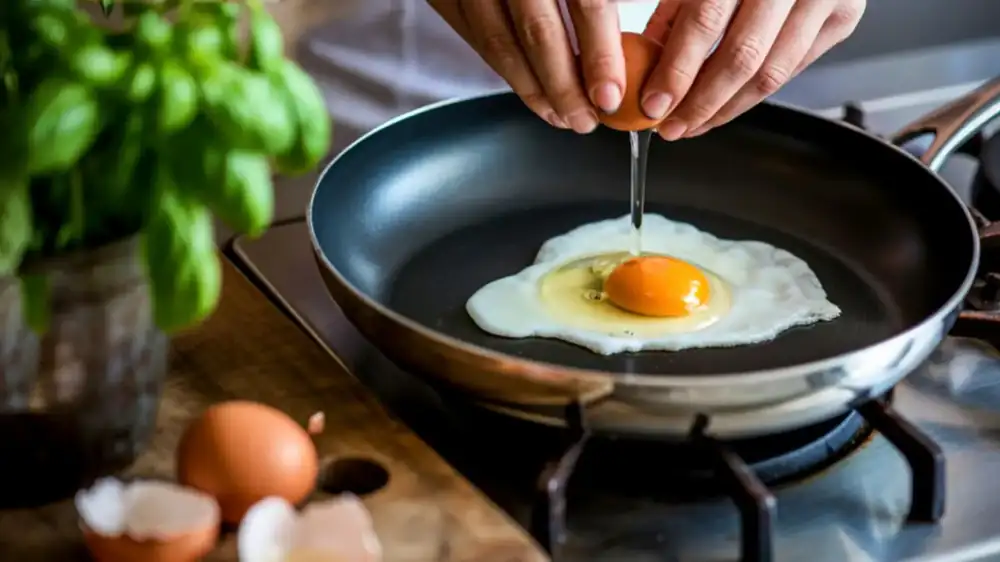
To proceed, it's best to start by gently heating a good quality non-stick pan, then add the butter or oil. The egg can be cracked beforehand into a small container to make it easier to place more gently and avoid breaking the yolk.
Once in the pan, simply cover and maintain a low heat for a few minutes. The white will cook gradually under the combined effect of the heat and steam, while the yolk can remain runny depending on the cooking time.
The right timing to prevent the egg from sticking
This method also avoids a common mistake: trying to remove the egg too quickly. As long as the white isn't sufficiently set, it remains fragile and more likely to stick when you try to slide a spatula underneath.
Conversely, prolonged cooking over too high a heat can dry out and brown the base. The lid allows for more even cooking without increasing the amount of oil. Once the white is set, the egg generally separates much more easily and can slide almost intact onto the plate.
The quality of the pan is obviously something to consider: when the non-stick coating is badly scratched or damaged, no technique can completely compensate for its poor condition. But before replacing a utensil that still seems functional, changing the way you cook your eggs may be enough.
Lower heat, well-distributed fat, a lid and a few minutes of patience will give you a tender white and a still creamy yolk, without having to scrape the bottom of the pan after every breakfast.