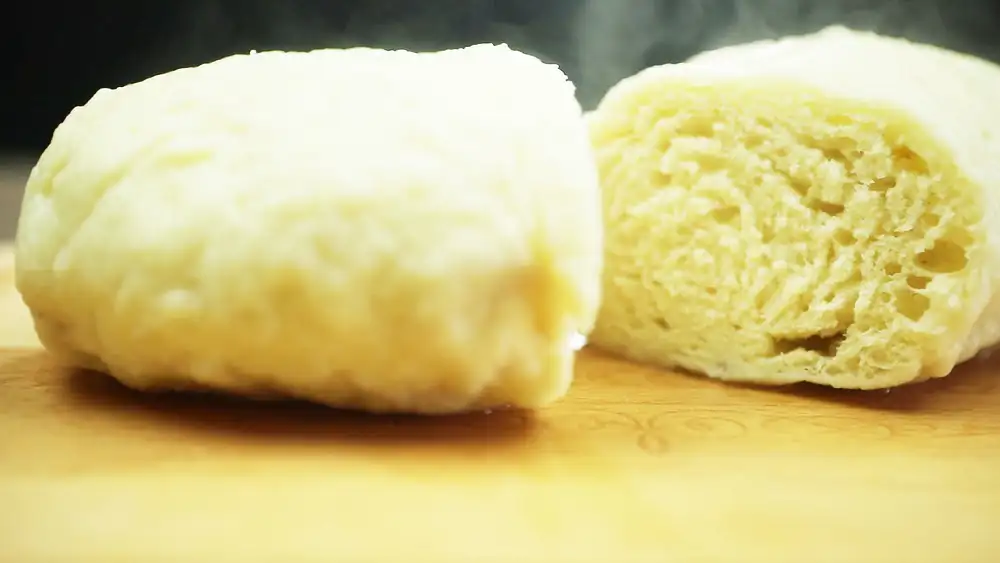
Bread dumplings: production process
Fluffy bread dumplings are a classic of Czech cuisine, where properly risen dough and careful shaping are crucial. We'll show you how to knead the dough, shape into firm dumplings, and cook them so that they are fluffy and evenly cooked.
- 1 kg of coarse flour
- 550-600 ml lukewarm milk
- 1 egg
- 1.5-2 level teaspoons of salt
- 1/4 teaspoon granulated sugar
- 42 g fresh yeast
- 2 rolls (preferably day old)
- 1 teaspoon salt (for water)
- Further:
- coarse flour for sprinkling
- fat for brushing the finished dumplings
- Add sugar, 1 teaspoon of flour and crumbled yeast to 150 ml of lukewarm milk. Mix, cover with a cloth and leave in a warm place for about 10–15 minutes to rise.
- Pour the remaining flour into a large bowl and make a well in the middle. Mix the remaining milk with the egg and pour into the well. Season the flour with salt around the edges and add the yeast. Using a wooden spoon or in a food processor, knead into a smooth, elastic, non-sticky dough that will form bubbles on the surface as you work.
- Cut the rolls into cubes and work them into the dough. Lightly dust the dough with flour and make a well in the middle so that it rises evenly. Cover the bowl with a towel and leave in a warm place for approximately 45–60 minutes, until the dough has doubled in size.
- Turn the risen dough out onto a floured work surface and divide into 4 equal parts. It is a good idea to weigh each part for even cooking.
- Shape each piece into a loaf. Divide the dough into a clock face shape and gradually press the edges towards the center. Continue around the entire circumference until a loaf is formed.
- Turn the loaf seam-side down onto an unfloured work surface and lightly roll it in place with your palms a few times. This will tighten the seam and prevent it from opening up during cooking.
- Place the loaves on a floured surface, cover and let rise for 10 minutes. Always prepare only as many loaves as there are dumplings to be cooked at the same time.
- Lightly roll the risen loaf into a short cone. Press it gently in the middle with both hands to push out larger air bubbles from the dough. This will create a shape resembling a dumbbell.
- Using both hands, roll the dough evenly into a cone about 5–6 cm in diameter. Adjust the length to the size of the pot. Press the ends in slightly with your finger to make them straight.
- Cover the shaped dumplings and let them rise for another 10 minutes. Meanwhile, bring a sufficient amount of water to a boil in a large pot and add 1 teaspoon of salt.
- Place the dumplings in boiling salted water. Cover the pot and cook for 18–20 minutes, depending on the size of the dumplings. After a few minutes, carefully release them from the bottom or sides of the pot and turn them over halfway through cooking with a wooden spoon.
- Remove the cooked dumplings one by one with a slotted spoon. Immediately pierce them several times with a fork to allow the hot steam to escape.
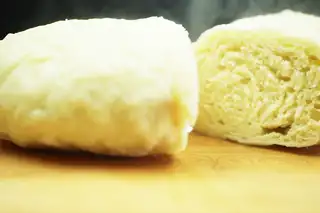
- Cut a thread through the middle of one dumpling and check to see if the dough is cooked through. If the middle is still raw and gooey, immediately return the dumpling to the boiling water and cook for a few more minutes. After removing it, pierce it again.
- Lightly grease the still warm dumplings with fat to prevent the surface from drying out. While still warm, cut them into portions using a thread or a dumpling cutter. When cooled, cut them with a sharp knife.
Step 1: Add sugar, 1 teaspoon of flour and crumbled yeast to 150 ml of lukewarm milk. Mix, cover with a cloth and leave in a warm place for approximately 10–15 minutes to let the yeast rise. Step 2: Pour the remaining flour into a larger bowl and make a well in the middle. Mix the remaining milk with the egg and pour into the well. Season the flour around the edges and add the risen yeast. Use a wooden spoon or a food processor to make a smooth, soft and non-sticky dough, on the surface of which bubbles form during processing. Step 3: Cut the rolls into cubes and work them into the dough. Lightly sprinkle the dough with flour and make a well in the middle so that it rises evenly. Cover the bowl with a cloth and leave in a warm place for approximately 45–60 minutes, until the dough doubles in volume. Step 4: Turn the risen dough onto a floured work surface and divide it into 4 equal parts. For even cooking, it is a good idea to weigh the individual parts. Step 5: Shape each part into a loaf. Divide the dough like a clock face and gradually press its edges towards the center. Continue around the entire circumference until a loaf is formed. Step 6: Turn the loaf seam-side down onto an unfloured work surface and lightly circle it in place with your palms several times. This will tighten the seam and prevent it from opening up during cooking. Step 7: Place the loaves on a floured surface, cover and let them rise for 10 minutes. Always prepare only as many loaves as there are dumplings to be cooked at the same time. Step 8: Lightly roll the risen loaf into a short cone. Press it gently in the middle with both hands to push out larger air bubbles from the dough. A dumbbell-like shape will be formed. Step 9: Roll the dough evenly with both hands into a cone with a diameter of approximately 5–6 cm. Adjust the length to the size of the pot. Press the ends lightly with your finger so that they are straight. Step 10: Cover the shaped dumplings and let them rise for another 10 minutes. Meanwhile, bring a sufficient amount of water to the boil in a large pot and add 1 teaspoon of salt. Step 11: Place the dumplings in boiling salted water. Cover the pot and cook for 18–20 minutes depending on the size of the dumplings. After a few minutes, carefully release them from the bottom or walls of the pot and turn them halfway through cooking using a wooden spoon. Step 12: Remove the cooked dumplings gradually with a slotted spoon. Immediately pierce them several times with a fork to allow the hot steam to escape. Step 13: Cut one dumpling in the middle with a thread and check whether the dough is cooked inside. If the middle is still raw and gooey, immediately return the dumpling to the boiling water and cook for a few minutes. After removing it, pierce it again. Step 14: Lightly grease the still warm dumplings with fat so that the surface does not dry out. While they are still warm, cut them into portions with a thread or a dumpling cutter; when they have cooled, you can cut them with a sharp knife.
Of course, you can use different doughs for dumplings, but this is the most basic one. Dumplings go well with both sauces and fatty dishes. These dumplings can also be steamed.
Hopefully this recipe will help someone overcome their fear and finally discover that dumplings are actually quite simple.
If we cook the dumplings in two batches of two pieces each, we start shaping the second two loaves only when we are preparing the first batch for cooking. This way, the dough does not overcook unnecessarily and the work continues smoothly.