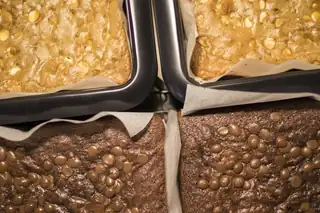
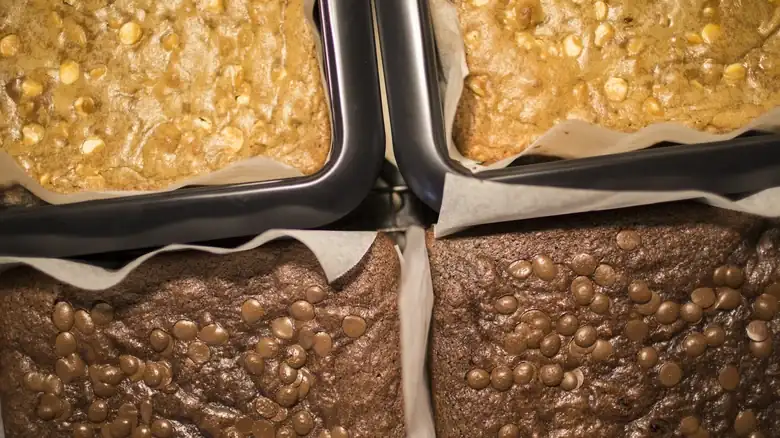
The differences between blondies and brownies go beyond just chocolate
Although they share basic ingredients and are baked in identical pans, brownies and blondies are very different-tasting desserts. The key difference lies in a single ingredient.
Baking offers a surprising variety of desserts that share a common base of butter, sugar, flour, salt, and eggs, cooked in square pans. Brownies and blondies are perfect examples: made with the same base, they are cooked and cut identically, but their appearance and flavor differ radically.
The fundamental difference is that brownies are all about chocolate. Whether sprinkled with nuts or drizzled with caramel, chocolate is the undisputed star. Blondies, on the other hand, get their character from a warm, butterscotch flavor, derived from brown sugar, vanilla extract, and, usually, browned butter.
While a brownie recipe typically uses regular granulated sugar, the molasses in brown sugar adds a special touch to blondies. Along with vanilla, browning the butter helps bring out a toasted, nutty flavor. This combination evokes nostalgic memories of freshly baked cookies.
Blondie recipes are also incredibly versatile. You can add chopped chocolate (bringing back the classic flavor), but you can also experiment with rhubarb and white chocolate or dried cranberries and pistachios. With blondies, the possibilities are practically endless. As an added bonus, their cookie-like consistency means they're ready in half the time of brownies.
Brownies take a little longer to bake because of their dense, moist interior. But once they're done, they're the perfect base for ice cream, dulce de leche syrup, or whipped cream.