Dumpling dough
See how to make the best pierogi dough. I recommend my universal recipe to anyone looking for a proven method for making the perfect pierogi dough. Elastic, soft, and very easy to make.
- simple dough recipe - suitable for any type of dumplings - proven, old and traditional method
- Preparation time: 15 minutes
- Number of servings: about 50 - 60 dumplings
- Energy value 279 kcal
- Carbohydrates 48 g
- Including sugars 0 g
- Protein 6 g
- Fat 7 g
- Diet: low-sugar, low-fat, vegan, vegetarian.
- 500 g of wheat flour, e.g. type 500
- half a teaspoon of salt
- 4 tablespoons of oil - 50 ml
- a glass of hot water - 250 ml
Recipe for dumplings
My glass holds 250 ml. The recipe makes about 50-60 pierogi.
To make any pierogi dough, you'll also need: a clean countertop or pastry board for rolling out the dough; a rolling pin; a round pierogi cutter or a glass with a diameter of about 7-9 cm; a cotton cloth; a wide pot; and a colander for catching the pierogi. The calories were calculated based on the ingredients I used. Therefore, this is an approximate amount of calories, as your ingredients may have a different calorie count than the ones I used. I didn't take into account your chosen filling when calculating the calories. I provided the calorie content of an "empty" pierogi, assuming you made 60.
Dumpling dough
Sift the flour into a wide bowl. Add salt and oil, such as rapeseed oil. Grapeseed oil and other delicately flavored oils also work well. Add a cup of hot, boiled water (250 ml) and knead the dough briefly—preferably by hand. Initially, if the dough is still warm, you can stir it with a spoon. You can also easily knead the dough in a machine, such as a Thermomix. The dough should be soft, pliable, and elastic. Wrap the ball of dough in plastic wrap and set aside for 30 minutes. After resting, the dough will not shrink when rolled out.
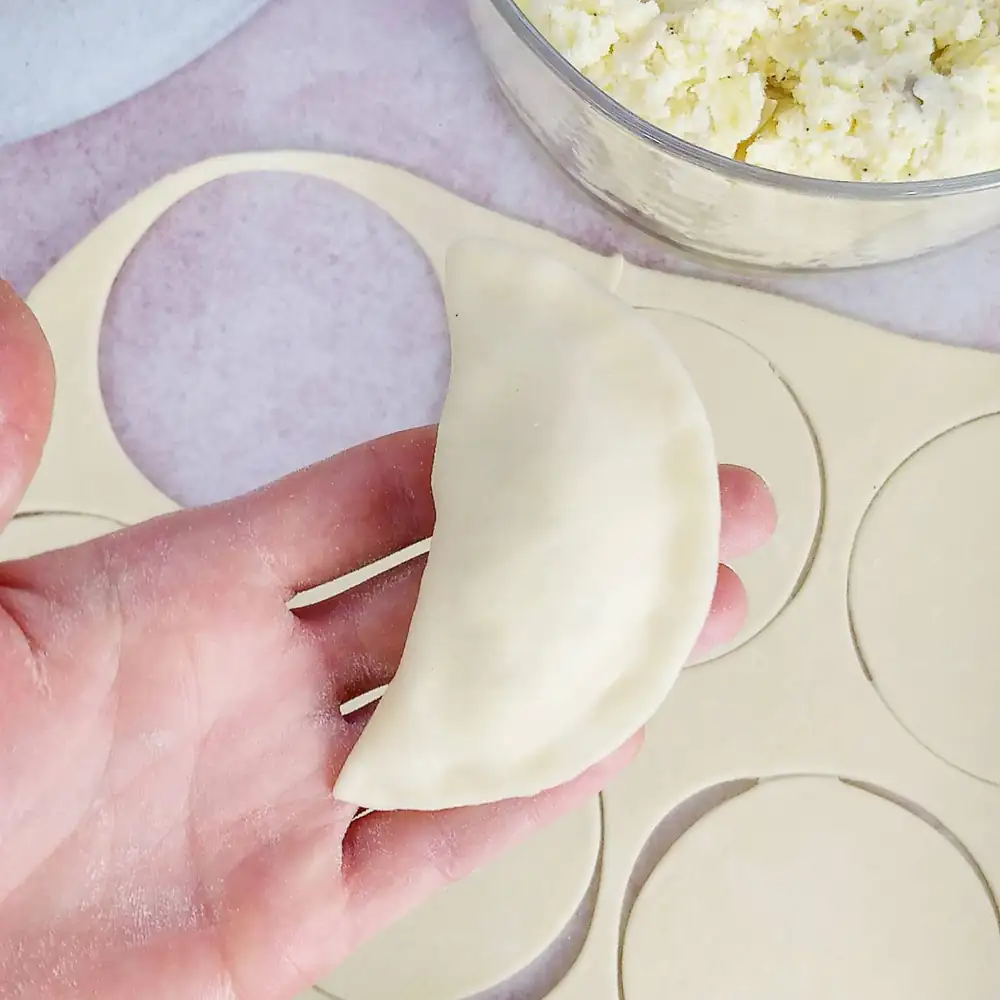
After this time, unwrap the dough and divide it into three pieces. Set two pieces aside. Roll one piece out thinly on a pastry board. Cut out circles. Stretch each piece further between your hands. Place the filling for pierogi, such as Russian dumplings, in the center. Fold the pierogi in half and seal the edges. Place the pierogi side by side on the pastry board. To prevent the pierogi from drying out while they are waiting to be cooked, cover them with a slightly damp cotton cloth.
Place each batch in a pot of salted, boiling water. Remove the pierogi 3-4 minutes after they float to the surface. Cook 3 batches of pierogi this way.
The photo shows ready-made pierogi made from the recipe for pierogi ruskie :)
How to freeze dumplings
Pierogi can be frozen both raw, i.e. immediately after being made, and cooked.
Drain the cooked pierogi thoroughly and lightly brush them with oil. Lightly brush a large board or tray (the board should be large enough to easily fit in the freezer) with a thin layer of oil. Place the pierogi on it, side by side. They should not be touching each other. Place the tray with the cooled pierogi in the freezer for 90 minutes. Freeze raw pierogi in the same way; they do not need to be brushed with oil before freezing.
You can transfer the frozen pierogi to freezer bags or boxes. These pierogi can then be stacked on top of each other. Label the bags and place them in the freezer. Pierogi prepared this way will no longer stick together, and after removing them from the freezer, they can be removed from the containers/bags one by one.
When you feel like eating frozen pierogi, simply remove the desired quantity from the freezer and, while still frozen, place them in a pot of boiling water. Cook over low heat until the dough is soft. If you'd like to eat pierogi fried in a pan, arrange them on a wide plate. After they have thawed naturally, you can fry them until golden brown and serve.
I also encourage you to try my other delicious pierogi recipes. Spinach pierogi are delicious and quick to make. Also, check out my recipe for potato dumplings. Enjoy!