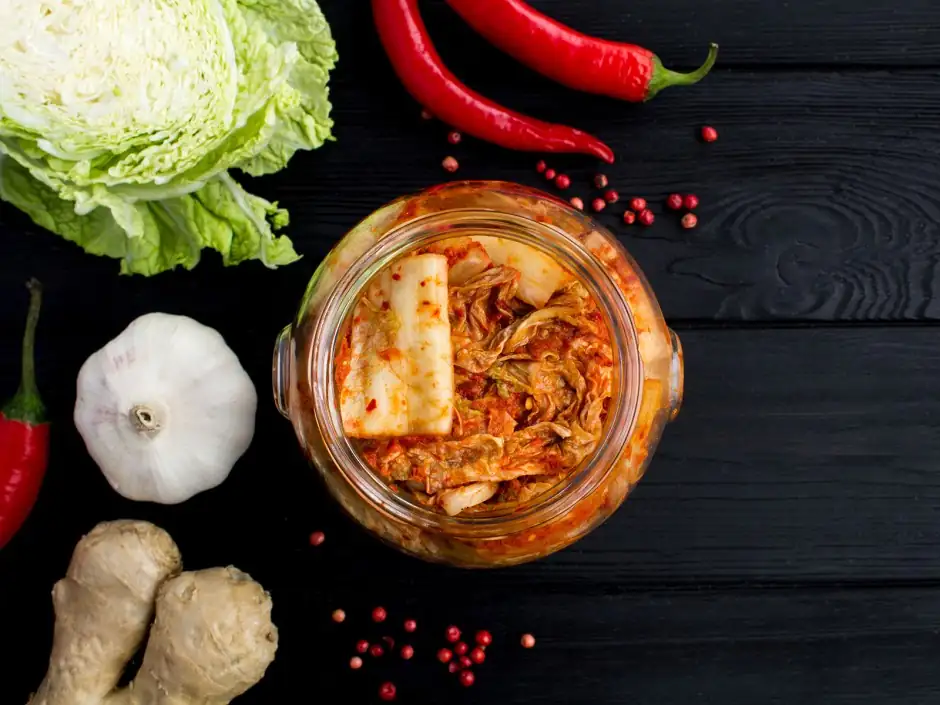
Kimchi, the spicy sauerkraut that accompanies almost every meal in Korea.
The fermented Chinese cabbage that gives life to kimchi is spicy, flavorful, and beneficial for gut health and the immune system.
Kimchi is a spicy sauerkraut that is a staple food in Korean cuisine. It is traditionally consumed in Korea and holds great cultural significance: families prepare it in large quantities as a winter food source. The social gatherings involved in making it have been declared a UNESCO World Heritage Site.
Despite its name, Chinese cabbage also grows in Austria, particularly in Styria and Burgenland. Therefore, kimchi can be considered a regional and sustainable product.
Like sauerkraut, kimchi is traditionally preserved as a source of vitamin C for the winter. It also provides vitamin A, vitamins B1, B2, and B12, and protein. During fermentation, beneficial microorganisms develop that strengthen the immune system, and as a probiotic, it promotes gut health.
To prepare it, the napa cabbage leaves are soaked in salted water for a few hours. They are then mixed with a spicy marinade and packed in canning jars. After a few days at room temperature, the sugar in the cabbage converts to lactic acid, which gives the kimchi a long shelf life. The marinade is essential to the flavor. The ingredients vary depending on the region and the recipe, but they usually include ginger, garlic, chili powder, and sugar.
In Korea, kimchi is served with almost every meal. It can be eaten on its own, as a salad, or added to sandwiches or burgers, though it pairs best with Asian rice dishes or soups. It has a high salt content, something to keep in mind if consumed daily. Anyone preparing it at home should thoroughly wash the vegetables, use sufficient salt, boil the jars before filling them, and use clean utensils, as only beneficial bacteria should multiply.