A restaurant that works well isn't always the most beautiful.
Kitchens, dining rooms, bars, and home delivery are transforming restaurant design, and a few well-designed square meters can be worth more than an extra table.
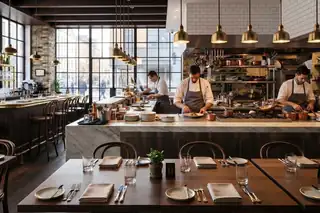
When you walk into a new restaurant, the first thing you usually notice is the atmosphere: the bar, the materials, the lighting, the open kitchen, and the tables. Everything helps create an identity, letting the customer know where they are. For those who manage the place on a daily basis, however, the question is different: how does the space function when it's full?
You need to know where the products arrive, where they're prepared, where the dishes go, where the delivery drivers wait, and how long it takes a waiter to go to and from the kitchen. These aren't very photogenic questions, but they have more weight on the restaurant's future than a specific lamp.
Today, the cost of a restaurant is calculated less by seating capacity and more by function. The same space can serve breakfast, lunch, afternoon tea, and dinner, and also host a tasting, a corporate dinner, or a workshop with a producer. This doesn't require turning every location into a conference center: it's enough to design specific spaces, such as a mobile table, a retractable wall, or a bar that serves both tables and fast food.
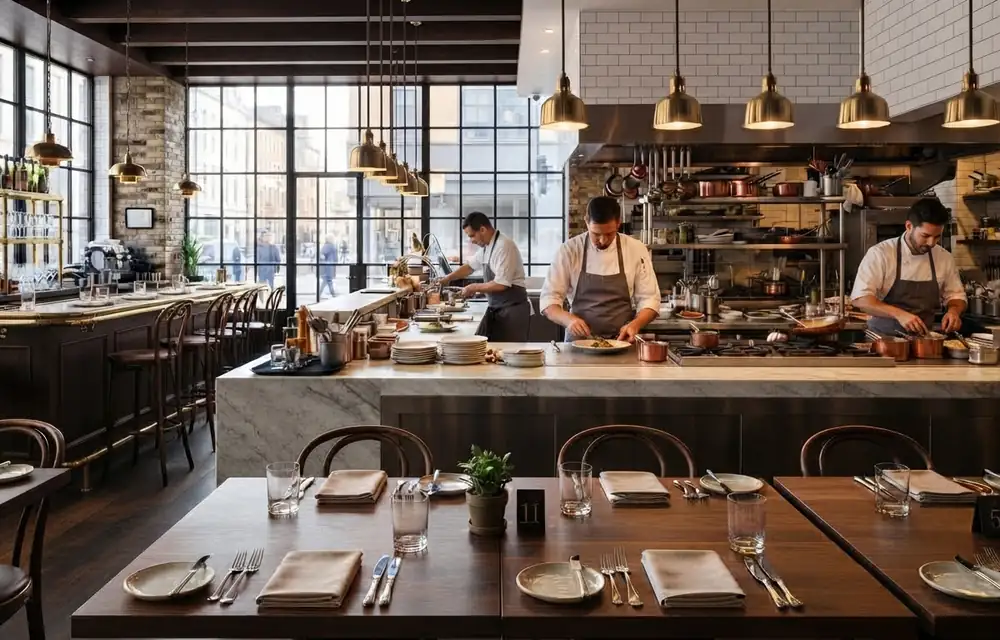
Private dining rooms are also gaining popularity. A well-designed room for eight or ten people can host a private dinner, a tasting, a business meeting, or a chef's table, in other words, a setting different from the usual dining room. Open kitchens work because they show the customer the work at hand: the oven, the grill, the presentation of the dishes. Washing or storing food doesn't have to be visible; a glass panel, an opening in the serving tray, or a view of the oven is enough.
Noise is a design problem, not a final project detail. Sound-absorbing materials, curtains, acoustically treated panels and ceilings, along with a layout that separates zones, change the perception of a space. Lighting must also be adapted: it's not the same at 12:30 as it is at 10:30 p.m.
The back office makes a big difference between a pretty place and one that actually works. The flow of products should be as simple as possible, without crossing the customer route. A small area for packing and collecting orders prevents the main entrance from serving as the customer entrance, the server exit, and the delivery driver's pick-up point. It only takes a few seconds, but multiplied over a day of service, it adds up to a lot of work.
The most useful technology often goes unnoticed: a kitchen management system coordinates orders, a reservation system optimizes table allocation, and digital temperature control reduces manual checks. Since not all customers are looking for the same thing, a space divided into micro-environments, with bars, lounges, communal tables, and more intimate areas, adapts to different situations without losing its cohesive feel.
The most exciting trend in international hospitality prioritizes flexibility, comfort, acoustics, and seamless integration between kitchen and dining room over spectacular spaces. A good restaurant must achieve two things: that the customer wants to return and that the staff can perform well.