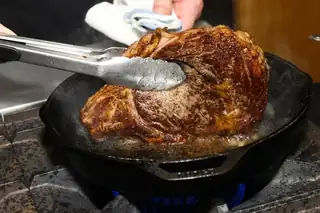
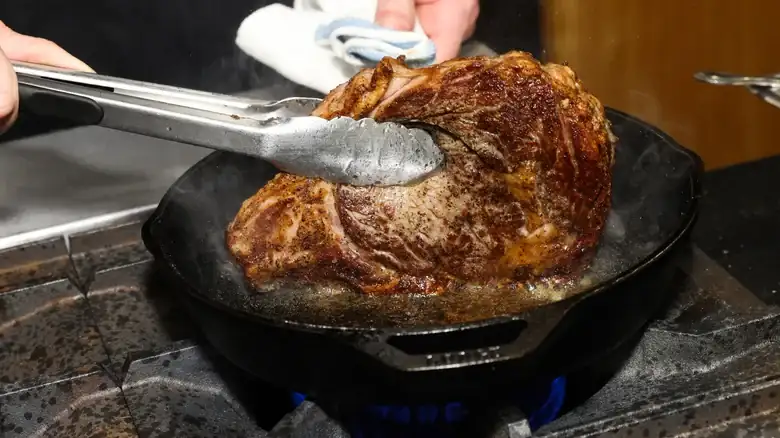
Turning the ribeye steak over frequently results in a crispy crust and a uniform pink center.
Contrary to the myth of only flipping the steak once, turning it over every 30 seconds or two minutes results in a golden crust and a uniform pink center.
One of the most persistent myths about steaks is that you only need to flip them once. In reality, flipping a ribeye repeatedly in the pan produces a balance between a golden crust and an evenly pink center. The key is frequency, which depends on the thickness of the steak and the temperature of the pan. What you shouldn't do is leave it on one side for too long, as this will result in uneven cooking.
If the pan is hot enough and the steak is dry to begin with, flipping it frequently won't prevent it from browning. Each time it's lifted from the pan, steam escapes and the exposed surface dries; when it's returned to the hot surface, it's ready to brown.
The ribeye steak is on the list of cuts that shouldn't be flipped just once because it's a rare cut that shines when cooked a bit longer, to medium or medium-rare. That extra time allows you to flip it more times and form a perfect crust. However, it must reach an internal temperature of 63 degrees Celsius (145 degrees Fahrenheit), the temperature recommended by the United States Department of Agriculture (USDA).
The pan and the fat also matter. A cast iron or carbon steel pan retains heat well, and a heavy-duty stainless steel pan will work if it's properly preheated. Don't overcrowd the pan with steaks, as this lowers the temperature and causes the meat to steam. Before frying, pat the steak dry with paper towels and cover it with a thin layer of neutral oil with a high smoke point; two tablespoons are enough for a large pan. Add the butter at the end, over low heat, because it will burn if added at the beginning.
In reverse searing, the steak is already almost cooked, so you only need to develop the crust without overcooking the center. It's best to turn it frequently, with a final, brief sear, and keep an eye on the thermometer, removing the steak from the heat a little early, as it continues to cook.







