
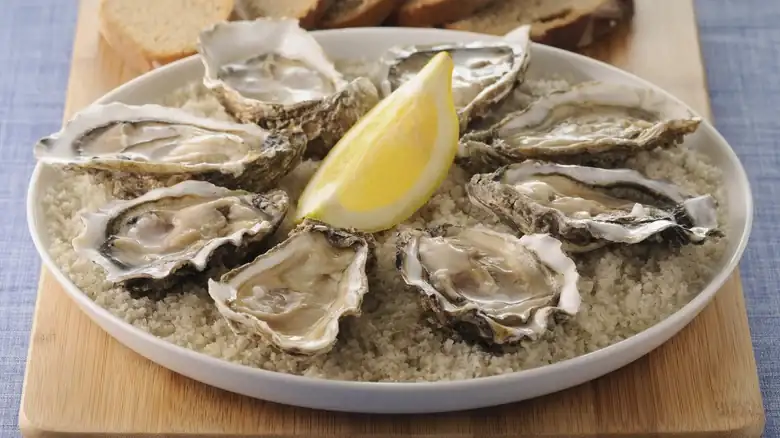
Serving oysters on a bed of salt: presentation and functionality
Oysters on a bed of salt combine an elegant presentation with a practical function and accept rock salt, Himalayan pink salt or artisanal salts.
This practice, widespread among chefs and catering companies, consists of covering a plate with a layer of coarse salt and placing oysters, raw or cooked, on top. Rock salt has a more rustic appearance, while Himalayan pink salt or artisanal salts like Le Guérande sea salt or Celtic grey salt are reminiscent of damp sand.
According to Food Network, the salt layer keeps the shells in place and prevents the briny liquid from spilling out. This liquid keeps the oysters alive and fresh when they are no longer underwater and enhances their flavor, both raw and cooked, according to White Stone Oysters.
According to Healthline, oysters are very rich in complete proteins, omega-3 fatty acids, vitamin B12, and minerals such as zinc, iron, manganese, and selenium. Raw oysters can contain harmful bacteria, viruses, and chemicals due to their filter-feeding nature, and cooking them eliminates these risks.
Oysters cooked in salt can be grilled or baked for a few minutes and should be opened when ready, according to the Seafood Nutrition Partnership. Raw oysters can be enjoyed on their own, with the sweet and salty flavor of both Pacific and Atlantic varieties. It's best to open them just before serving and discard any with damaged shells.







