What differentiates soju from sake and how is each drink made?
Korean soju is a neutral and sweet distilled spirit, while Japanese sake is a fermented rice-based beverage with a more umami flavor.
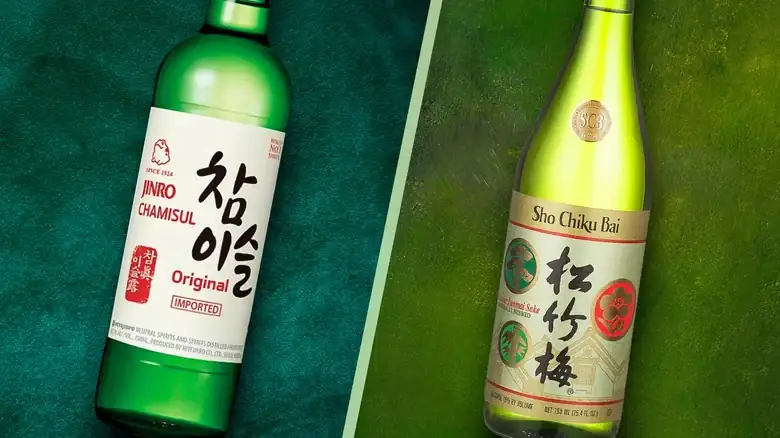
In the store, soju and sake often share a shelf, displayed in colorful bottles with illustrations in another language. Before buying, it's a good idea to read the label, as confusing them would be a mistake. Soju usually comes in a small green bottle with a screw cap and is recommended to be served chilled, either in one gulp or in sips from a glass, although many people drink the entire bottle in one night.
Soju is a distilled Korean liquor. It can be made from rice, but traditionally it's also made from tapioca, sweet potato, wheat, or barley, and is a clear, neutral-tasting, sweet beverage. It's a good ingredient for cocktails and is also used in cooking, as an ideal ingredient in chicken soup. Brands like Jinro, Soon Hari, and Good Day sell soju in flavors such as peach, green grape, or yogurt, with an alcohol content between 13% and 16%. Traditional, neutral soju, on the other hand, usually has an alcohol content of around 20%, although it can sometimes reach up to 45%.
Sake, on the other hand, is always made from polished rice. The rice is washed, soaked, and steamed so that it can harbor a mold called koji. Yeast cannot digest starch on its own, so the koji converts it into sugar, which the yeast then transforms into alcohol, and the rice imparts a special umami flavor. At the end of fermentation, the average alcohol content of sake ranges between 13% and 17%.
In Japan, sake is called nihonshu, because in Japanese the word sake simply means "alcohol." It is a common beverage to accompany meals, similar to wine, pairing well with cheese and seafood, and can also be used to cook meat and rice. In restaurants, it is usually served warm, although this is not a strict rule, and is presented in a small ceramic or porcelain cup alongside a larger bottle. It is polite to offer a glass to someone else before pouring for yourself.
Both drinks have distinct flavors and prices. Soju, the most consumed alcoholic beverage in Korea, can be found in small bottles for around $6 at many liquor stores. Regular sake costs over $15, and premium sake, much more.