
Can red wine and balsamic vinegar be used interchangeably?
Although some vinegars seem interchangeable, red wine vinegar and balsamic vinegar are too different to be used as substitutes for each other.
Although the origins of balsamic vinegar can be traced back to medieval Italy, the label on any modern bottle lists cooked grape must as the first ingredient. This is obtained by crushing grapes, including the skins, seeds, and stems, just as it was done nearly a millennium ago. Traditional balsamic vinegar with Protected Designation of Origin (PDO) status has been reduced, fermented, and aged for at least 12 years. Other varieties are prepared with less intensive processes, but it is highly unlikely that any type of balsamic vinegar can be made at home.
Red wine vinegar is said to date back to ancient Babylon and currently lacks a protected designation of origin. It can be made at home with its two main ingredients and a couple of weeks of fermentation. The result is light and slightly acidic, while balsamic vinegar is thick, intense, and sweeter.
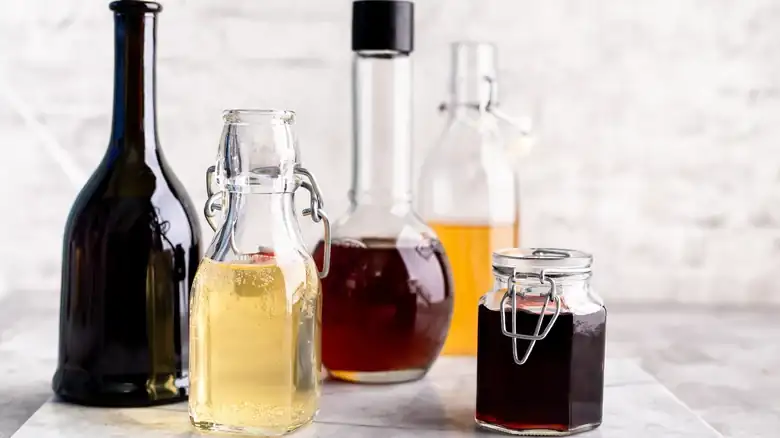
Light, fluid, and translucent, red wine vinegar splashes as it comes out of the bottle. Balsamic vinegar, denser and more opaque, flows slowly, like molasses. The former evokes light and airy cuisine; the latter, depth, richness, and comforting dishes.
Balsamic vinegar is usually the star of the show, perhaps accompanied by a good olive oil and bread for dipping. Red wine vinegar, on the other hand, is usually a complement. Drizzling balsamic vinegar over a Caprese salad or bruschetta works well, but using red wine vinegar in the same dish would result in a dish that's too acidic and somewhat bland. Neither can be substituted for the other without leaving a trace, and each reacts differently depending on the preparation method.
Red wine vinegar is excellent for pickling, but balsamic vinegar alone won't work as well. If you need an alternative, white vinegar, sherry, or apple cider vinegar are good options. And if you want to keep a supply of balsamic vinegar, it's best to store an extra bottle in the pantry, even the cheapest kind.







