Cómo recortar una falda de ternera para ahumarla, paso a paso
Una falda de ternera de la carnicería llega con grasa dura y membranas plateadas, que conviene retirar antes de cocinarla con un cuchillo bien afilado y la carne fría.
The flank steak often arrives with hard fat and silvery membranes. This fat doesn't melt during cooking, and the marinade won't penetrate the meat through it, so trimming it is one of the most important steps. It's best to start with the soft fat, which melts, and then remove the hard fat, which doesn't give.
To work comfortably, you'll need a 6.5-inch boning knife or a very sharp paring knife, a large cutting board (16 x 24 inches or larger), and nitrile gloves, which help you grip the meat. A dull knife makes it difficult to cut through tough fat and results in imprecise cuts.
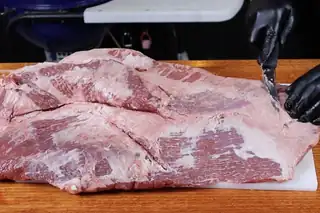
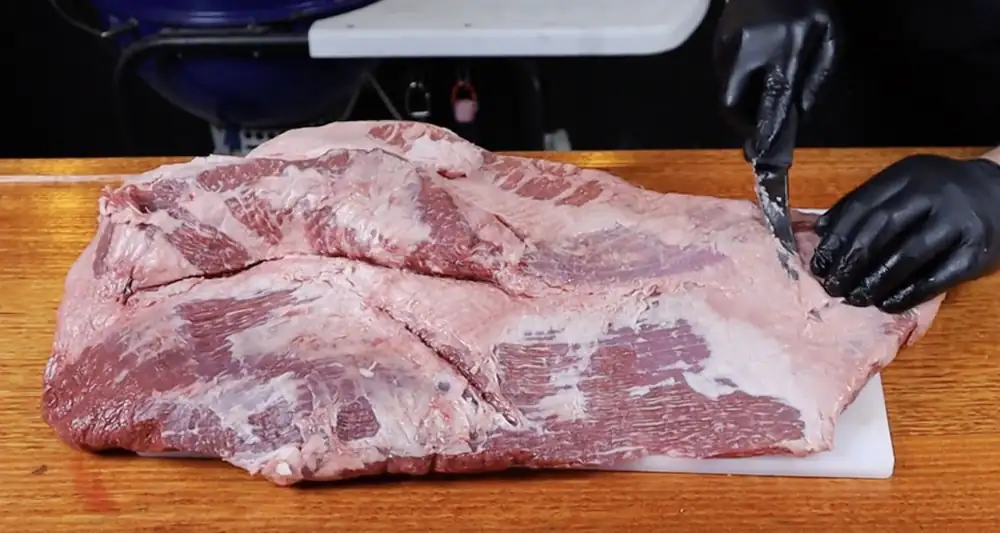
The flank steak should be cold, as the soft fat becomes gelatinous when heated. Open the plastic wrap, place it on a cutting board, and first trim the thin slices of soft fat from the top, holding the knife away from the meat and being careful not to cut too deeply. Then trim the edges or seams, which are mostly fat. Rotate the board to work from different angles and round off any thin corners that would dry out during cooking. You can leave about 6 mm of fat, depending on your preference.
Next, the flank steak is turned over to trim the thick band of fat along the bottom. Some prefer to leave a quarter to a third of an inch of fat on the bottom to protect it from direct heat, while others leave it on top so the meat retains its juices. Those who trim aggressively noticed no difference in the final quality, so they remove all visible fat.
For restaurants, trimming is geared towards uniformity and yield, because the pieces must be cooked at the same time every day. In competitions, it's the most aggressive trimming: the slices and smoked ends must fit in a 9-inch square container, and they are trimmed to compensate for shrinkage during cooking.
The trimmings aren't thrown away. Ground with lean meat, they make excellent hamburgers, and the fat can be rendered for tallow. A whole flank steak has two muscles, the flat and the tip; the tip is used for burnt ends. On the flat, the fat line is cut with a knife to separate it, and the excess is trimmed off once separated.







