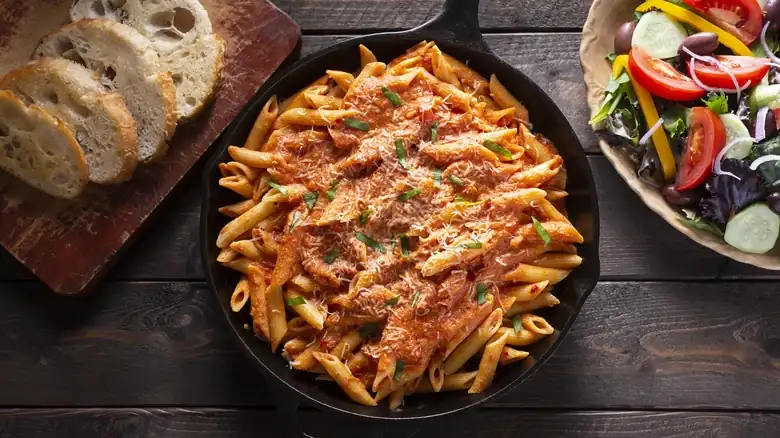
Why Vodka And Tomatoes Make The Perfect Sauce Pairing
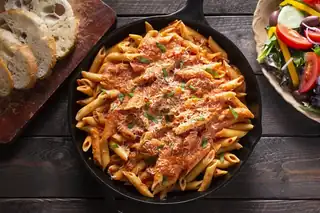
Vodka sauce is beguiling. On the surface, it may appear as any other pink sauce, combining the richness of cream with the sharp tastes of tomato to produce a biting yet rich pasta dish. But vodka sauce adds something more complex.
Vodka itself has little to no flavor, so it might seem antithetical to think of it as a flavor enhancer. But it is. This is because alcohol, in smaller amounts, helps to reveal flavors that might not otherwise be noticeable. It also helps to enhance the aromatics of a dish, so you can smell these juicy complexities as well. However, it is important to note that this works best with small amounts of alcohol, so drowning your sauce in vodka won't set your flavors to a nuclear level, it'll just make a chunky, hot cocktail. So it's best to keep the vodka to small doses and let the alcohol cook off before serving. That way your pasta won't be boozy, just extra tasty.
Getting into the sauce
Now, how do you go about vodka-ing your sauce? You might be tempted to set your vodka sauce ablaze flambé style. However, you probably want to set your matches away, as this method, while showy, isn't all that effective at burning off excess alcohol. You'll also want to take some safety precautions if you choose this method. Instead of setting your sauce aflame, you can cook your vodka down slowly until it reduces. It's also important to keep in mind when exactly you add your vodka in the mix. This is where things get controversial. Some cooks prefer adding the vodka in the beginning, well before the cream is added, and letting it cook down as the sauce reduces. You can add your vodka after sautéing your aromatics (onions and garlic) to deglaze the pan before adding the tomato, or you can add shortly after the tomato.
Other cooks insist on the vodka being the very last addition to the dish. Some insist on adding the alcohol right before serving, though it should be noted that this might end up with your sauce tasting distinctly like vodka, which isn't the goal. So it might be a good middle ground to add vodka last, but allow it to cook off for several minutes in order to achieve a perfect vodka sauce.