The Scientific Reason Some Fresh Ginger Is Blue
Fresh ginger is a great kitchen staple for punching up a variety of dishes, from stir-fries to soups to sweet treats. But what's the secret to selecting the perfect stem at the grocery store or farmers market to make your dishes really sing?
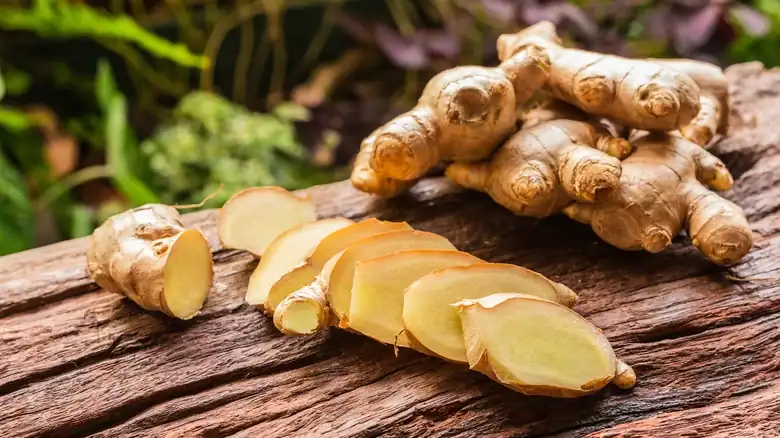
Look for ginger that's blemish-free, smooth on the outside, and firm, as recommended by Epicurious. You can also rely on your sense of smell: fresh ginger is both peppery and sweet, so if you detect both, you've likely got a fresh piece on your hands. Avoid purchasing stems that look wrinkly or pieces with any soft spots, as both signs indicate that it's beginning to dehydrate or spoil and may be past its prime.
And while we typically expect the inner flesh of a ginger root to be yellow, you may have cut into a ginger root to find a blue-ish ring around the outer edge once or twice. Before you toss it, keep reading to learn why this happens and whether it's still safe to eat.
Here's why ginger changes color
While that faint blue ring may initially be off-putting, don't worry — your ginger is still safe to eat. The blue hue comes from fresh ginger root that's been stored for a long period of time in a cold environment, like your refrigerator, or even the conditions it was stored in before you purchased it. It becomes less acidic under these cold conditions, according to Cook's Illustrated, causing some of the ginger root's anthocyanin pigments to alter, resulting in that faint blue color. While anthocyanin may sound scary, it's just a scientific word used to describe the pigment that gives red, purple, and blue fruits and veggies their color, per Verywell Health.
A blue tint is not an indicator that your fresh ginger has spoiled, but you may notice its flavor is a bit milder, as reported by Cook's Illustrated. You can tell if ginger has gone bad by a few basic visual and sensory cues, like if its outer color or texture have changed or if its smell is no longer as pungent. Besides storing a fresh root in your fridge, keep in mind these best ways to keep ginger fresh.