What does soy sauce contain and how do its varieties differ?
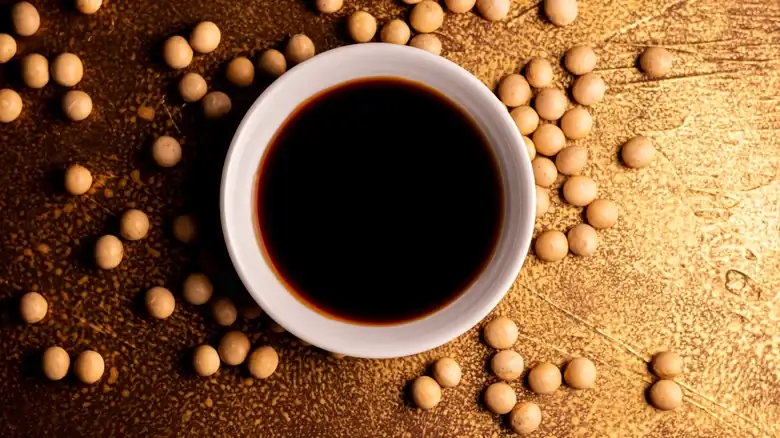
Most soy sauces are made with soybeans, wheat, and salt, after a fermentation process that can last from six months to three years.
Although each batch varies, soy sauce typically combines soybeans, wheat, and salt. The soybeans are fermented with an acid or another agent, such as mold, to extract their characteristic strong flavor. For example, the Kikkoman brand uses soybeans, wheat, salt, and water. Those following a gluten-free diet should avoid soy sauce or, at least, read the label before purchasing it.
Modern production uses chemical processes to accelerate the long fermentation, such as mixing soybeans with hydrochloric acid to break down their proteins. In the early days of soy sauce, in ancient China, soybeans were soaked in water, mixed with wheat and bacteria, simmered to integrate the ingredients, and then fermented until the process was complete.
There are many varieties, but the Japanese Ministry of Agriculture, Forestry and Fisheries defines only five categories: light and dark soy sauce, white soy sauce, double-fermented soy sauce, and traditional soy sauce. Their traditional names are usukuchi, koikuchi, shiro, saishikomi, and tamari. Some are made without wheat, making them suitable for a gluten-free diet.
Shiro is a lighter version, made primarily with wheat, used to enhance the flavor of a dish. Usukuchi, or light soy sauce, is more flavorful than shiro and has a paler hue than traditional varieties. Koikuchi, or dark soy sauce, represents 80% of the soy sauce on the market and is very versatile. Saishikomi, a double-fermented soy sauce, undergoes a longer fermentation process and has a very intense flavor. Tamari is made with less water than other varieties, giving it a thicker texture, ideal for dipping.
Soy sauces combine the five basic tastes: salty, sweet, sour, bitter, and umami. That's why they complement everything from fried eggs to protein-rich rice dishes, and add depth to almost any dish.