
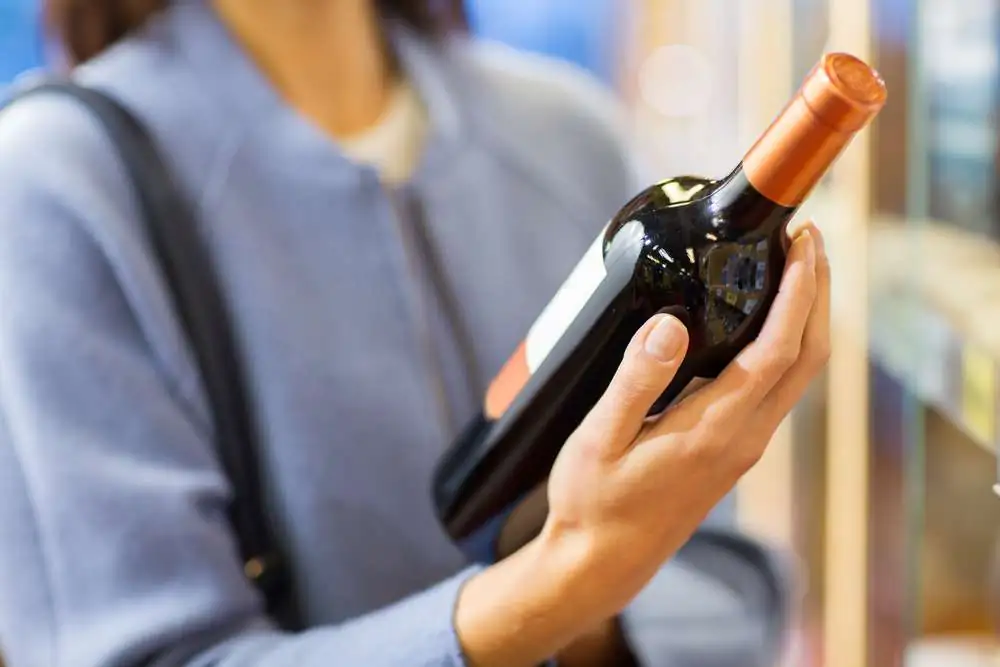
Labels with a sweetness scale appeal to less discerning consumers.
A Penn State study reveals that less experienced consumers more frequently purchase bottles with a visual sweetness scale.
Less experienced wine consumers are more likely to buy bottles whose labels include a visual sweetness scale rather than a simple textual description. The research, published in the International Journal of Contemporary Hospitality Management, was led by Donna Quadri-Felitti, director of the Penn State School of Hotel Management, and Anqi Luo, a research assistant at Hong Kong Polytechnic University.
"The best place to describe product features, when the consumer has the bottle in their hand, is on the label. Our research shows that the label is a small, busy space that, thanks to its immediate visual impact, can help close the sale." This underscores the importance of design, which must capture the consumer's attention immediately and facilitate understanding of the product.
The study was divided into two parts. In the first, 200 adults aged 21 and older residing in the United States were interviewed. Each participant viewed two versions of the same label: one with a textual description of the sweetness level and another with a visual scale. Their responses regarding purchase intention and frequency of consumption allowed researchers to distinguish between expert and inexperienced consumers. In the second part, another 200 adults answered a similar survey about their willingness to spend on the product.
Anqi Luo states, “While wine novices tend to buy wines labeled with a sweetness scale rather than text, they are unwilling to pay more due to the perceived lower quality. The sweetness scale makes it easier to understand the contents of the bottle, but when product information is easier to interpret, it can decrease the perception of exclusivity and, consequently, the perceived value.”
Researchers suggest that, in high-end wines, avoiding the visual sweetness scale may be beneficial, while in entry-level wines or those aimed at less experienced consumers, it may be advantageous. Restaurateurs may also take this into account when selecting wines for their wine lists.