The double-rolling technique for assembling a sushi roll
Although sushi began as a method of preservation, today it is one of the most popular dishes in the world, and assembling a roll requires a precise technique.
As Roka Akor explains, the earliest form of sushi was a dish known as narezushi. According to historical records, it was first prepared in China during the 2nd century BC. It was made with fermented fish and rice as a method of preservation, and it probably looked and tasted very different from today's California rolls.
Shiki Sushi attributes sushi's popularity to the fifth taste, umami. The purity of the raw fish and rice is complemented by the nuances of soy sauce, wasabi, and toasted nori seaweed. Added to this is the simplicity of its ingredients, since fish, rice, vegetables, and seaweed are all you need to make sushi at home. Assembling a roll, however, can be tricky.
Makizushi, or sushi rolls, are one of the most common types of sushi and also one of the most difficult to prepare. They require specialized equipment, such as a bamboo mat. The Minimalist Baker suggests that first-timers try using a towel covered with cling film instead, which allows you to control the roll without it sticking to your hands.
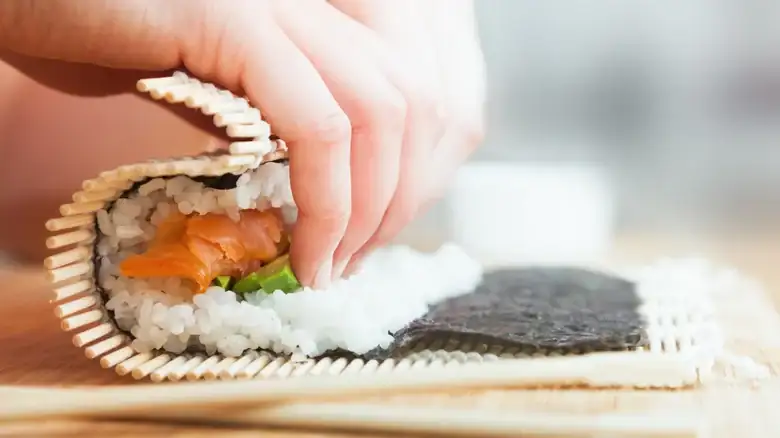
To achieve the perfect roll, Food & Wine shares the recommendation of Nobuyuki Matsuhisa, creator and sushi chef of Nobu: the double-rolling technique with the nori sheet. With the sheet laid out flat and the rice evenly distributed, roll half of the sheet, unroll it, and repeat the process on the opposite side before rolling it completely. This distributes the ingredients evenly and results in a perfectly round roll. Matsuhisa also recommends following the "rule of five" to determine how much rice is too much.
Shogun Orlando advises against overfilling the rolls, as excess rice or other ingredients can prevent a uniform product. With sticky rice, which adheres to almost everything, it's best to dampen your hands before rolling.
Secrets of Sushi advises using a little water to seal the rice. When spreading it on the nori, leave some edges uncovered at the top and bottom, and just before rolling, spray them with water. This helps the nori adhere and the filling stay in place.