The house salad reveals a lot about a restaurant's cuisine.
Two restaurant experts agree that a simple dish on the menu can indicate attention to detail in the kitchen.
“You can tell a lot about the level of attention to detail in the kitchen by looking at a house salad,”
Before the main course arrives, the house salad can offer clues about the rest of the meal. Hakki Akdeniz, an American restaurateur and entrepreneur, founder of Mira Mediterranean, says, "You can tell a lot about the attention to detail in a kitchen just by looking at a house salad." If it looks like a last-minute addition, such as a tray of mixed greens, he'll pass it up. "You can tell when a salad is prepared with a purpose, rather than simply to fill out the menu."
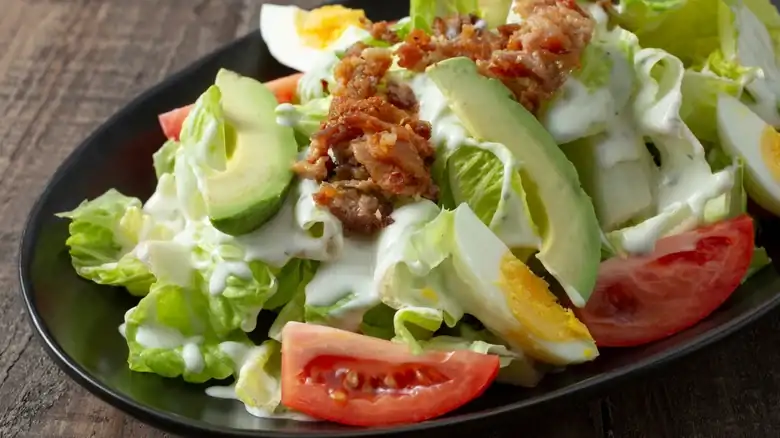
There's no single way to make a house salad, but it should be vibrant, flavorful, and fresh. Karen Schloss, owner of Diaz Schloss Communications and a public relations and marketing expert in the hospitality industry, judges restaurants by their house salad and a classic cocktail. When working with a new establishment that has expressed interest in collaborating, she always orders two things: "a Manhattan with Maker's Mark and a house salad." According to her, "both give me the information I need about the bar and the kitchen."
A house salad doesn't have to be spectacular, but it should be appetizing and well-balanced, and far superior to a restaurant wedge salad, which is usually very expensive. Schloss asks himself if the dressing is too much or too little and if the vegetables are fresh and crisp. The croutons also offer clues: if they seem carefully made, the restaurant pays attention to detail; if they come from a bag, perhaps they're cutting corners in the kitchen.
Even a simple salad can impress, especially in a restaurant where the chef attends to every detail of the experience. Akdeniz sums it up this way: "The 'basic' dishes are sometimes the ones that best demonstrate a chef's talent." When the simplest dish is well done, it's a sign that the rest of the meal will be too.