Tagine: the art of slow cooking
The tagine elevates slow cooking to a ritual: under the conical lid, the aromas gradually build up, long before the food is served. Its shape is no coincidence: a gentle simmering takes place in a closed space, where the balance of meat, vegetables, spices and a little liquid creates concentrated, layered flavors.
How the tagine works
Tagine is both a name for the dish and the vessel used to prepare it: traditionally made of clay or ceramic, the shape consists of a wide, flat base and a tall, conical lid. The design is not just aesthetic: the steam generated during heating condenses in the lid and then drips back onto the food, creating a continuous circle of moisture. Thanks to this, the dish remains succulent, while minimal added liquid is sufficient.
The dish is used over low, even heat – traditionally over charcoal, but now more often on a stove, with a heat spreader or in the oven. It is particularly suitable for meats that require longer cooking, layered vegetable dishes and stews: the result is a clean, concentrated one-dish meal in which the meat becomes tender, the vegetables absorb the aromas deeply and the juices thicken naturally.
Preparing for first use
A new tagine – especially an unglazed version – requires preparation before use. This strengthens the vessel, reduces the risk of cracking, and partially seals the pores.
The preparation consists of a few basic steps. The vessel is first immersed in water for a few hours, or even overnight, to properly saturate the material. It is then allowed to dry and then lightly coated with oil.
The heating is done gradually: starting from a cold oven, it is heated at a moderate temperature, and then left to cool completely in the oven. This heat treatment helps to stabilize the structure of the dish.
When using on a stove, it is advisable to use a heat spreader and avoid sudden temperature changes, which can damage the material.
Structure of food in a tagine
Cooking is not just about timing, it's also about order. The layering of ingredients determines the development of flavors and the balance of textures.
The base is usually olive oil, onion, garlic and spices. This layer not only launches the flavors, but also protects the more sensitive ingredients from direct heat.
This is where the protein goes – chicken, lamb, beef or fish, or plant-based alternatives – followed by the more substantial vegetables, such as carrots, potatoes or other root vegetables. These soften more slowly, so they can withstand longer cooking times.
The next layer is filled with additional spices – cumin, coriander, paprika, ginger or turmeric – and a small amount of liquid. The peculiarity of a tagine is that, due to the enclosed space, much less water or stock is needed than in a traditional ragout.
Gentler ingredients – olives, salted lemon, dried fruits or fresh herbs – are added to the dish at a later stage of cooking to preserve their character.
Cooking in a tagine
The food cooks evenly over low heat. The process is indicated by a subtle, barely noticeable bubbling sound, while the steam constantly circulating under the lid keeps the food moist. It is advisable to lift the lid infrequently to prevent heat and steam from escaping.
The cooking time depends on the ingredients used: fish and vegetables that soften more quickly are ready in a shorter time, while meat requires longer cooking, even several hours.
The dish is ready when the meat falls apart easily, the vegetables are tender, and the sauce has thickened naturally.
Classic flavor combinations
Tagine cuisine is based on a delicate balance of sweet, spicy and sour flavors. The different ingredients and spices reinforce each other to create the distinctive yet harmonious flavors that define Moroccan cuisine.
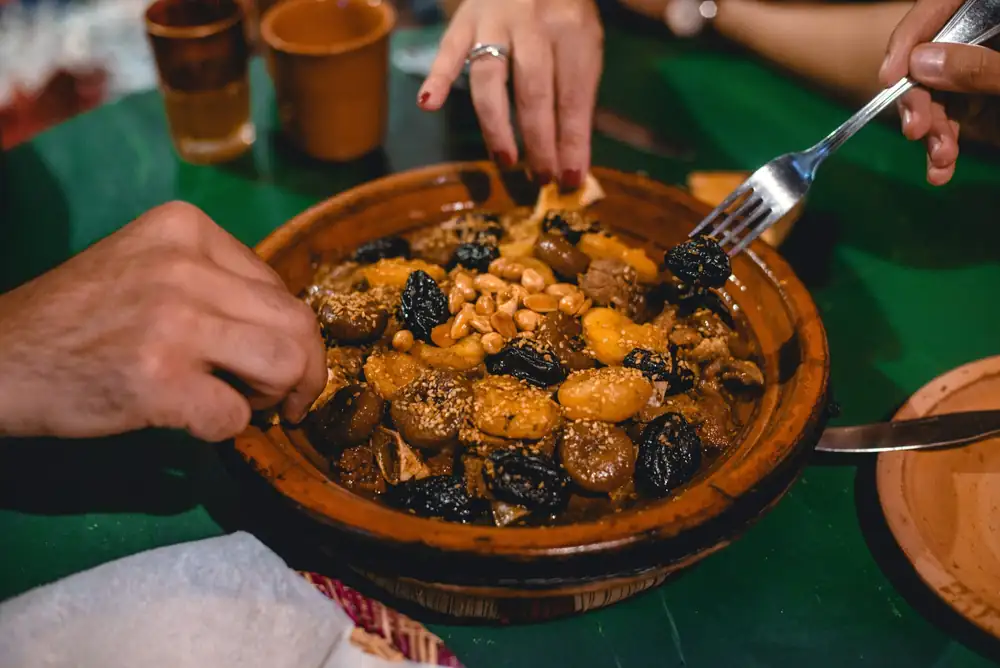
Chicken with salted lemon and olives is one of the most well-known variations: fresh, citrusy and slightly salty flavors come together. Lamb or beef jerky is often made with dried fruits, which give the dish a deep, rich character, complemented by cinnamon and warm spices.
The vegetable variations are based on root vegetables, squash and legumes, providing complete, balanced meals without meat. The fish versions are lighter: made with tomatoes, peppers and olives, with a shorter cooking time to preserve the freshness of the ingredients.
Cleaning and storage
Long-term use of a tagine requires gentle treatment. It is advisable to wait until the pot has completely cooled down before cleaning to avoid damage caused by sudden temperature changes.
Cleaning is done by hand, preferably with mild detergents, avoiding strong rubbing, which can damage the surface of the material. Stubborn dirt can be dissolved with a short soak.
It is important to allow the container to dry completely before storing. It is a good idea to leave the lid slightly open to allow air to circulate freely, thus avoiding moisture buildup.