The most famous cheeses of Italian cuisine
Parmigiano Reggiano: the umami-rich classic.
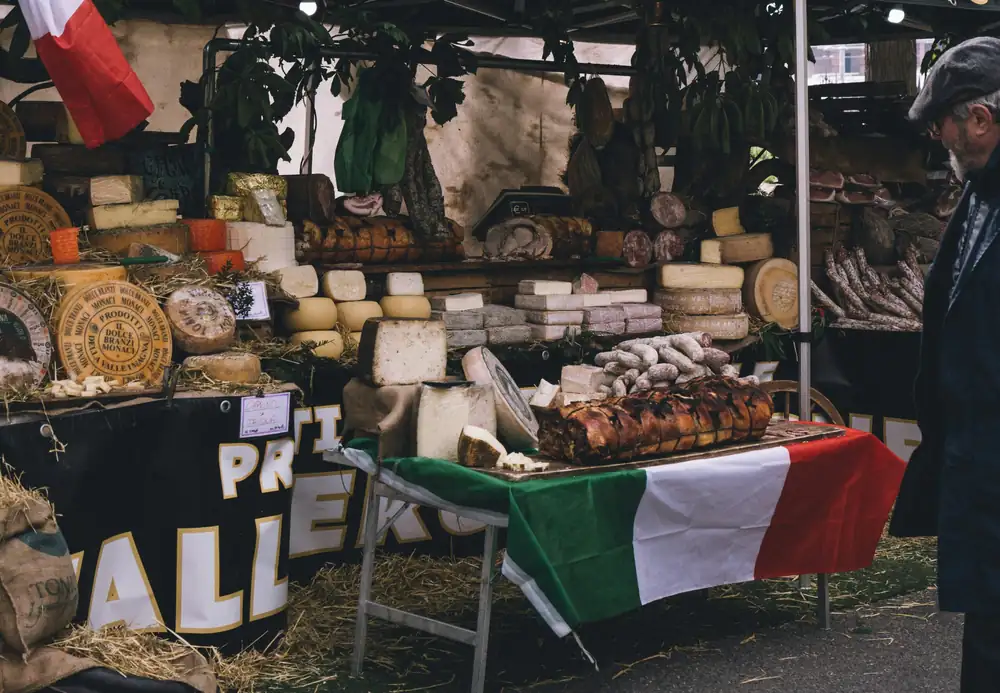
Parmigiano Reggiano can only be produced in the regions of Parma, Reggio Emilia, Modena, and certain areas of Bologna and Mantua. The cheese wheels, which can weigh up to 40 kilograms, are aged for at least a year, and the longer aging gives them a completely new character.
The tiny, crunchy crystals that appear inside the cheese are not salt crystals, but tyrosine particles that form during maturation. The 24-month version has a buttery, nutty character, making it perfect for pasta and risotto, while longer-matured pieces show deeper, dried fruit and umami notes.
The latter are often served on their own, sliced – with aged balsamic vinegar or a glass of Lambrusco.
Pecorino Romano: the defining base of Roman pastas.
Made from sheep's milk, Pecorino Romano is one of the oldest cheeses in Italy, and its distinctive, salty aroma still defines Roman cuisine today.
Authentic cacio e pepe and carbonara are unimaginable without it: its saltiness and fat content, combined with the pasta water and egg yolk, create a silky, uniform sauce. Its distinctive flavor also works particularly well with meaty stews and peppery dishes.
Ricotta: the light classic from cannoli to lasagna.
Ricotta is not technically a classic cheese: the whey left over from making mozzarella or provolone is reheated, hence its name, which literally means "recooked."
Its mildly sweet, light flavor makes it suitable for desserts as well as savory dishes. It's essential in Sicilian cannoli, while also adding creaminess to ravioli fillings or a lighter texture to lasagna. Really good, fresh ricotta is almost cloud-like light—a completely different experience than the mass-produced versions.
Mascarpone: the silky classic
Mascarpone from Lombardy is made from fresh cream, which gives it a particularly rich and silky texture.
Its most famous use is of course in tiramisu, but it is a much more versatile ingredient in Italian cuisine. It adds a particularly silky texture to risotto, and it enriches the dish in mushroom or truffle pasta sauces without becoming too acidic.
It is always worth adding it to food at the very end of cooking.
Mozzarella: the basis of pizza and Caprese.
Mozzarella is the best-known representative of Italian pasta filata cheeses, but there are significant differences between its different types.
Fior di Latte, made from cow's milk, has a firmer texture, making it ideal for Neapolitan-style pizzas, while Mozzarella di Bufala Campana DOP, made from buffalo milk, has a softer, richer and more aromatic character - making it the authentic choice for classic Caprese salads.
It is worth taking mozzarella out of the refrigerator 20–30 minutes before eating so that its aromas can fully develop.
Burrata: the creamy Puglia classic
Burrata comes from the Puglia region: inside the mozzarella shell is stracciatella mixed with cream, which slowly spreads out on the plate when cut.
Freshness is key with this cheese. It is at its best at room temperature, especially when paired with ripe tomatoes, extra virgin olive oil and fresh basil.
With the rich creaminess of burrata, the simplest pairings usually work best.
Gorgonzola: the most famous Italian blue cheese
Originating from the Milan area, Gorgonzola is Italy's best-known blue cheese. Of its two main types, Dolce has a softer, buttery-creamy texture, so it works well in pasta sauces or paired with pears.
The longer-aged Piccante, on the other hand, is a much more intense, crumbly and salty cheese. One of the most popular pairings is Marsala or Passito, which nicely balance the strong flavors of the cheese with their sweet flavors.
Provolone: the melting classic of Italian sandwiches.
Provolone is a semi-hard pasta filata cheese whose richness is mainly determined by aging.
Provolone Dolce is softer and melts well, so it works really well on pizzas or warm paninis. Provolone Piccante, on the other hand, is aged longer and has a more intense, drier character.
The two varieties work particularly well together on cheese platters, paired with aged cold cuts and full-bodied Italian red wines.