The roux method in the oven, without having to stir
Mastering the roux is key in many classic recipes, such as gumbo, and the oven allows you to prepare it without having to stir.
“flour is heated to the point where its starch breaks down and undergoes the Maillard reaction, forming dark brown pigments and flavorful compounds.”
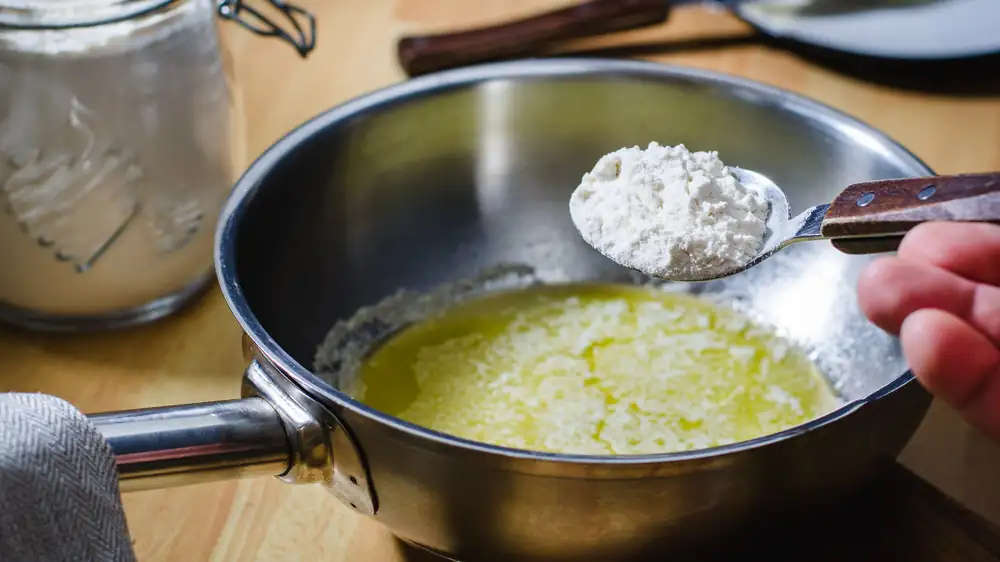
A roux is a 50/50 mixture of fat and flour prepared at the beginning of a recipe. It adds body, flavor, and thickness to the final dish, as Epicurious points out. According to Serious Eats, it's primarily used to eliminate the raw flour taste and prevent lumps from forming in the sauce.
Making a roux requires a delicate balance. In some cases, a deep brown color is desired, so you have to keep a close eye on it while it cooks and stay near the stove. But not all roux has to be made on the stovetop: according to America's Test Kitchen, cooking it in the oven is not only an option, but it may be preferable for certain dishes, such as gumbo.
America's Test Kitchen notes that the flavor of a roux is achieved when "flour is heated until its starch breaks down and undergoes the Maillard reaction, forming dark brown pigments and flavorful compounds." The oven-baked technique is called a dry roux and requires only a pan and flour.
To make a roux, preheat the oven to about 200 degrees Celsius (390 degrees Fahrenheit) and stir the flour occasionally as it browns. Remove it when it reaches the desired color. Then add a little room-temperature water or stock to the toasted flour and stir it into the sauce, soup, or stew you want to thicken. Unlike a traditional roux, which usually contains butter, this method is completely fat-free.
Some general tips: Butter is the most common ingredient in most roux, but for a dark roux, a neutral oil is preferable, as it has a higher smoke point and prevents burning, according to Taste of Home. The lighter the roux, the thicker it is; the darker it is, the more flavor it imparts to the final dish. Taste of Home also recommends using a whisk or a spatula.
Making a roux may seem complicated, but with a little practice it becomes simple and allows you to prepare many dishes.