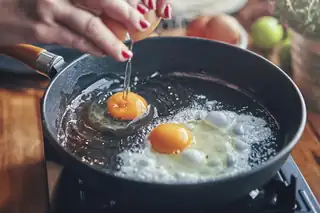
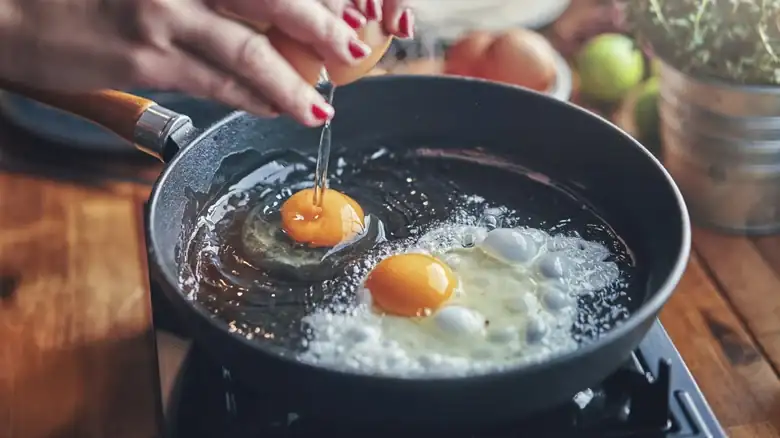
The best frying pans for achieving the perfect fried egg, according to an expert
There's an art to making the perfect fried egg. The kind where the edges are slightly crispy, the yolk is warm and runny, and the white is evenly set without being too rubbery.
“I typically use a fairly shallow frying pan with sloped sides because that makes it easier to remove the egg or flip it if I'm going for over easy,”
There's an art to making the perfect fried egg. The kind where the edges are slightly crispy, the yolk is warm and runny, and the white is evenly set without being too rubbery. Many people think that ruining a fried egg is due to a lack of skill, and that may be true, but another important part of the problem lies in the type of pan you use. We spoke with Lisa Steele, a fifth-generation chicken breeder, creator of the popular blog FreshEggsDaily, and author of the new cookbook "In Season: 125+ Sweet and Savory Recipes Celebrating Simple, Fresh Ingredients," who told us that stainless steel or carbon steel pans are the best for making a perfect fried egg.
“Personally, I love stainless steel or carbon steel pans,” she said, adding that “I find them light enough to easily lift or tilt with one hand, and also easy to clean without requiring as much care as other types of pans.” While stainless steel pans are a kitchen staple, carbon steel pans are also very popular. Both materials are known for their durability and good heat conductivity, making them ideal for frying eggs. “I usually use a fairly shallow pan with sloping sides because it’s easier to remove the egg or flip it if I want it fried,” Steele says.
Pans to avoid and other tips for achieving the perfect fried egg.
While Lisa Steele can recommend the best pans for a perfect fried egg, she admits her opinion on which ones to avoid is "very unpopular." There are plenty of other recipes for a cast iron skillet, but Steele doesn't think fried eggs should be one of them. "A cast iron skillet is very heavy and difficult to tilt if you're basting the egg or flipping it," she says. Steele also dislikes using nonstick pans, as they tend to be "very delicate: they scratch or chip very easily, not to mention the chemicals some brands use in their manufacture."
Once you have the right pan, making a perfect fried egg should be easy, but there's still a chance something can go wrong. "It's really important to make sure the pan is nice and hot before you add the egg," says Steele. To prevent the egg from sticking, she recommends "turning the heat to medium-low, adding the butter (or oil)," and only when "the butter has melted (or the oil is bubbling), add the egg." You can also improve your fried egg by adding a lid to the pan. For easier cleanup, Steele says to "add water to the pan as soon as you serve the egg and let it sit on the stove (with the heat off) while you eat. That way, when you're ready to wash the dishes, any egg residue that might have stuck will have already loosened."







