The quenelle, the oval shape that originated in a French fish dish
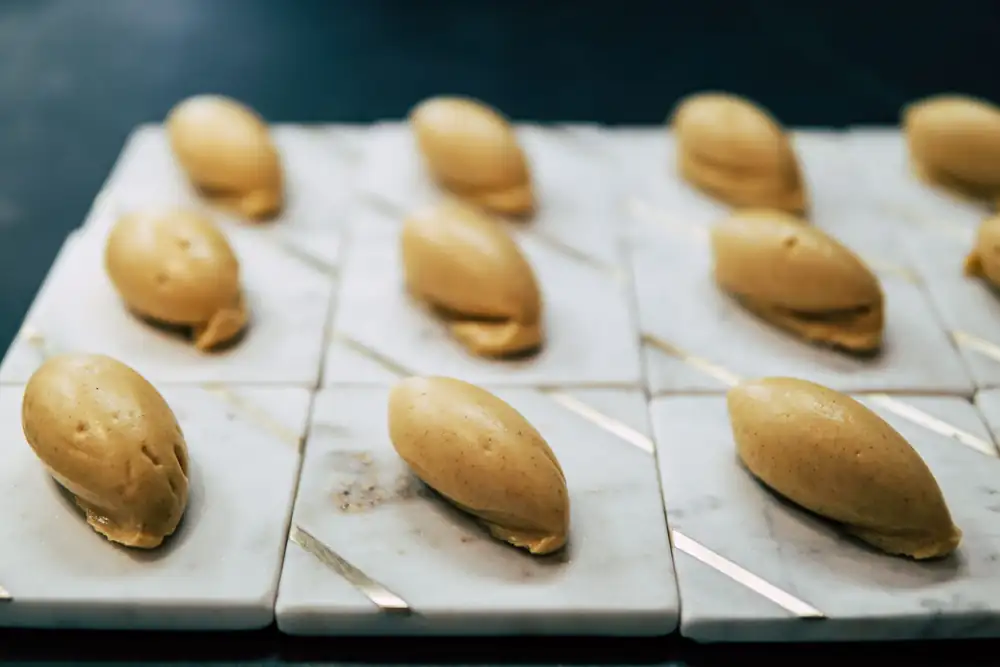
The quenelle originated as a French fish dish molded into an egg shape, and today it gives its name to any preparation with that shape.
The original dish, "quenelles de brochet," is a mixture of creamed fish, breadcrumbs, and egg, shaped into an egg. It's cooked using the same process as poached eggs. Today, the term is used to describe any preparation with a similar shape, such as ice cream, steak tartare, or mashed potatoes. Shaping a perfect quenelle is more difficult than it looks: the goal is a smooth, egg-shaped dumpling with a slightly pointed end.
The technique can be done with one or two spoons, but chefs prefer one because it results in a smoother quenelle. Cindy Khoo, executive pastry chef at the Hilton Singapore, perfected the technique under the tutelage of her mentor when she worked as a kitchen assistant at the Shangri-La Hotel Singapore.
According to Khoo, the technique is learned at the beginning of pastry school, once the fundamentals are mastered, but it requires a lot of practice. "At first, you usually don't get the shape right; the mixture sticks to the spoon, so you have to keep trying again and again."
It sounds simple in theory, but surprisingly difficult in practice. "It's complicated to explain or teach someone how to do it," says Khoo. "It has a lot to do with movement, with style. You have to take into account the ambient temperature and the texture of the food you're pouring."
Khoo suggests dipping the spoon in warm water before using it. It should be warm enough for the quenelle to loosen, but not so hot that the mixture melts instantly. With stickier foods, like sorbet, rubbing the back of the spoon with the palm of your hand can help loosen it.
The technique is worth practicing: its classic and elegant form never goes out of style.