Navarra shows what a pepper is worth
An autumn weekend: an evening stroll through a vineyard, a visit to a winery, and a wine tasting. Sounds tempting, doesn't it? Now let's swap the vineyard for a field of peppers. The product is worth it.
Competition is even fiercer on supermarket shelves, where Lodosa peppers face off against produce from Peru or China that sells for five times less. “Ours is the least profitable pepper there is,” explains Jonás. “Between production and processing, a jar should sell for seven euros, but you can find other varieties in the supermarket for one or two.” Globalization has turned what was once commonplace into a luxury, and this has led to the crisis of a sector that used to support the entire town of Lodosa. During harvest time, the whole family pitched in, but that's no longer possible, nor legal. Now, farmers struggle to find workers to pick the fruit: “Even paying them any price isn't enough: there aren't enough hands, and some years hundreds of kilos are left in the fields.”
Today it's peppers, tomorrow it's artichokes
One of the keys to the strategy for boosting the primary sector is to showcase its value to a public that increasingly travels for gastronomic reasons. Under the slogan 'The imperfect secret of our land,' Navarre aims to "build a seasonal destination, governed by the seasons, that today attracts visitors drawn by peppers and later by artichokes or asparagus," explains David Chivite, head of tourism marketing for the Navarre region. The idea is to attract travelers "who respect the land, support local producers, and seek authentic experiences"—magic words in the gastronomic sector.
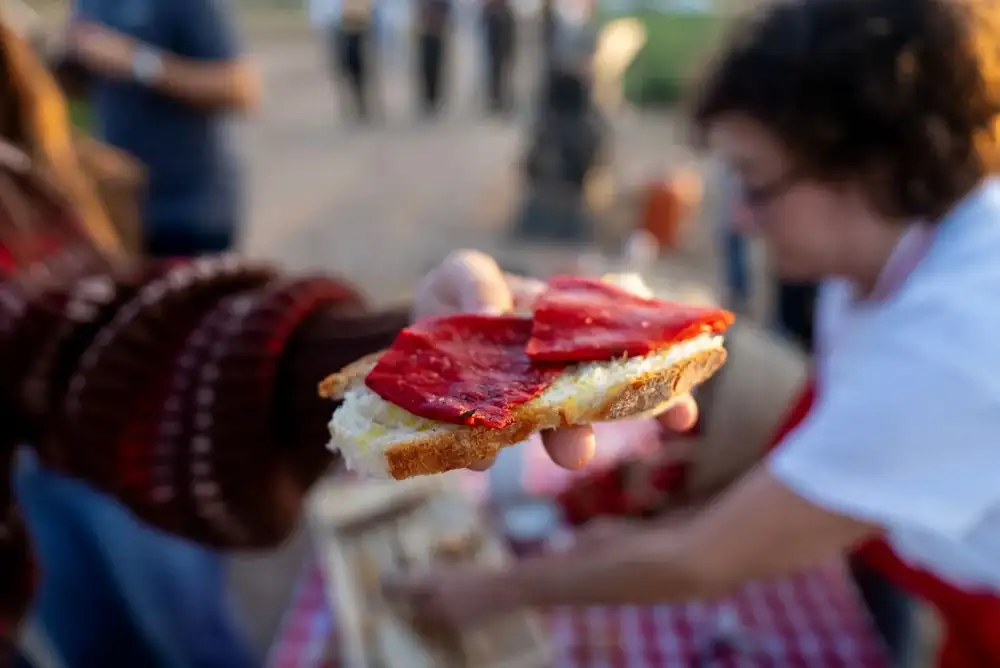
From words to action, a few days ago the fields of Lodosa and the Torre de Velasco—an impressive, recently restored medieval fortification—hosted one of these immersive experiences. Visitors were able to tour the crops, pick the peppers, learn how to roast and peel them with the producers, and finally taste them right there on the farm, accompanied by other local products. To close the day, chef Jesús Iñigo created a menu entirely featuring Lodosa piquillo peppers, paired with wines from the Navarra Designation of Origin.
The hospitality of the people of Navarre did the rest. The producers' friendliness, their explanations of the details of cultivation and the challenges they face transformed the event into something more than just a tasting. Because it's not just about indulging in a feast, but about being aware of the history, the care, and the time behind each fruit. Ultimately, it's about understanding the true value of a pepper.