Eating fish: between necessity and dilemma
“If our children continue eating like this, they will live shorter lives than their grandparents,” warns Dr. Rosaura Leis, president of the Scientific Committee of the Atlantic Diet Foundation.
It was one of the diatribes raised at the VI Meeting of the Seas held in Tenerife, because experts are concerned both about the drop in fish consumption as a source of Omega 3 and the depletion of the seas.
Leis, a leading expert in pediatric nutrition, was emphatic: “If our children continue eating as they do, they will live shorter lives than their parents or grandparents, and they will also have a lower quality of life.” The reason lies in a decline in fish consumption, especially oily fish.
“If we want health, we must return to those traditional diets from the very beginning of our lives,” he declared.
If on the opening day Dr. Carlos Duarte explained how the contribution of Omega 3 had played a fundamental role in the evolutionary leap of modern man, favoring brain development and giving the communities that consumed it a reproductive advantage, the medical analyses carried out over the last decades by Dr. Leis in Galician schoolchildren and elderly people show that the downward trend in its consumption will soon have effects on human health.
A kind of regression whose effects usually become apparent within two generations and for which, fortunately, we have an antidote within reach.
“The Mediterranean and Atlantic diets are a life insurance policy that we are abandoning.” This balance between abundant fruits and vegetables, legumes, olive oil, meat, and dairy products, where fish and seafood play a fundamental role, has clear consequences for our health: “Lower risk of heart attacks, obesity, insulin resistance, stroke, and suffering from depression or senile dementia, among other advantages.”
“It’s not so much that each of the foods that make it up are healthy in themselves,” he explains, “but rather the diet as a whole, in balanced proportions and cooked in a simple way, avoiding ultra-processed foods, that has a greater impact on health.”
Scottish nutritionist Carrie Ruxton echoed this sentiment, arguing that "the brain's favorite food for babies is Omega 3" and that through diet, "children can be programmed to have a lower risk of disease through their mothers' diet."
Good for the heart, immune system and brain, should be a label included on fish, in his opinion.
American entrepreneur Courtney Nichols Gould even designed gummy candies with a vitamin complex rich in Omega-3 to ensure her two-year-old son received the necessary intake. The product was a success, demonstrating that "there are business opportunities in healthy eating too," she says.
Fish to feed other fish
The nutritional benefits are clear, but the debate on healthy seafood that is the focus of this edition of the Meeting of the Seas also has socio-economic and political implications that deserve to be analyzed.
“How do we provide a growing population with quality seafood?” asked marine biologist Carlos Duarte. His colleague Daniel Pauly was emphatic: “There aren’t enough resources in the sea for everyone in the world; the question is, who’s going to eat the available fish?”
The very dynamics of globalization exacerbate the problem, with large populations of small pelagic fish that were once the nutritional base in Southeast Asia or certain regions of Africa now used to make fishmeal to feed the aquaculture of large predators such as tuna or salmon.
In that sense, Benjamín Lana, general director of Vocento Gastronomía, alluded to the “steak culture” that seems to have taken hold in our eating habits, which favors the consumption of large fish, which can be easily filleted and consumed without bones, but which in turn consume a huge amount of resources to be produced.
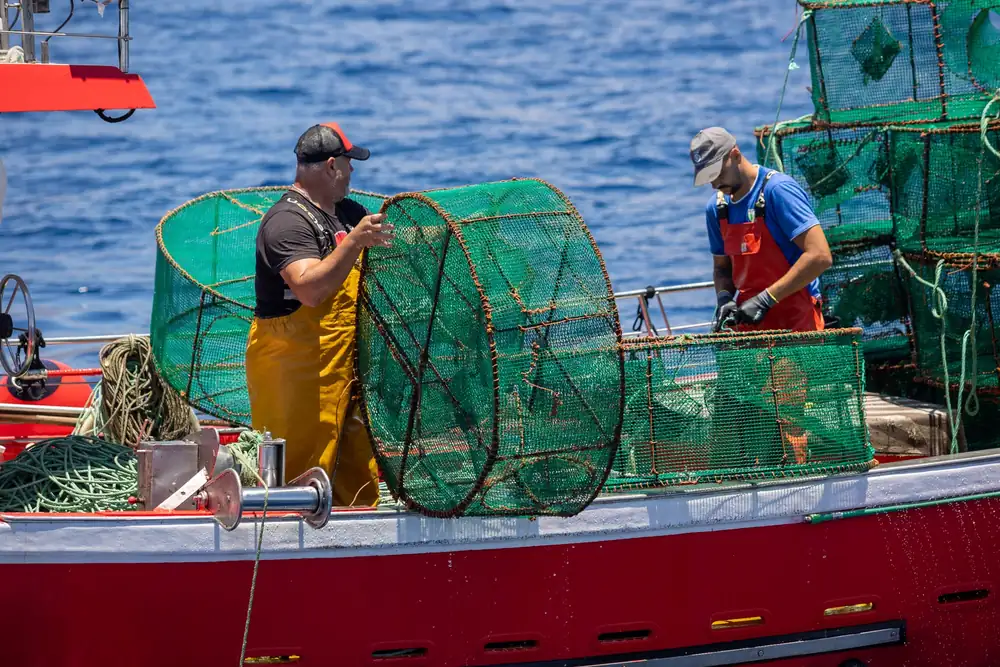
Javier Garat, representative of the fishing employers' association and present in various blue economy organizations both Spanish and European, participated in the same debate and wanted to defend the role of the Spanish fleet, one of the most powerful globally, and its commitment to sustainable fishing practices.
This dilemma between the human need to eat fish and how to make it accessible to the whole planet without depleting the seas gave meaning to the motto of the congress that brings together scientists and chefs: "Blue health".
Pedagogy from the kitchen
Restaurants have a fundamental role to play in increasing fish consumption and raising public awareness of its importance.
To support the presentations focused on health, the gastronomic aspect of the Meeting of the Seas relied on chefs such as Álvaro Garrido (Mina*, Bilbao) on this second day, where 80% of the ingredients in his dishes come from the sea.
“Buying fish at the market is an act of sustainability,” he argued before expressing his concern about the decline in fish consumption in Spain, despite the fact that it is currently a leader, by a wide margin, in the European Union: “In ten years, it may resemble an Anglo-Saxon country.”
Chele González, Gallery by Chele (Manila), contributes her bit in the Philippines, combining locally sourced fish with European techniques in dishes like kinilaws, a kind of ceviche in which different vinegars and coconut milk are added to tabon, a native dried fruit that kills bacteria in the fish.