
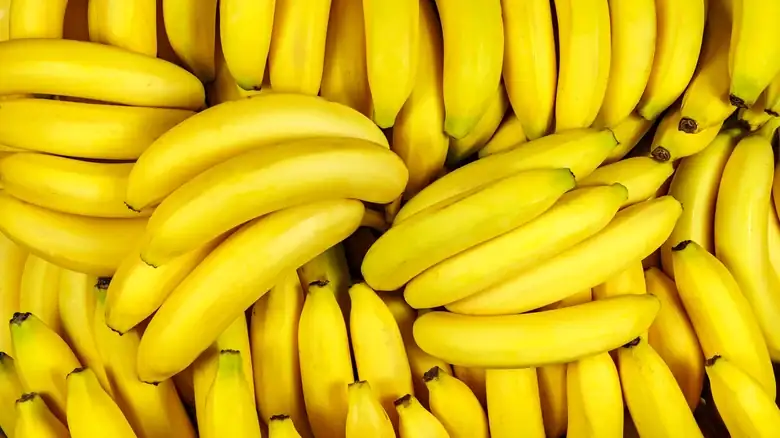
Plátanos maduros: conservarlos en la encimera o en el frigorífico
Los plátanos amarillos brillantes en una cesta atraen la vista, pero sin protección adecuada se oscurecen y ablandan rápidamente, lo que desalienta a muchos comensales.
The answer is ambiguous: both options work, just in different ways. In supermarkets, bananas are displayed unrefrigerated in the fruit section. The key is their ripeness. Green bananas keep best at room temperature, where they continue to ripen evenly. When brown spots appear and the fruit softens, some people move them to the refrigerator to slow down the process.
Freshly purchased green or yellow bananas should not be refrigerated. Cold slows ripening and can even damage the fruit, making it bitter and causing the blood vessels to darken. To ripen properly, they need to produce ethylene, the gas that sweetens and softens them. Hanging them on a banana hook will allow them to ripen without damage.
Once bananas develop brown spots and soften, refrigeration is an option if you want to slow down ripening and enjoy them for longer. The flesh remains flavorful even if the peel darkens. If the ripening time has passed and the bananas are very soft, peel, slice, and freeze them in an airtight container; they will keep for several months and are ideal for smoothies, banana bread, or baking.







