Sisilie's instinct for skrei
Cod fisherwoman Sisilie Skagen & her instinct for skrei
Cod fisherwoman Sisilie Skagen & her instinct for skrei
Sisilie Skagen is one of the few women who have made their mark among Norway's cod fishermen – with her own boat and a strict eye on the stocks of the valuable catch.
Sisilie Skagen is one of the few women who have held their own among Norway's cod fishermen.
MAGNIFICENT PIECE FROM NORWAY
Once Sisilie Skagen has dropped her children off at kindergarten, she doesn't go to the office, but heads out to sea – preferably between January and the end of April. In icy winds and temperatures around freezing, large schools of winter cod migrate to the Lofoten Islands, where their spawning grounds lie. At this time of year, the fish is called "Skrei," which literally translates to "wanderer." Unlike ordinary cod, its flesh is very firm, lean, and tender – a delicacy sought after worldwide.
The office job promised boredom.
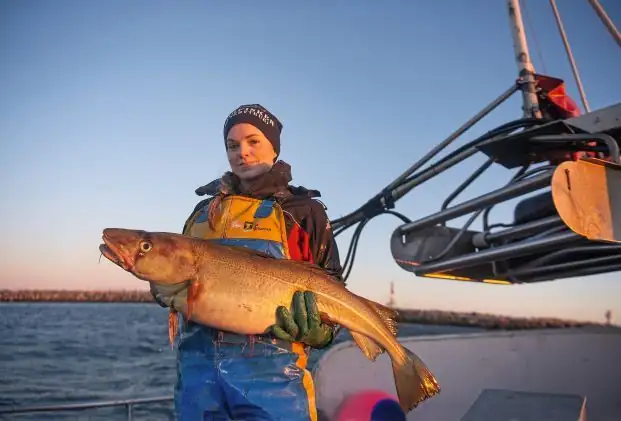
“I grew up right on the quay; my father was also a fisherman, and I went to sea with him from childhood,” says the petite woman with the gentle features. As a fisherwoman, she is an anomaly in the male-dominated industry; women usually stay ashore. Daily life on the rough seas is too harsh, the heavy work with fish weighing up to 40 kilos too strenuous, and too time-consuming to be there for children. Sisilie Skagen proves otherwise. “When I started, I went to the gym every day to build muscle and gain more strength. But I quickly realized that it's much more about technique than strength.” The 28-year-old Norwegian lives with her partner in a blended family of seven in the Lofoten Islands; three of her five children are from her first relationship. They, too, know life on the boat and are often on board when their mother pulls hundreds of kilos of cod from the water. But it wasn't always certain that Sisilie would one day follow in her father's footsteps. The office job in healthcare promised security, a steady income – and boredom. So she traded the quiet work at the computer for the ups and downs of a fisherwoman's life. She inherited her boat, the "Braken," from her father.
Shark
At ten meters long, it's one of the smaller fishing boats, a so-called "Sjark," with which she catches 230 tons per year. "I love the sea, the sea air, and the community. We spend a lot of time outdoors, and because not that many people live here, almost everyone knows everyone else." The community grows when the Skrei season begins in January. That's when the fishermen go out to sea together to catch the winter cod, a significant economic factor for the region. The catch quota is strictly regulated, and quality control ensures that the Skrei meets high standards. Even the tongues of this valuable catch are used.
I grew up eating fresh cod with potatoes and bacon.
“Even at the age of six, I earned my pocket money as a cod tongue cutter during the season; it’s nothing unusual here.” Children still supplement their income by removing the cod’s prized delicacy. To ensure that an entire region can continue to depend on cod for its livelihood, the Coastal Reference Fleet was established, of which Skagen is a member – the first woman. With her boat, she collects catch samples, provides data, and contributes her experience to ensure that future generations can also rely on these natural resources. Once the cod season is over, she also fishes for saithe, lumpfish, black halibut, and monkfish off the coast of Lofoten.
To break down the prejudices that female fishermen still face, Skagen works "smarter and faster," as she puts it. This includes equipping her father's boat with modern technology, something he was initially rather skeptical of. "My father is a stubborn, impetuous man who prefers to do things the old-fashioned way." Despite modern aids, her father still goes out to sea with her and helps his daughter as soon as the skrei season begins.
Skrei is a delicacy found only in Norway. This special fish is in season until April and tastes best fresh from the pan. The "wanderer" is strictly controlled in its homeland.