Cuándo conviene precalentar la sartén y cuándo se puede omitir
Precalentar la sartén garantiza resultados consistentes en muchas recetas, pero no siempre es necesario, porque el material y el alimento determinan la respuesta.
Cast iron pans almost always need to be preheated because their robust construction takes time to distribute heat and they tend to have hot spots. Carbon steel, on the other hand, heats up much faster because it is lighter, and some recipes benefit from starting with a cold pan.
Preheating ensures consistent results when following a recipe because cooking takes place in an environment similar to the intended one. Cooking without preheating actually makes food take longer because it spends more time at a low temperature, so skipping this step hardly saves any time.
Proper heating also prevents food from sticking. Surface moisture evaporates upon contact with the pan, separating the food from the surface. This is especially helpful when frying meats, vegetables, and sticky foods like eggs. Furthermore, excess moisture evaporates quickly, allowing food to sear rather than steam, and resulting in steaks and chops that brown evenly.
Delicate foods require gentler heat. The same applies to foods that can burn easily, such as delicate spices, thinly sliced garlic, butter (even when browning), and nuts, which should start in a cold pan for better temperature control.
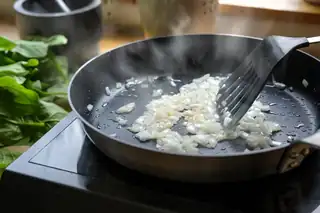
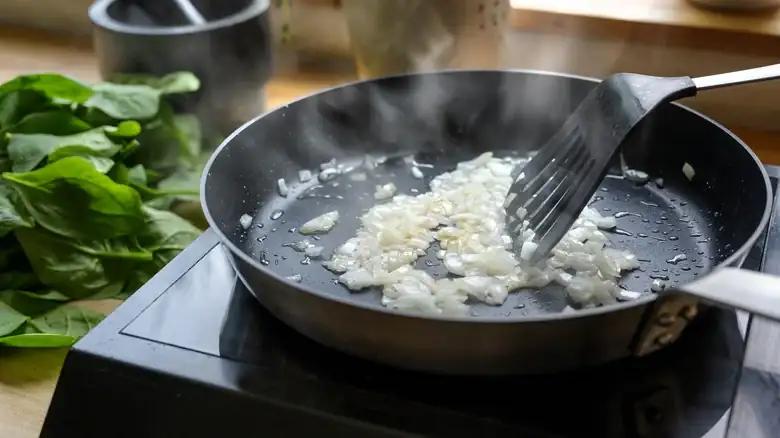
Fatty cuts of meat, like bacon or chicken thighs, also cook better in a cold pan: the fat has time to render, and then the meat browns in its own fat. Caramelized onions do the same, because the water evaporates before the sugars begin to caramelize.







