
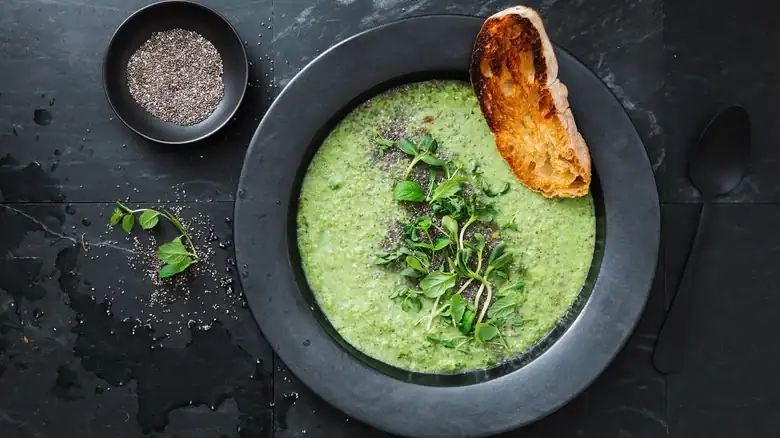
Cuándo añadir las hierbas frescas a una sopa para conservar su sabor
Las hierbas frescas pierden su aroma con facilidad, así que conviene añadirlas al final de la cocción, salvo en el caso de las sopas frías.
Adding fresh herbs to a hearty soup brings freshness and lightness, but the timing makes all the difference. As a general rule, fresh herbs are added at the end of cooking.
They are very delicate and lose their flavor easily. If added too soon, the heat will strip them of their aromas, and in the end, there may be no flavor left, or only bitter notes hidden deep within the plant.
Some herbs don't withstand intense heat well, so it's best to add them at the end or reserve them for garnish. This applies to fresh parsley in a basic tomato sauce as well as basil in roasted pumpkin soup. In gazpacho, however, herbs can be added earlier, because low temperatures don't affect delicate herbs as much as hot broths do.
With dried herbs, the approach changes. Rosemary, sage, and thyme retain their flavor after drying and are added at the beginning so they can release their full aroma during slow cooking. For dill and mint, however, it's best to use fresh herbs because their flavor is more intense.
Fresh herbs tend to spoil within a week, while dried herbs can be stored in the pantry for months or even years. If you can still smell the aroma when you open the jar, the herbs are in good condition. Both types can be combined: add the dried herbs at the beginning of the soup and the fresh ones towards the end.







