Por qué el cacao en polvo negro tiene el sabor a chocolate más sutil
El cacao en polvo está presente en brownies y chocolates calientes, pero no todos los tipos saben igual ni se comportan igual al hornear.
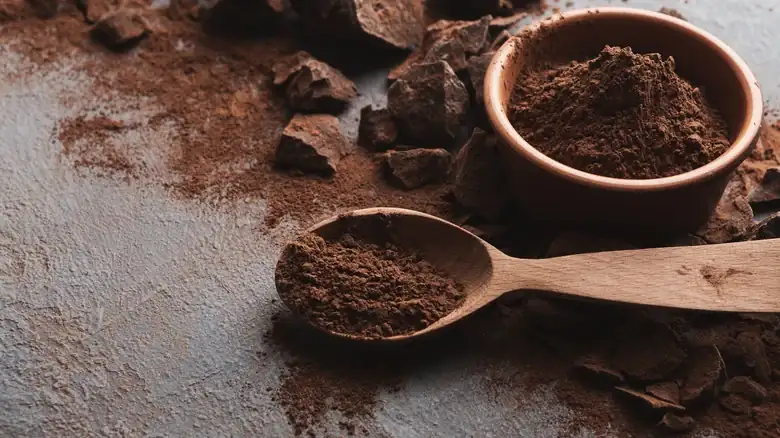
Cocoa powder comes from a process that begins with the beans. These are fermented, dried, and roasted, and then the seed is separated from the husk and ground into a paste composed mainly of cocoa butter, the fat that gives chocolate its silky texture, and cocoa particles. To make the powder, most of the butter is removed, and the remainder is ground into a fine powder.
In its natural state, cocoa powder is bitter and acidic. Adding an alkalizing agent, such as potassium carbonate, neutralizes this acidity. Dark cocoa is the most alkalized variety, with a much higher pH than other types, which is why its chocolate flavor is more subtle. In addition to darkening the color, alkalization softens the flavor, to the point that some connoisseurs feel that dark cocoa barely tastes like chocolate at all.
Dark cocoa is very useful when baking requires a particularly dark color, and it's famous for its use in Oreo cookies. However, it's usually mixed with other types, because on its own it can produce dry and unappetizing cakes. Natural cocoa retains the acidity of the bean, has a lower pH and a more intense flavor, and is the most common, especially in the United States, where most recipes assume it's necessary.
Due to its acidity, natural cocoa can be used with baking soda, an alkali that reacts to produce carbon dioxide, causing baked goods to rise. Alkalized cocoas, on the other hand, are called Dutch or Dutch-processed, named after the Dutch chocolatier Coenraad van Houten, their inventor. Most have a neutral pH of 7 and a dark brown color, intermediate between natural and dark cocoa. Their flavor is milder and earthier than natural cocoa, but retains the chocolatey character that dark cocoa lacks.
Since Dutch cocoa is not acidic, recipes using it require baking powder, and it's helpful to know the difference between the two. The three types shouldn't be used interchangeably without considering their differences, although alkalized and natural cocoa are suitable for a wide variety of pastries and even savory recipes. It all depends on the desired flavor.