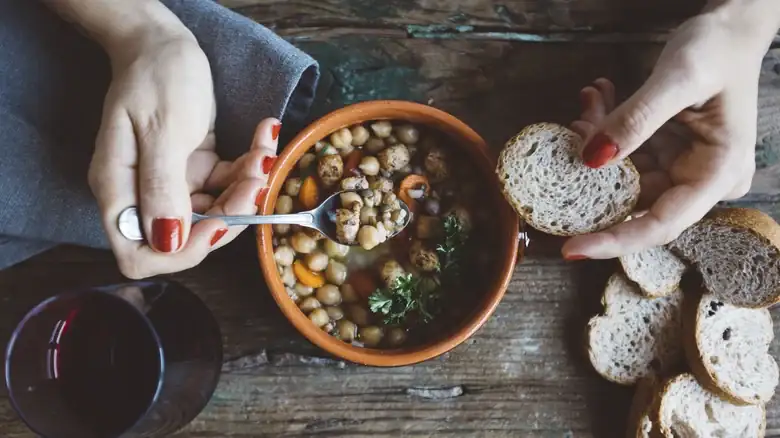
The difference between soup and stew lies in the liquid and the method.
Although they seem like similar dishes, soup and stew are distinguished by the amount of liquid and how their ingredients are cooked.
Both are typically winter dishes, although there are also summer soups, like gazpacho. They share many ingredients, such as meat, seafood, vegetables, and aromatic herbs, all cooked in liquid. Therefore, it might seem like a matter of semantics, but a closer look, spoon in hand, reveals some rather marked differences.
Soup generally contains a higher proportion of liquid than stew. That's why stew is usually thicker, and sometimes it's thickened even further with a roux made from flour and oil or butter. Some soups are already quite thick, like pea soup. Others, which some cooks find too thin, are thickened with a trick from French chef Jacques Pépin: adding instant mashed potatoes.
The difference also lies in the cooking method. Stew is prepared by simmering pieces of meat and vegetables submerged in liquid. Tough cuts of beef, for example, become very tender with slow, steady cooking, especially in a cast-iron pot with the lid on, so that the moist heat softens the connective tissue. Constantly lifting the lid allows this steam to escape, one of the most common mistakes.
Soup, on the other hand, is usually brought to a boil first and then simmered to allow the flavors to meld and intensify. It's quicker to prepare than a stew. Creamy seafood soups and broths belong to the soup category, not stews: creamy soups are smooth, while broths retain chunks of seafood.