Carnitas or shredded pork: what are the differences between the two slow cooking methods?
Two slow-cooked pork dishes, one Mexican and one from the southern United States, with distinct traditional techniques and flavors.
Slow-cooked pork has a special charm, especially in larger cuts like the shoulder, where the fat and connective tissue melt into the meat. In North America, this method appears in carnitas and pulled pork. Carnitas come from Mexico, specifically from the town of Quiroga in the state of Michoacán, and are mostly served in tacos. Pulled pork is a classic of Southern barbecue, often served in a sandwich with a smoky, spicy salsa.
Both dishes feature succulent pieces of pork cooked over low heat, but their traditional techniques and flavors differ. It's worth taking a closer look at each to appreciate their nuances.
Carnitas, whose name means "little pieces of meat," are prepared by slow-cooking large cuts of pork such as ham, shoulder, or loin. In a large copper pot called a cazo, trotters, ribs, and other parts of the pig can also be added. They are not defined by the cut of meat, but by the slow cooking in lard, which transforms them into a kind of confit. The goal is a juicy interior and crispy edges.
Every cook has their own spice blend. The most common combine cumin, oregano, onion, garlic, lime, and chilies, and can include herbs, fruits, or dairy products. When prepared properly, they have a slight sweetness and a bold flavor. They are served in DIY tacos with hot sauce and pickled vegetables, and are also used as fillings for enchiladas, tortas, and burritos.
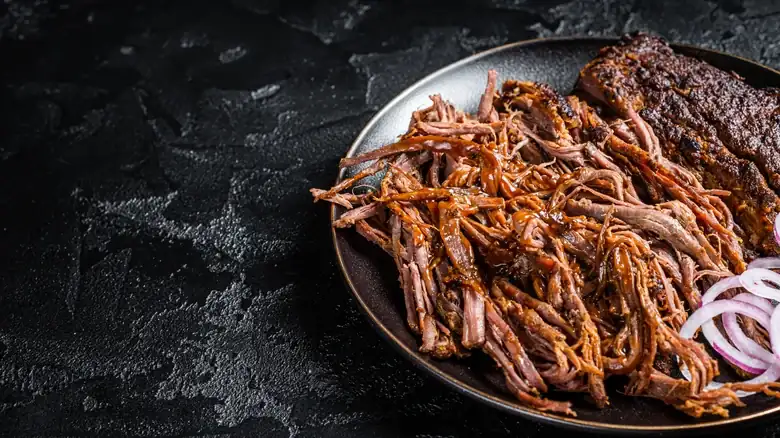
Pulled pork is a classic Southern barbecue dish, typically made with shoulder, whose marbling keeps it juicy. Smoking is the preferred method, though it doesn't define the style: the oven, pressure cooker, and slow cooker also yield good results. The key is time, hours at a low temperature, until the fat renders and the meat falls apart with a fork, hence the name.
To season it, each cook uses their own blend, with cumin, chili powder, mustard powder, paprika, onion powder, garlic powder, and brown sugar. Recipes vary in their emphasis on sweet, spicy, or herbal flavors, and homemade barbecue sauce can always be added.