Qué es el corte brunoise y cuándo conviene usarlo
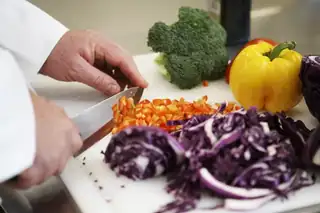
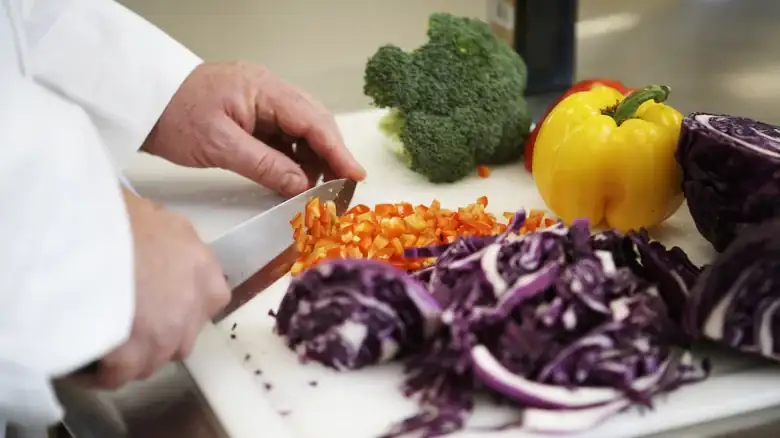
El brunoise, derivado de la juliana, consiste en dados pequeños que sirven para guarniciones de sopas o para dar sabor a una salsa.
Before cutting, make sure you have a sharp knife, as dull ones are dangerous. Choose a vegetable that will retain its shape when cut into very small pieces: carrots and celery are better options than a raspberry.
Clean the vegetables, peel them if necessary, and trim off the tough ends. Then, cut them into strips two to three inches long and about a quarter of an inch wide, creating a julienne. Turn it 90 degrees and cut it into strips one-eighth of an inch wide to obtain the brunoise.
Before adding it to soup, it's best to blanch it briefly in boiling salted water, remove it, and plunge it into ice water to stop the cooking process. If blanching is too time-consuming, a quick steam will do just as well. Ramen is an excellent choice, and it can also be added to a creamy tomato soup or a consommé.
The fine cut maximizes the surface area of the vegetable, allowing its flavor and aroma to be released intensely. This makes brunoise ideal as the base for soup or broth, especially with aromatic vegetables like onions. In a birria broth, for example, it pairs perfectly with a touch of finely diced onion.
A classic brunoise consists of carrots, onions, leeks, celery, and turnips, cooked in butter. Its name is said to come from a small French commune called Brunoy.
This cut is also suitable for cured meats like sausages, hot dogs, and meatballs, and for fruit salads, such as melon, cucumber, and strawberries cut into a brunoise. The more patience you have with irregular shapes, the better the final presentation will be.







