
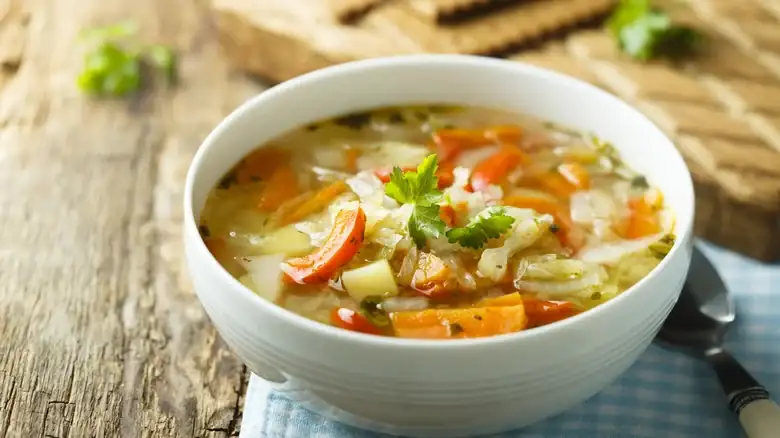
Cómo evitar que las verduras de la sopa queden blandas
En los meses fríos, una buena sopa depende de que sus verduras conserven la textura, y el orden en que se añaden marca la diferencia.
Smooth, creamy soups, like roasted tomato soup, and clear soups, like classic chicken noodle soup, depend on the texture of their vegetables. Nothing is more off-putting than mushy carrots, celery, and onions floating in the broth.
A base of aromatics, with onion, carrot, celery, and leek cooked in a fat like butter, is essential for a flavorful broth. The common mistake is overcooking the vegetables, and the order of the steps is key to avoiding this, taking into account the cooking time of each one.
In a soup recipe published in Bon Appétit, chef Molly Baz suggests using a batch of vegetables to flavor the broth. This is then strained, and more carrots and celery are added, cooked just until they achieve a bright color and a firm texture. Alternatively, the vegetables can be added one at a time.
Dense vegetables, such as potatoes, turnips, radishes, firm broccoli, cauliflower, fennel, kale, chard, squash, and okra, need longer cooking times and can be added at the beginning.
In contrast, asparagus, corn, spinach, carrots, green beans, and peas cook quickly and should be added at the end.







