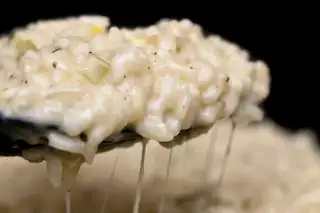
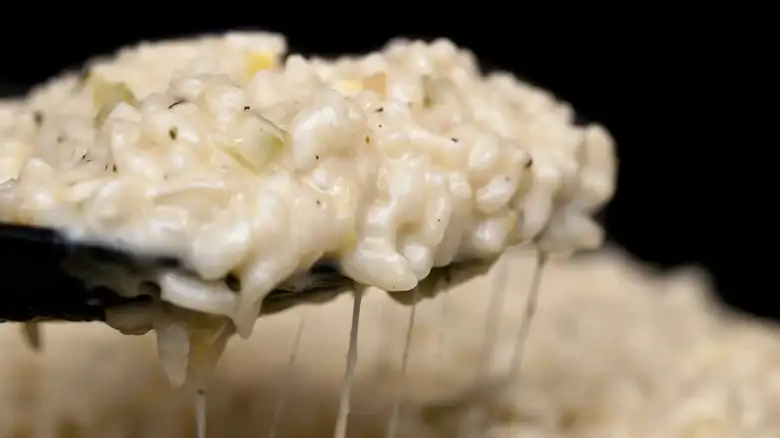
The amylose in rice explains the creamy texture of risotto
Creamy risotto depends on the balance between amylose and amylopectin, and arborio rice is the variety that best achieves this.
Risotto is delicious, but laborious, and its texture depends on a component many are unaware of: amylose. According to Food Crumbles, the starch content of rice varies depending on the variety, because each combines two starches, amylose and amylopectin, in different proportions. The more amylopectin the grain has, the stickier it is, like short-grain rice or sushi rice. The more amylose it has, the looser and lighter it is, like long-grain basmati rice.
The ideal risotto requires a balance: a moderate amount of amylose and a slightly higher proportion of amylopectin. This results in a creamy dish without being sticky, with a fluffy yet firm texture.
Arborio rice is the best choice. It's short-grain and has a high starch content because it doesn't undergo the extensive milling process of other varieties, and it also has a naturally high proportion of amylopectin. It absorbs liquid better, and it's best not to rinse it, because even a quick wash removes some of the starch.
The key step is toasting the rice. You can add it dry to the pan or to hot butter or oil, stirring until it's well coated. This protects it from the liquid that will be added later, ensuring even cooking without that unpleasant mushy texture.
To ensure a creamy texture, stir constantly. Every few minutes, add a ladleful of the hot liquid, which will be absorbed as you stir while the starches begin to react. After about twelve repetitions, the rice will have a velvety texture thanks to the action of the starches.







